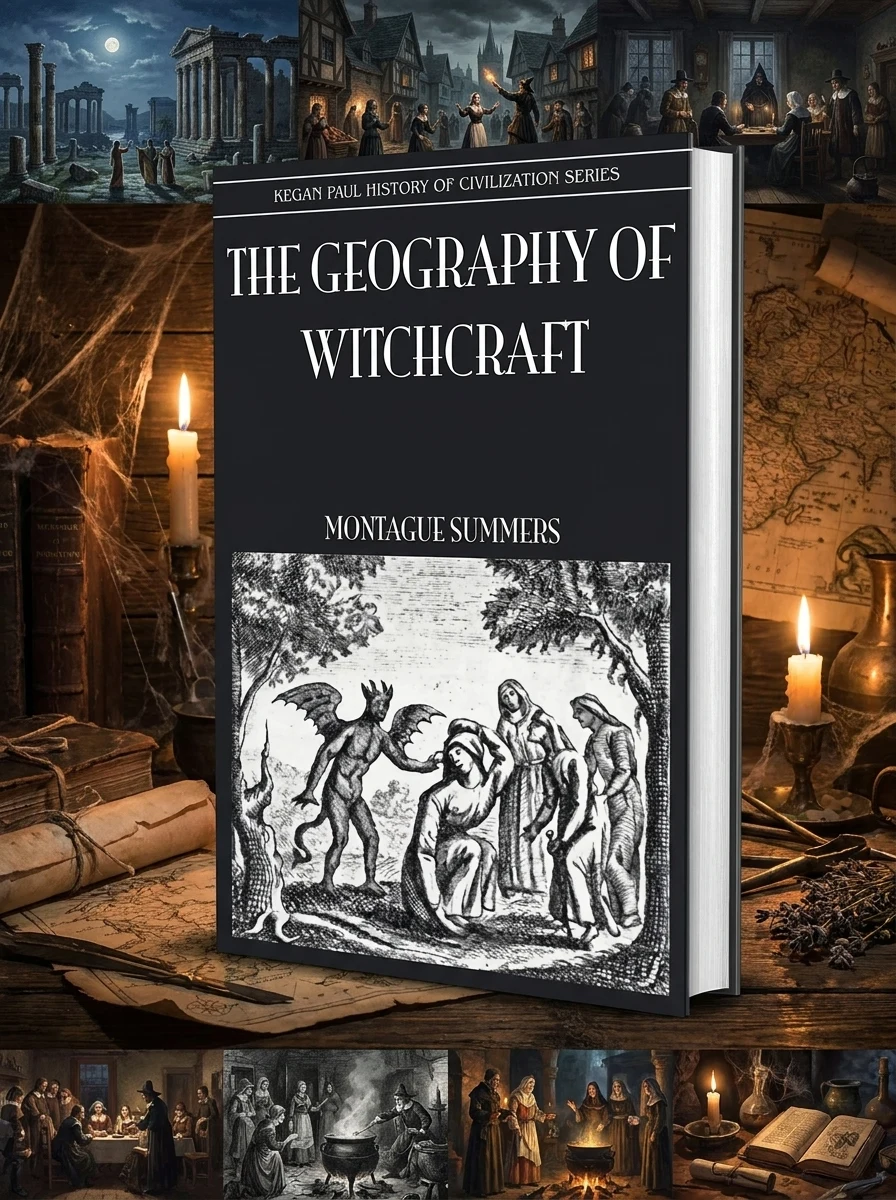
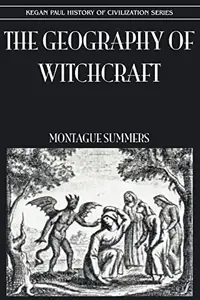
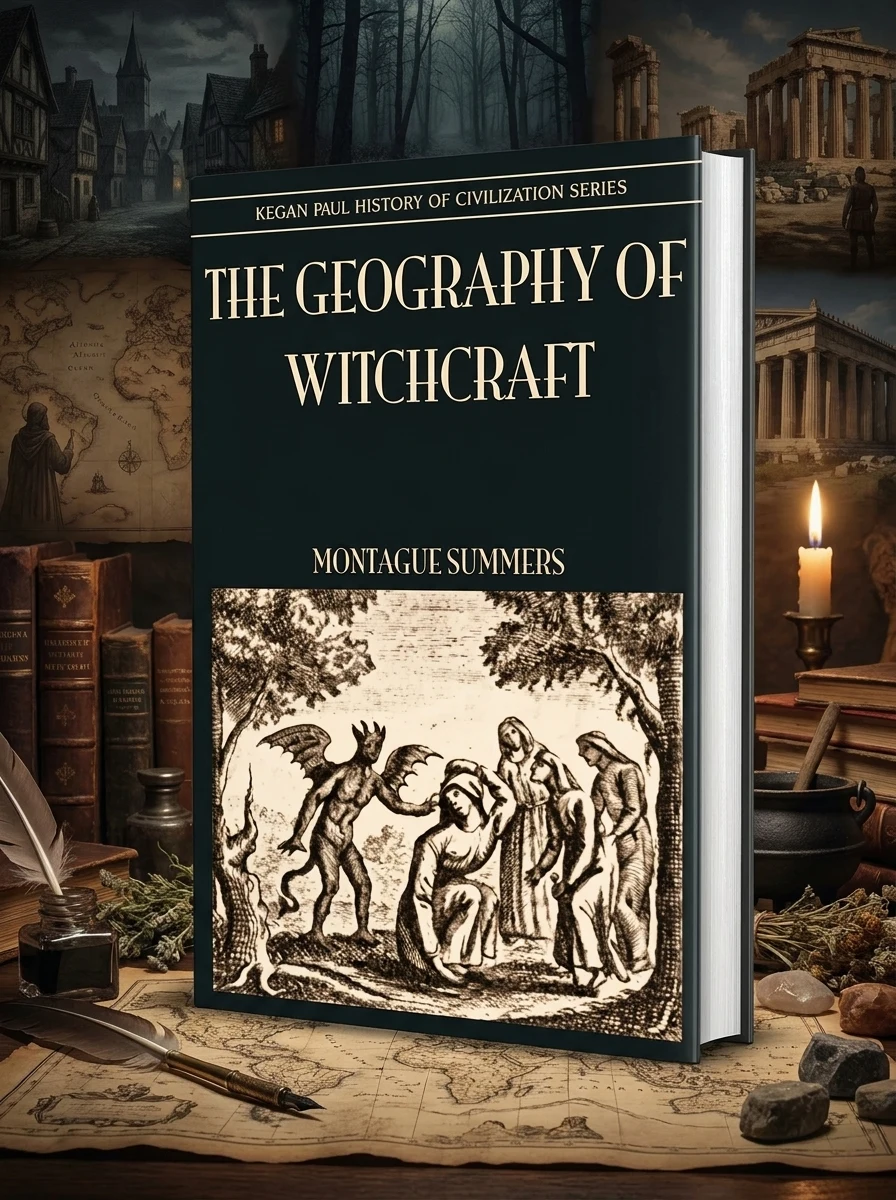
Geography of Witchcraft Summers, Montague
Summers, MontagueStock reported in the catalog; fulfillment is confirmed with your request.
Uncover the global tapestry of witchcraft, meticulously mapped across centuries and continents.
Montague Summers meticulously expands upon his previous monumental work, charting the historical proliferation of witchcraft across the globe. This volume delves into detailed accounts of its perceived manifestation, presenting extensive evidence from diverse cultures and eras. Readers will find comprehensive chapters dedicated to its presence in ancient Greece and Rome, its fervent grip on medieval Europe, including England, Scotland, France, Germany, Italy, and Spain, and its enduring influence even in the New World, specifically New England. Summers endeavors to illustrate the pervasive 'epidemic' through a rich tapestry of historical anecdotes and documented cases.
Montague Summers operates within the tradition of historical occultism and anti-witchcraft scholarship, presenting witchcraft as a pervasive, tangible epidemic rather than mere superstition. His work reflects an early 20th-century fascination with documenting the global spread of these practices through a lens of serious historical inquiry.


📝 Description: Geography of Witchcraft Summers, Montague
💎 Expert review
📖 Why choose it
Why this book is worth reading
This volume is essential for the dedicated scholar or enthusiast seeking a comprehensive, albeit controversial, cartography of witchcraft history. Readers who appreciate exhaustive documentation and are interested in how perceived manifestations of witchcraft spread across ancient Greece, Rome, medieval Europe, and New England will find immense value here. Summers’ meticulous expansion on his previous work offers a unique perspective on the 'epidemic' nature of these beliefs, providing rich anecdotes and documented cases that illuminate the fervent grip this phenomenon held on diverse cultures from England to Spain. It serves those who wish to understand the historical depth and global tapestry of occult practices through a rigorous, if singular, viewpoint.
⭐ Reader reviews
Reader rating
Summers’ Geography of Witchcraft is a dense, exhaustive survey that prioritizes breadth over critical nuance. While it offers a fascinating glimpse into early 20th-century perspectives on global witchcraft, it is not suited for modern anthropologists or skeptics seeking objective analysis. Readers expecting balanced historiography may find Summers' assertions regarding the 'epidemic' of witchcraft overly literal and lacking contemporary scholarly detachment. It is best approached as a historical artifact of occult studies rather than definitive truth. However, for those interested in the sheer volume of documented cases across continents, it remains an undeniable resource that captures the fervor of its era.
❓ Frequently asked questions
📖 Who should read this
If you are a serious student of historical occultism, particularly interested in the detailed, if controversial, perspectives of early 20th-century scholars on witchcraft's global spread, this book offers a deep dive into historical accounts and interpretations.
🎯 Key themes and symbolism
Global Witchcraft Manifestations
This work meticulously chronicles how beliefs and accusations of witchcraft appeared uniquely across various geographical locales. Summers dissects the distinct cultural and historical contexts of each region, from the classical world of Greece and Rome to the fervent trials of New England, illustrating the diverse forms the phenomenon adopted throughout history.
Documenting the Ascent
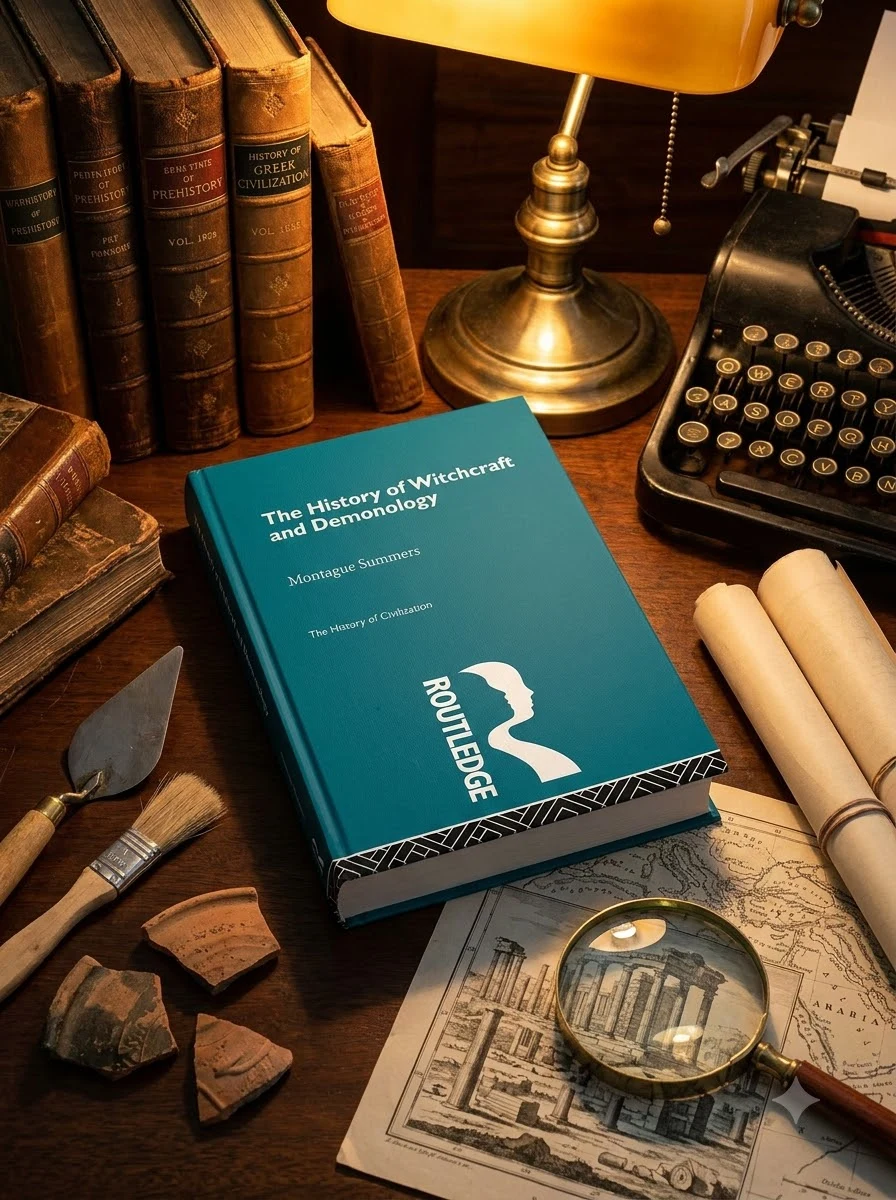
Building directly upon his foundational text, *The History of Witchcraft and Demonology*, Summers continues his exploration of what he posits as the rising influence and spread of witchcraft. He aims to provide a continuous narrative, tracing its trajectory and perceived increase in prominence throughout different historical periods and societal structures.
Evidential Historical Approach
Rather than offering mere conjecture, Summers presents a wealth of "detailed evidence" to substantiate his claims about the widespread nature of witchcraft. His method involves drawing upon historical records, trial transcripts, and cultural accounts from each region discussed, aiming for a comprehensive, if decidedly biased, documentation of the phenomenon.
💬 Quotes from the book
“The insidious tendrils of the Black Art, though often concealed, may be traced with chilling clarity through the annals of every civilized nation, a testament to its pervasive and malignant influence.”
“From the pagan rites whispered in Grecian groves to the desperate confessions wrung in the Puritan courts of Salem, the evidence is overwhelming and geographically disparate, yet unified in its dark purpose.”
📜 Historical context
📚 Glossary
- Witchcraft
- Demonology
- Occultism
📔 Questions to reflect on
- How might Summers' personal beliefs and the prevailing cultural anxieties of his time have shaped his interpretation of historical 'evidence' regarding witchcraft?
- Consider how modern anthropology or sociology might approach the same historical events and cultural phenomena differently than Summers did in this work.
- Which region discussed in the book do you find most compelling, and what does its specific manifestation of witchcraft reveal about the cultural anxieties of that particular era?
📖 From the series “History of Civilization”
All books in the series →
✍️ More books by this author Summers, Montague
All books by this author →
 75
75
 88
88
 85
85
 86
86
🏛 Books from this publisher Routledge
All books from this publisher →



 89
89


You might also like
See more →

 91
91
 88
88