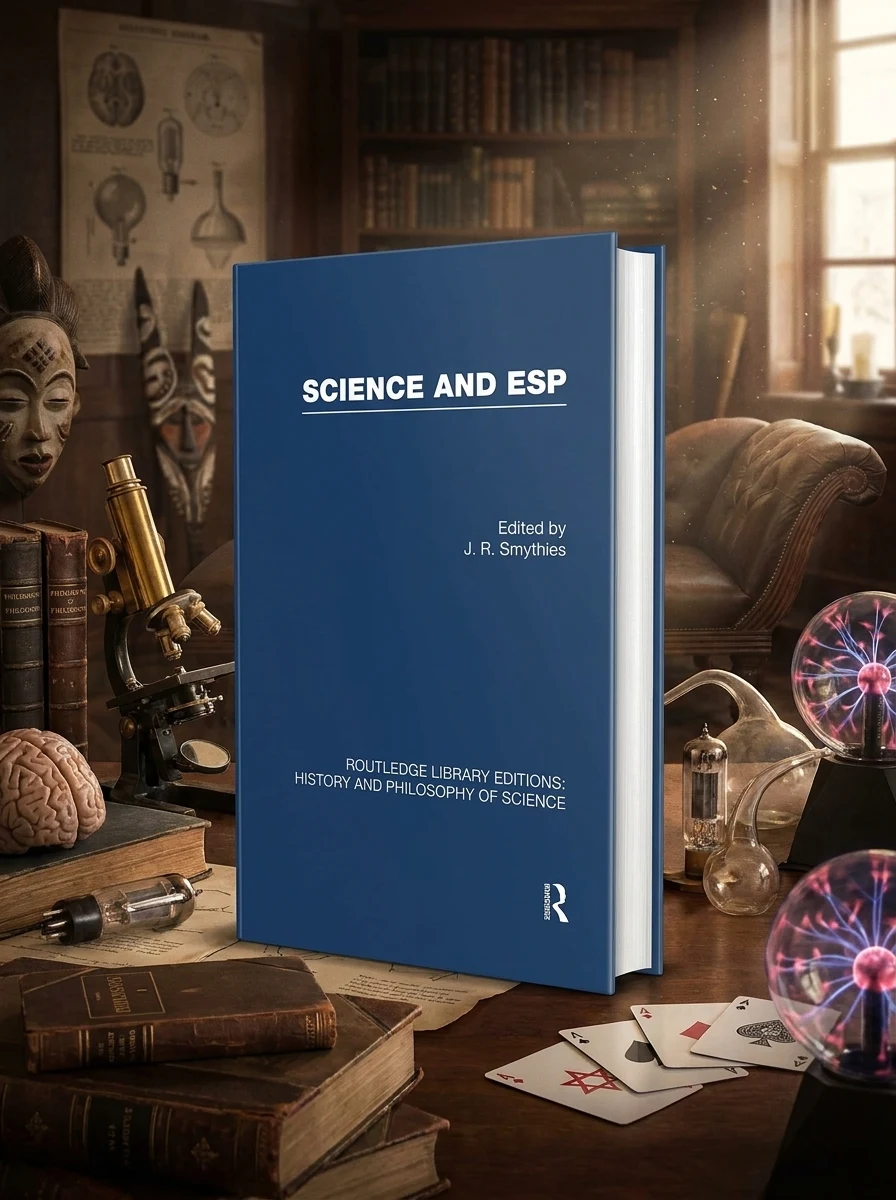
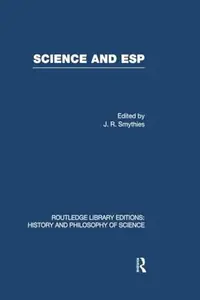
Science and ESP Smythies, J R
Stock reported in the catalog; fulfillment is confirmed with your request.
Unsettle your understanding of reality with this groundbreaking inquiry into psychic phenomena.
This compelling collection, originally published in 1967, offers an interdisciplinary examination of extrasensory perception. Bringing together diverse viewpoints from philosophers, psychologists, and scientists, it boldly asserts that phenomena like telepathy and clairvoyance possess a demonstrable validity that traditional scientific inquiry can no longer afford to dismiss. The book challenges established paradigms, advocating for a serious re-evaluation of psychic experiences within a rigorous intellectual framework. It's an essential read for those seeking to bridge the gap between empirical study and the enigmatic reaches of the human mind.
Published in the late 1960s, this work emerges during a period of intense scientific scrutiny regarding psychic phenomena, reflecting the era's attempt to legitimize ESP within rigorous intellectual frameworks. It stands as a bridge between traditional occult curiosity and mid-century academic inquiry into the human mind.


📝 Description: Science and ESP Smythies, J R
💎 Expert review
📖 Why choose it
Why this book is worth reading
This volume is essential for the intellectually curious skeptic who seeks empirical validation for psychic experiences without abandoning scientific rigor. It appeals to those fascinated by the intersection of philosophy, psychology, and parapsychology, offering a serious re-evaluation of telepathy and clairvoyance. Readers seeking to understand how established paradigms can be challenged will find this interdisciplinary examination deeply rewarding. It is not for casual readers but for scholars and enthusiasts willing to engage with complex arguments that demand a reconsideration of reality's boundaries and the limits of traditional scientific dismissal.
⭐ Reader reviews
Reader rating
Smythies presents a bold, interdisciplinary argument that demands attention from serious students of esoteric science. While the collection effectively bridges the gap between empirical study and psychic phenomena, its dense academic tone may alienate casual occultists seeking mystical narratives or simple affirmations. It is strictly for those prepared to navigate rigorous philosophical and psychological debates rather than enjoy light reading. The text does not cater to those who prefer unexamined belief systems; it requires an active, critical mind ready to confront challenging assertions about the validity of ESP within a scientific context.
❓ Frequently asked questions
📖 Who should read this
Are you a curious intellectual, a skeptical scientist, or an open-minded seeker? This book invites anyone intrigued by the unexplained to engage with thoughtful arguments that challenge conventional understanding of consciousness and perception, urging a re-examination of what science can truly measure.
🎯 Key themes and symbolism
Interdisciplinary Inquiry
This volume meticulously compiles insights from various fields—from psychology to physics—to construct a holistic argument for ESP. It demonstrates how a phenomenon often relegated to the fringes can be illuminated when viewed through multiple academic lenses, fostering a richer, more nuanced understanding.
Validating Psychic Phenomena
At its core, the book makes a forceful case for the undeniable existence and significance of extrasensory perception. It moves beyond mere speculation, presenting arguments that suggest these abilities are not imaginary but are genuine aspects of human experience that warrant serious scientific consideration.
Challenging Scientific Dogma
Science and ESP directly confronts the skepticism prevalent in mainstream scientific circles regarding psychic abilities. It advocates for an expansion of scientific inquiry to encompass phenomena that defy conventional explanation, pushing the boundaries of what is considered empirically verifiable and intellectually acceptable.
💬 Quotes from the book
“The persistent dismissal of anomalous experiences merely because they elude current theoretical frameworks represents a failure of scientific imagination, not a definitive refutation of the phenomena themselves.”
“When psychologists, physicists, and philosophers converge on the inexplicability of certain mental events, it behooves us to consider the possibility of a deeper, as yet unmapped, aspect of consciousness.”
📜 Historical context
📚 Glossary
- ESP
- Parapsychology
- Precognition
📔 Questions to reflect on
- How might the scientific community's understanding of reality shift if ESP were widely accepted as a valid phenomenon?
- Reflect on any personal experiences or anecdotes you've encountered that might align with the concept of extrasensory perception.
- In what ways can an interdisciplinary approach, as showcased in this book, enrich our understanding of other complex, unexplained phenomena?
📖 From the series “Routledge Library Editions: History & Philosophy of Science”
All books in the series →
🏛 Books from this publisher Routledge
All books from this publisher →

 89
89


You might also like
See more →
 91
91
 91
91