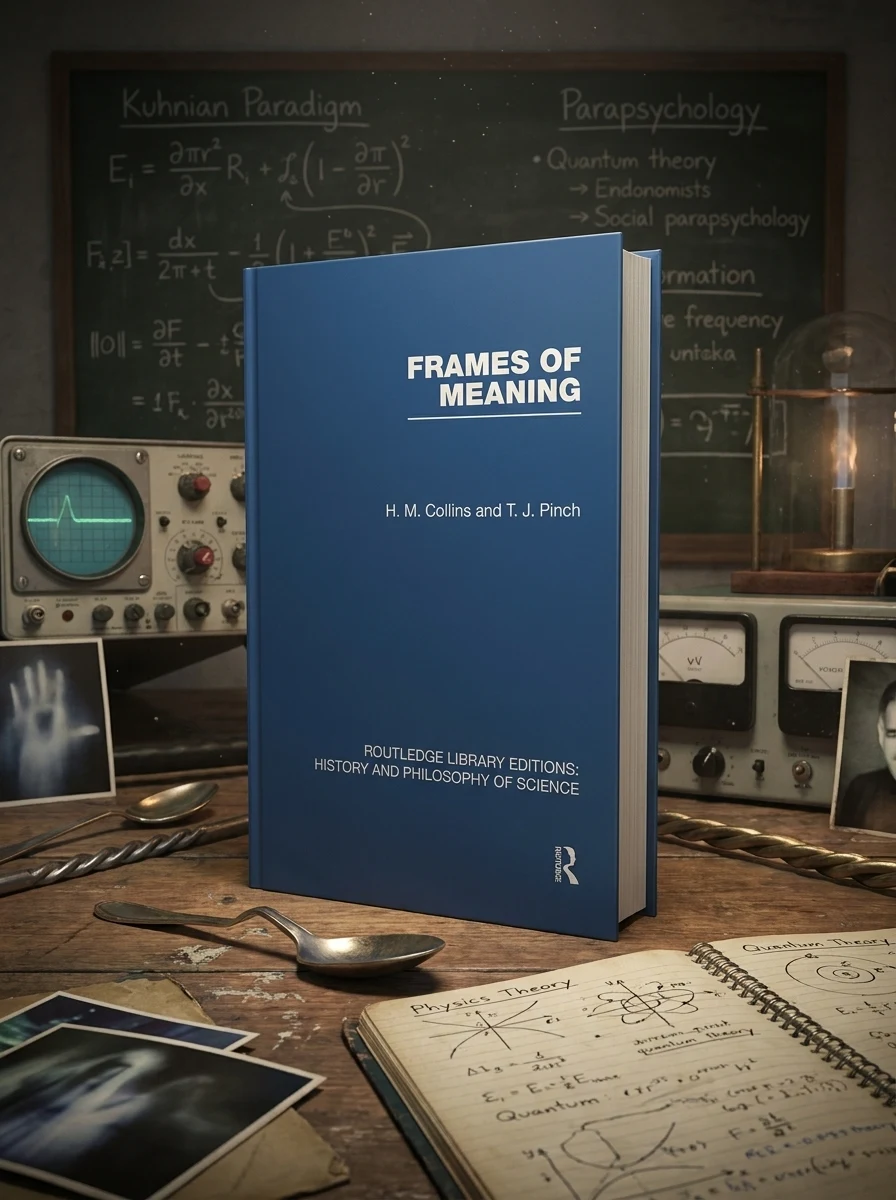
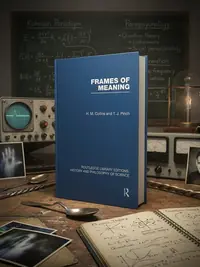
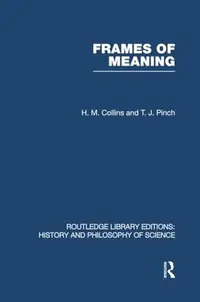
Frames of Meaning: The Social Construction of Extraordinary Science Collins, Hm
Stock reported in the catalog; fulfillment is confirmed with your request.
Uncover how radical ideas challenge the very foundations of scientific truth, exploring the boundaries of the extraordinary.
This seminal work delves into the profound implications of Thomas Kuhn's theory of incommensurable paradigms, investigating how vastly different rational frameworks impede mutual understanding. The authors first explore the theoretical landscape surrounding parapsychology, scrutinizing its compatibility with established scientific disciplines like physics and psychology. They then pivot to an in-depth empirical investigation of metal bending, a seemingly anomalous phenomenon. The study culminates in an analysis of diverse interpretations, offering fresh insights into the nature of scientific revolutions and the acceptance of "extraordinary" claims within the scientific community.
This work sits at the intersection of sociology of science and occult studies, challenging positivist norms by examining how extraordinary claims are socially constructed and validated within scientific communities.


📝 Description: Frames of Meaning: The Social Construction of Extraordinary Science Collins, Hm
💎 Expert review
📖 Why choose it
Why this book is worth reading
Readers fascinated by the sociology of knowledge and the boundaries between science and parapsychology will find this text invaluable. It offers a rigorous empirical look at metal bending, not to prove psychic powers, but to understand how different rational frameworks interpret anomalies. Those interested in Thomas Kuhn’s theory of incommensurable paradigms will appreciate how the authors apply these theoretical landscapes to real-world scientific controversies. This book is essential for anyone seeking to understand why certain extraordinary claims gain traction while others are dismissed, revealing the social mechanics behind scientific truth and revolution.
⭐ Reader reviews
Reader rating
While intellectually stimulating, this academic study may frustrate readers seeking definitive proof of paranormal phenomena or casual occult advice. It is a dense sociological analysis rather than a practical guide to esoteric practices. The focus on metal bending as a case study for paradigm shifts requires patience with theoretical discourse. Readers who prefer direct mystical experiences or clear-cut scientific validations might find the social constructionist approach too abstract. However, for scholars and serious students of science studies who enjoy dissecting how communities negotiate truth, it remains a compelling and necessary examination of the friction between established science and the extraordinary.
❓ Frequently asked questions
📖 Who should read this
For discerning readers fascinated by the philosophy of science, the sociology of knowledge, and the enigmatic boundaries of human experience. If you ponder how established truths are formed and challenged, and what truly constitutes "extraordinary" science, this rigorous inquiry will deeply resonate.
🎯 Key themes and symbolism
Paradigm Incommensurability's Reach
The book dramatically expands on Kuhn’s concept, arguing that differing scientific paradigms create fundamental barriers to understanding. It explores the profound difficulties encountered when attempting to bridge the conceptual gulfs between distinct rational communities, particularly concerning phenomena that defy conventional explanation.
Parapsychology's Scientific Standing
Collins and Pinch meticulously examine parapsychology, assessing its potential integration into mainstream science. They review existing literature and scrutinize its methodologies against the rigorous standards of physics, psychology, and quantum theory, questioning what constitutes legitimate scientific inquiry when faced with the anomalous.
Empirical Study of Anomalies
Shifting from abstract theory to direct observation, a significant portion of the book is dedicated to a detailed empirical study of metal bending. This practical investigation provides a concrete case study for exploring how "extraordinary" phenomena are observed, interpreted, and either validated or dismissed within scientific discourse.
💬 Quotes from the book
“To truly comprehend an 'extraordinary' claim, one must first map the often-invisible conceptual terrain that renders it either rational or absurd within its originating framework.”
“The moment a phenomenon deviates from expected normalcy, it ceases to be merely an observation and transforms into a crucible for the very definition of scientific truth.”
📜 Historical context
📚 Glossary
- Paradigm Incommensurability
- Parapsychology
- Empirical Study
📔 Questions to reflect on
- Consider a belief you hold that is widely dismissed by mainstream science. How might differing "rational categories" prevent its acceptance?
- How do the prevailing scientific paradigms of our time influence what phenomena are deemed "extraordinary" versus simply "unexplained"?
- Reflect on a personal experience that defied conventional explanation. How might an empirical study approach such an event, and what limitations would it face?
📖 From the series “Routledge Library Editions: History & Philosophy of Science”
All books in the series →
🏛 Books from this publisher Routledge
All books from this publisher →

 89
89


You might also like
See more →
 91
91
 91
91