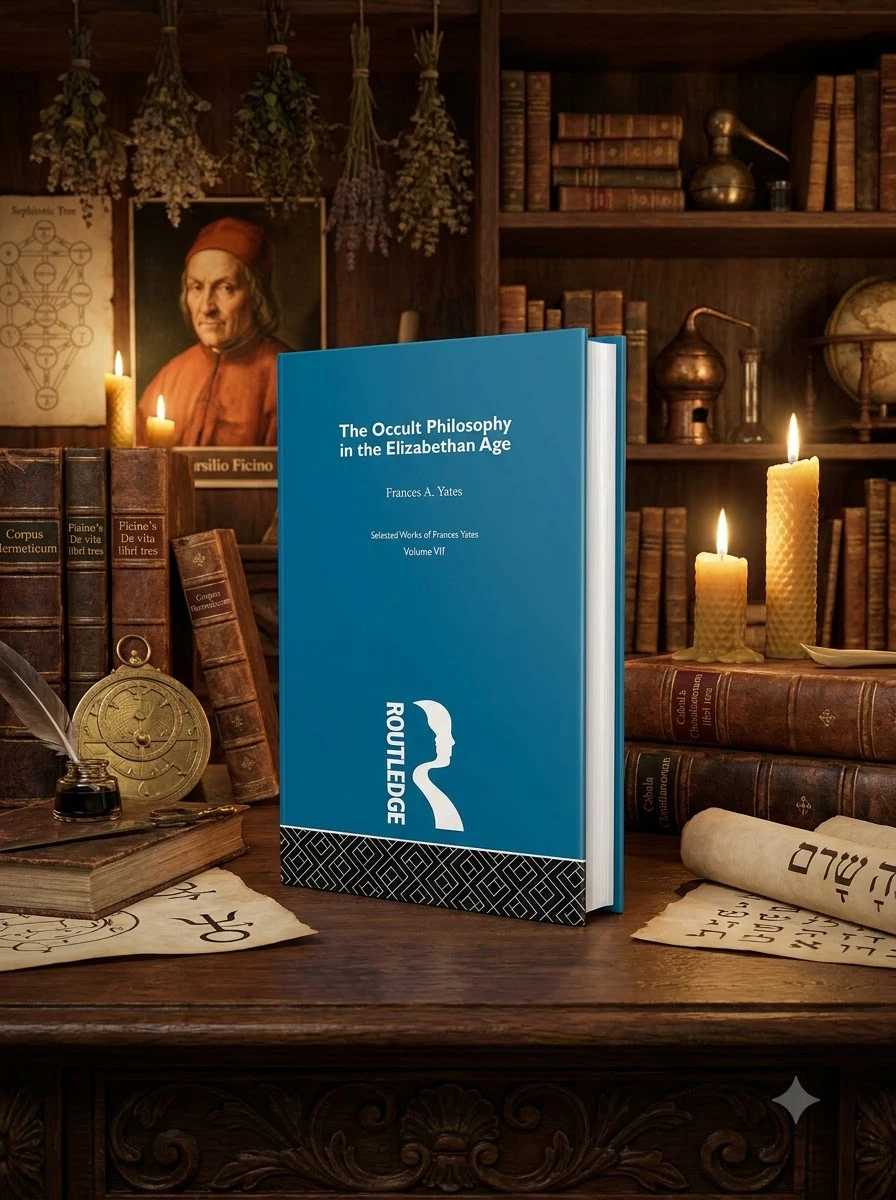
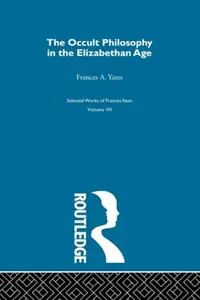
The Occult Philosophy in the Elizabethan Age
Yates, Frances AStock reported in the catalog; fulfillment is confirmed with your request.
Uncover the secret intellectual currents that shaped the Elizabethan Age's spiritual landscape.
Frances Yates masterfully illuminates the hidden intellectual underpinnings of the Elizabethan era, exploring what she terms 'the occult philosophy.' Far from a general treatise on esotericism, this work meticulously traces the convergence of revived Hermetic traditions, championed by figures like Marsilio Ficino, with a distinctly Christianized interpretation of Jewish Cabala, as introduced by Pico della Mirandola. Yates's scholarship meticulously unpacks how these intertwined mystical currents influenced the era's thought, revealing a sophisticated, historically grounded understanding of Renaissance esotericism and its profound impact on intellectual life.
This work sits firmly within the study of Renaissance intellectual history and esotericism, examining the hidden currents that defined the spiritual landscape of Elizabethan England. It bridges the gap between classical Hermetic traditions and Christianized Jewish Cabala as interpreted during the early modern period.


📝 Description: The Occult Philosophy in the Elizabethan Age
💎 Expert review
📖 Why choose it
Why this book is worth reading
Scholars and enthusiasts of the Elizabethan Age will find this volume indispensable for understanding the profound spiritual underpinnings of its intellectual life. Frances Yates offers a meticulously researched exploration of how revived Hermetic traditions and Christianized Cabala converged to shape the era's thought. Readers interested in the sophisticated interplay between mysticism, religion, and philosophy during the Renaissance will gain a historically grounded appreciation for these esoteric influences. It is essential for those seeking to uncover the secret currents that influenced cultural and spiritual developments of this pivotal period.
⭐ Reader reviews
Reader rating
Yates provides a masterful illumination of the occult philosophy shaping the Elizabethan era, meticulously tracing the convergence of Hermeticism and Cabala. While her scholarship is rigorous and historically grounded, offering a sophisticated understanding of Renaissance esotericism, this dense academic work may not suit casual readers seeking accessible narratives or those uninterested in deep historical theology. It is best appreciated by those with a strong background in intellectual history who are willing to engage with complex textual analysis rather than straightforward storytelling.
❓ Frequently asked questions
📖 Who should read this
If you're captivated by the intellectual history of the Renaissance, seek to understand the esoteric undercurrents that shaped an epoch, or wish to explore the scholarly origins of Western esotericism, this book is an indispensable guide for your journey into forgotten wisdom.
🎯 Key themes and symbolism
Hermeticism's Renaissance Resurgence
Explores how Marsilio Ficino's reintroduction of ancient Hermetic texts sparked a profound spiritual and intellectual awakening. This theme details the core tenets of Hermetic thought and its transformative influence on Renaissance philosophy, emphasizing its role in shaping a new worldview that sought divine knowledge through esoteric wisdom.
Christianized Cabala's Esoteric Synthesis
Discusses Pico della Mirandola's audacious integration of Jewish Cabalistic traditions into a Christian framework. This section reveals how thinkers sought to reconcile ancient mystical Jewish wisdom with Christian theology, creating a unique syncretic system that promised deeper understanding of the divine and the cosmos, becoming a cornerstone of the 'occult philosophy.'
Elizabethan Esoteric Thought
Examines how these combined Hermetic and Cabalistic ideas permeated the intellectual fabric of the Elizabethan Age. Yates demonstrates that this 'occult philosophy' was not a fringe belief but a significant, often influential, intellectual current among scholars and thinkers, offering a comprehensive understanding of the period's spiritual and philosophical landscape.
💬 Quotes from the book
“My endeavor here is not to delve into the general phenomena of 'the occult,' but rather to precisely delineate the intellectual current known as 'the occult philosophy' within its specific historical epoch.”
“The unique synthesis of Hermetic revival, spearheaded by Ficino, and the Christianized interpretation of Cabala, profoundly influenced by Pico, forms the very core of what we identify as the Renaissance's 'occult philosophy'.”
📜 Historical context
📚 Glossary
- Hermeticism
- Cabala (Christian)
- Ficino, Marsilio
📔 Questions to reflect on
- How might understanding 'occult philosophy' as an intellectual current rather than a fringe belief change your perception of the Renaissance?
- Consider the implications of Christianizing Jewish Cabala. What does this reveal about intellectual syncretism during the period?
- If you were an Elizabethan scholar, how might you have reconciled traditional religious dogma with the insights offered by Hermetic and Cabalistic texts?
✍️ More books by this author Yates, Frances A
All books by this author →
🏛 Books from this publisher Routledge
All books from this publisher →
 89
89
You might also like
See more →
 91
91
 91
91