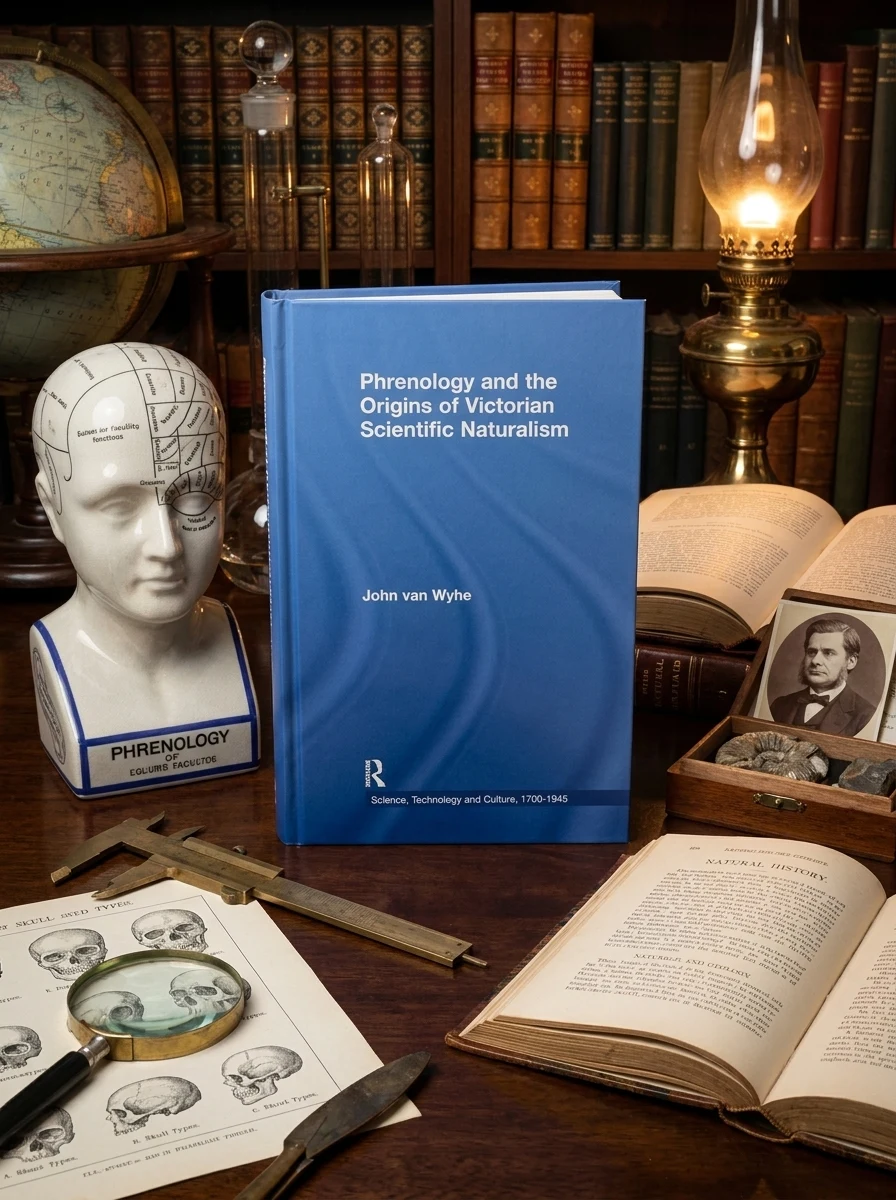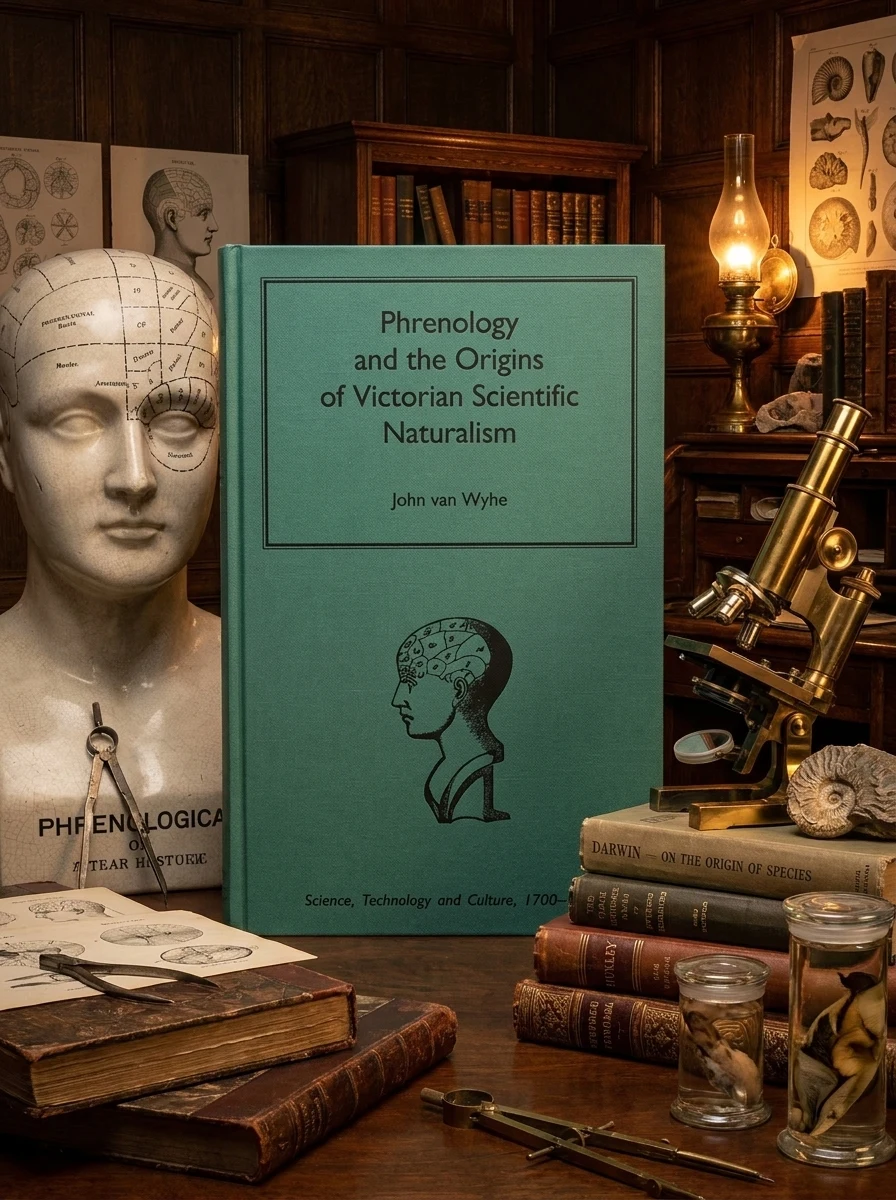
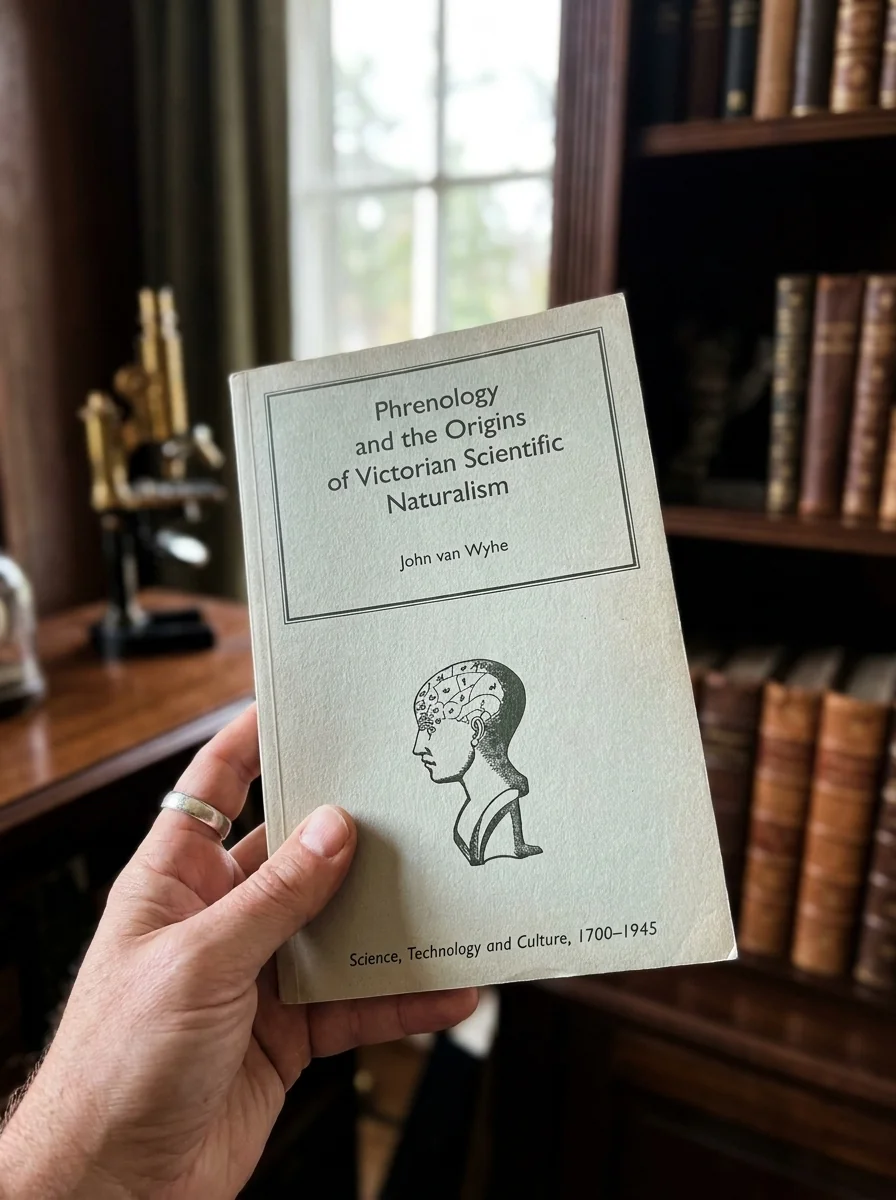
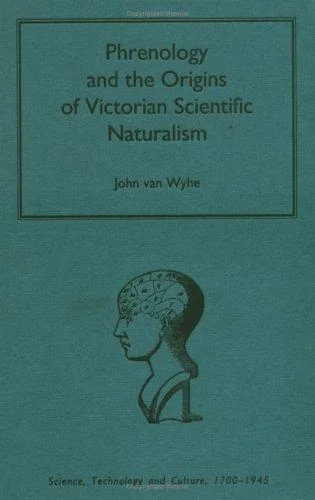
Phrenology and the Origins of Victorian Scientific Naturalism Wyhe, John Van
✍️ Wyhe, John VanA historical study charting how nineteenth century phrenology debates shaped Victorian scientific naturalism.
Dr John van Wyhe examines how early phrenology controversies in the 1820s established Victorian concepts of natural laws well before 1859. Focusing on George Combe and his 1828 bestseller, The Constitution of Man in Relation to External Objects, the work reveals how phrenologists influenced Victorian discussions across medicine, education, theology, and economics. The text restores Combe to the center of Victorian intellectual history, offering a detailed account of how nineteenth century thinkers across Britain and America reassessed the connection between human nature, society, and the natural world.
This work covers Victorian Britain and America throughout the nineteenth century, focusing on intellectual debates from the 1820s phrenology controversies up to 1899. It examines the historical period surrounding the publication of George Combe's 1828 work and Charles Darwin's 1859 publication of The Origin of Species.


📝 Description: Phrenology and the Origins of Victorian Scientific Naturalism Wyhe, John Van
💎 Expert review
📖 Why choose it
Why this book is worth reading
This book is essential for scholars and enthusiasts who wish to understand the complex intellectual roots of modern scientific naturalism beyond the shadow of Darwin. Readers interested in how phrenological advocates shaped medicine, education, and economic thought will find this re-evaluation deeply illuminating. It offers a nuanced perspective on how these theories intertwined with religious implications, providing a vibrant look at pre-existing debates about nature and humanity. If you are fascinated by the overlooked forces that influenced Victorian Britain and America, this volume reveals the true precursor to later scientific figures like Huxley, making it a vital addition for anyone seeking to grasp the full scope of 19th-century intellectual history.
⭐ Reader reviews
Reader rating
Wyhe presents a compelling argument that phrenology was more than mere pseudoscience, serving as a crucial intellectual force in Victorian society. The text successfully illuminates how these theories influenced diverse fields from theology to economics. However, casual readers seeking entertaining anecdotes or simple debunking may find the dense academic analysis dry and overly focused on historical context rather than practical application. It is not suited for those expecting a lighthearted exploration of skull shapes but demands engagement with serious historiography. While intellectually robust, its niche focus on scientific naturalism's origins limits its appeal to general audiences interested in esoteric topics without a background in academic history.
❓ Frequently asked questions
📖 Who should read this
If you're fascinated by the hidden currents of intellectual history, the intersection of science and spirituality, or the often-misunderstood origins of modern thought, this book is for you. It offers a fresh perspective on a pivotal historical period.
🎯 Key themes and symbolism
Phrenology's Hidden Influence
The book meticulously reveals how phrenology's concepts extended far beyond simple head-reading, permeating diverse fields like medicine, penal reform, educational theory, and even theological discussions, thereby shaping a broader cultural understanding of human nature and society. It underscores its role as a lens through which Victorians interpreted the world.
Pre-Darwinian Naturalism
It challenges the common assumption that scientific naturalism began with Darwin's *Origin of Species*. Instead, the book demonstrates a robust intellectual tradition of naturalistic thought flourishing throughout the 19th century, with phrenology serving as a significant catalyst and framework for these pre-Darwinian scientific and philosophical inquiries.
Science vs. Spirit Debates
The work delves into the intense intellectual and societal discussions of the Victorian era regarding the relationship between the natural world and human existence, particularly where scientific discovery intersected with religious belief. Phrenology, positioned at the forefront, actively engaged with and fueled these profound cultural controversies.
📜 Historical context
📚 Glossary
- Phrenology
- Scientific Naturalism
- Victorian Era
📔 Questions to reflect on
- Consider how a seemingly 'discredited' idea like phrenology could still profoundly shape a cultural era. What does this tell us about the nature of scientific progress and public acceptance?
- Before reading this, how did you perceive the origins of scientific naturalism? How does the book's argument about pre-Darwinian influences shift or refine your understanding?
- Phrenology sought to explain human nature through physical attributes. Reflect on contemporary attempts to link biology or neuroscience to personality and behavior. Are there parallels, or lessons to be learned, from phrenology's history?