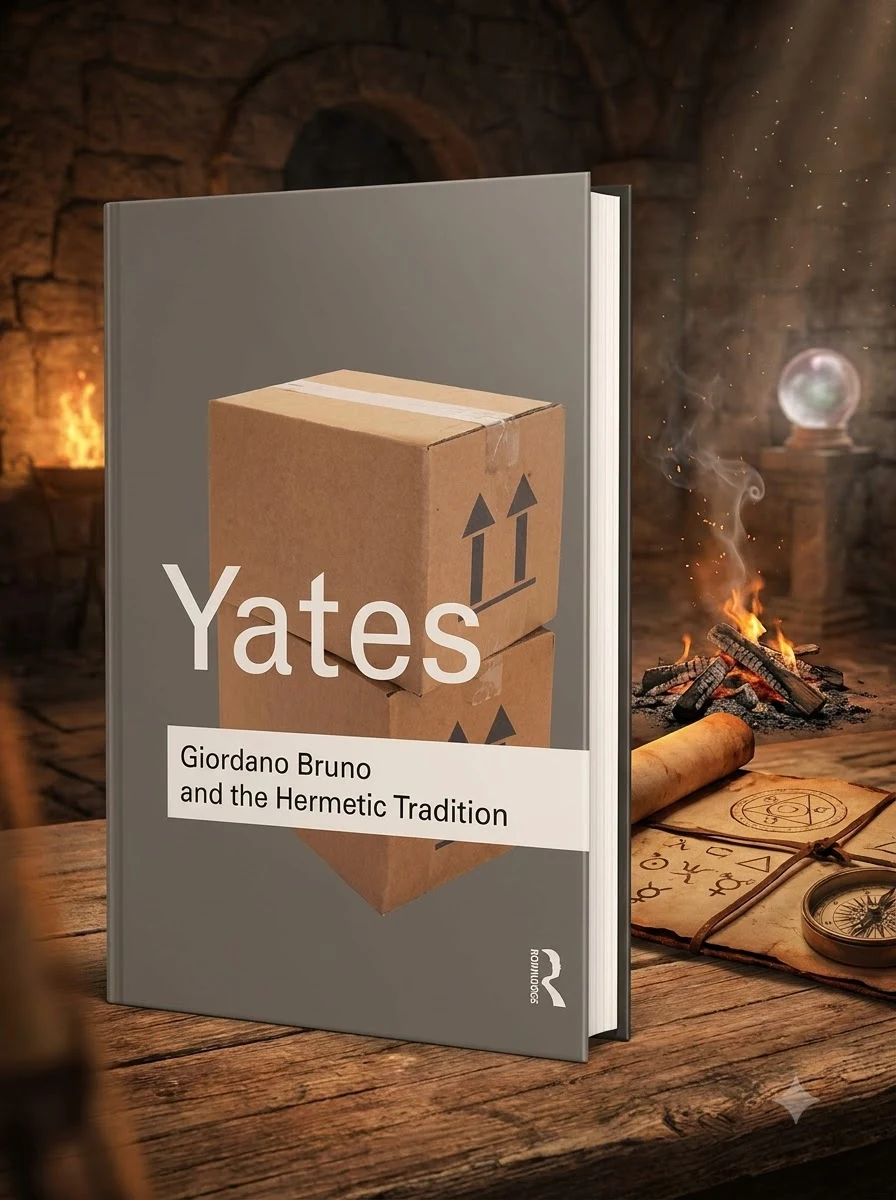
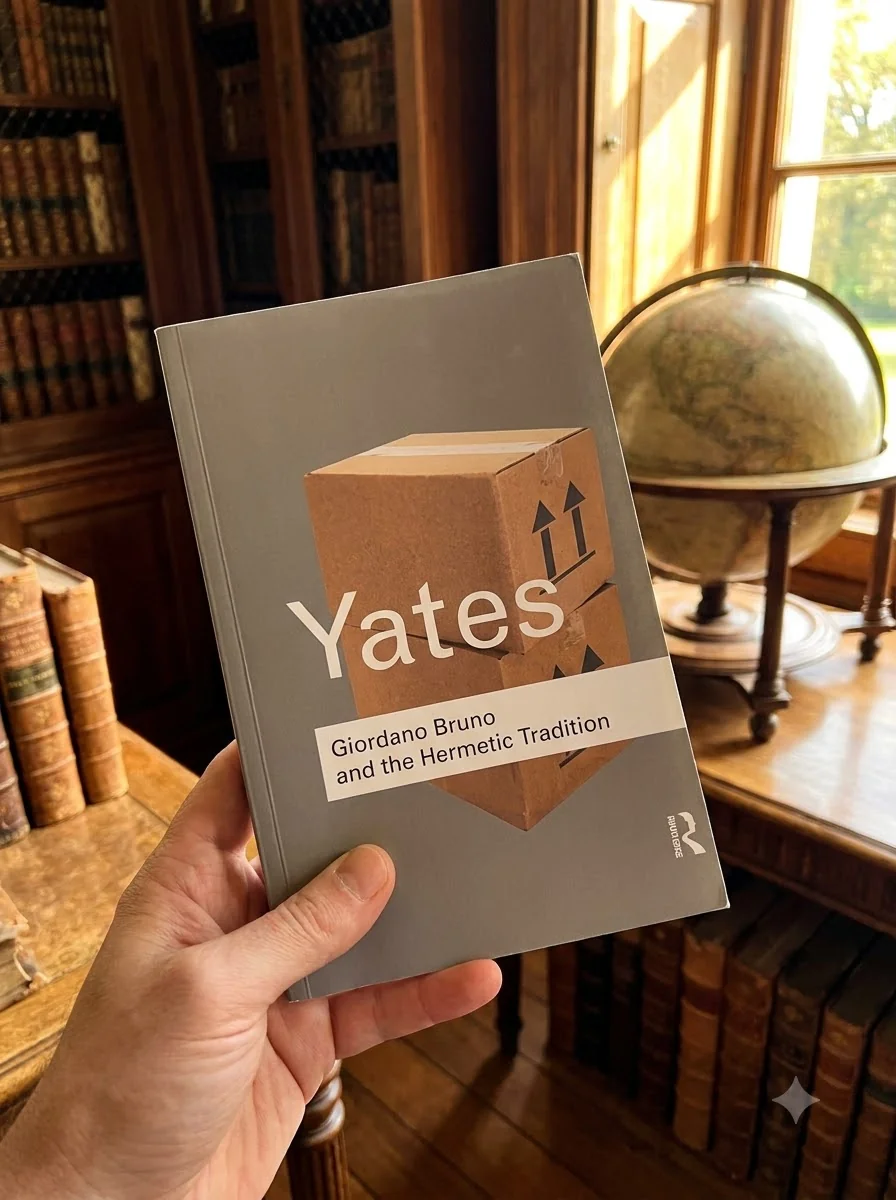
Giordano Bruno and the Hermetic Tradition
✍️ Yates, FrancesIn 1600, ecclesiastical authorities in Rome executed the renegade philosopher Giordano Bruno at the stake for spreading teachings of free love, peace, and brotherhood. Dame Frances Yates, the distinguished scholar who famously sparked the modern revival of academic interest in the historical role of the occult sciences, thoroughly examines his turbulent life, trial, and enduring intellectual legacy in this classic historical study. The detailed narrative moves chronologically through Bruno's extensive travels across early modern Europe, documenting his initial stay in Paris, his crucial years writing and teaching in England, his period in Germany, his second visit to Paris, his final published work, and his ultimate return to Italy, concluding with his connections to Tommaso Campanella.


📝 Description: Giordano Bruno and the Hermetic Tradition
📑 What's inside
- Preface, Abbreviations, Introduction J. B. Trapp
- 1. Hermes Trismegistus
- 2. Ficino's Pimander and the Asclepius
- 3. Hermes Trismegistus and Magic
- 4. Ficino's Natural Magic
- 5. Pico della Mirandola and Cabalist Magic
- 6. Pseudo-Dionysius and the Theology of a Christian Magus
- 7. Cornelius Agrippa's Survey of Renaissance Magic
- 8. Renaissance Magic and Science
- 9. Against Magic: (1) Theological Objections; (2) The Humanist Tradition
- 10. Religious Hermetism in the Sixteenth Century
- 11. Giordano Bruno: First Visit to Paris
- 12. Giordano Bruno in England: The Hermetic Reform
- 13. Giordano Bruno in England: The Hermetic Philosophy
- 14. Giordano Bruno and the Cabala
- 15. Giordano Bruno: Heroic Enthusiast and Elizabethan
- 16. Giordano Bruno: Second Visit to Paris
- 17. Giordano Bruno in Germany
- 18. Giordano Bruno: Last Published Work
- 19. Giordano Bruno: Return to Italy
- 20. Giordano Bruno and Tommaso Campanella
- 21. After Hermes Trismegistus was Dated
- 22. Hermes Trismegistus and the Fludd Controversies
- Index
💎 Expert review
📖 Why choose it
Why this book is worth reading
Readers deeply interested in the hidden currents of history and the complex interplay between magic, science, and theology will find this book indispensable. It offers a profound re-evaluation of Giordano Bruno, moving beyond the simplistic martyrdom narrative to explore his radical cosmology and engagement with ancient wisdom. If you are fascinated by how esoteric traditions shape intellectual history and seek to understand the potent magus behind the controversy, this meticulous tracing of his philosophical roots provides essential context for his tragic end and enduring legacy.
⭐ Reader reviews
Reader rating
Frances Yates delivers a rigorous scholarly analysis that is essential for understanding the Hermetic tradition's impact on Renaissance thought. The book excels in detailing Bruno’s intellectual world without resorting to sensationalism. However, it does not suit casual readers seeking a straightforward biography or those uninterested in dense philosophical and historical analysis. It requires patience and a willingness to engage with complex esoteric concepts. While the narrative is compelling for specialists, general audiences may find the academic depth demanding rather than accessible.
❓ Frequently asked questions
📖 Who should read this
If you're fascinated by the hidden currents of history, the interplay of magic and philosophy, or the brave, often tragic figures who dared to question dogma, this is an essential read. It offers deep insights into the intellectual landscape that shaped our understanding of the cosmos.
🎯 Key themes and symbolism
Hermeticism's Enduring Power
This book illuminates the profound impact of the Hermetic tradition, an ancient body of esoteric knowledge, on Renaissance intellectual life. It reveals how figures like Bruno weren't just philosophers but magi, believing in the power of sympathetic magic and cosmic correspondence to transform both self and world.
Bruno's Cosmic Vision
Explore Bruno’s daring cosmology, which posited an infinite universe teeming with life, a radical departure from geocentric models. The book demonstrates how his understanding of the divine immanence within nature, drawing heavily from Neoplatonic and Hermetic sources, fueled his revolutionary and ultimately dangerous philosophical explorations.
Intellectual Persecution
Delve into the tragic story of Giordano Bruno's demise at the stake, not merely for scientific dissent, but for challenging established religious and philosophical paradigms with his Hermetic-infused worldview. This narrative examines the perilous intersection of radical thought and institutional power in the Renaissance.
📜 Historical context
📚 Glossary
- Hermeticism
- Neoplatonism
- Magus
📔 Questions to reflect on
- Consider how Frances Yates's reinterpretation of Bruno shifts our understanding of the Renaissance. What impact does acknowledging the 'magical' dimension have on perceiving this pivotal historical era?
- Bruno's fate highlights the conflict between radical intellectual freedom and established dogma. Where do you see similar tensions playing out in today's society, particularly concerning unconventional ideas?
- Reflect on the nature of 'heresy' throughout history. What makes certain ideas so threatening to power structures, and how does Bruno's story exemplify this?