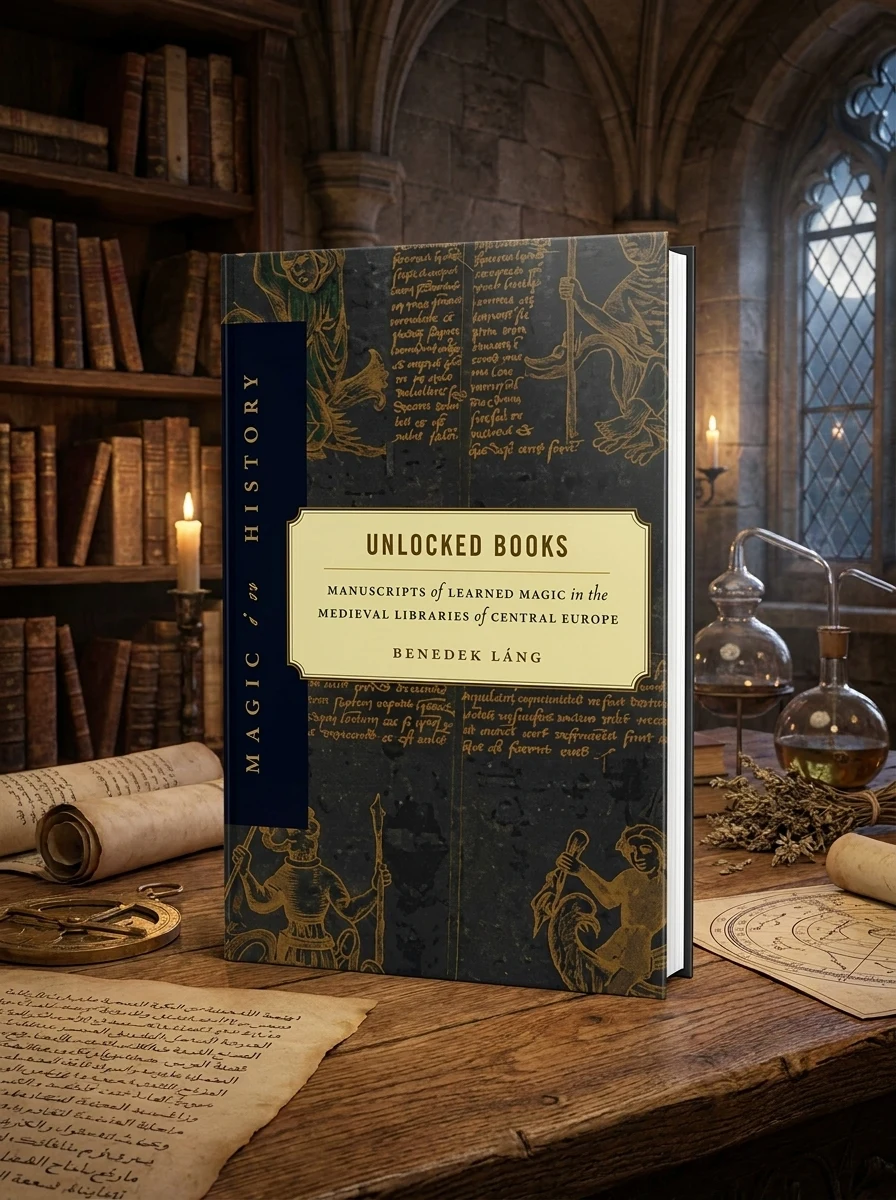
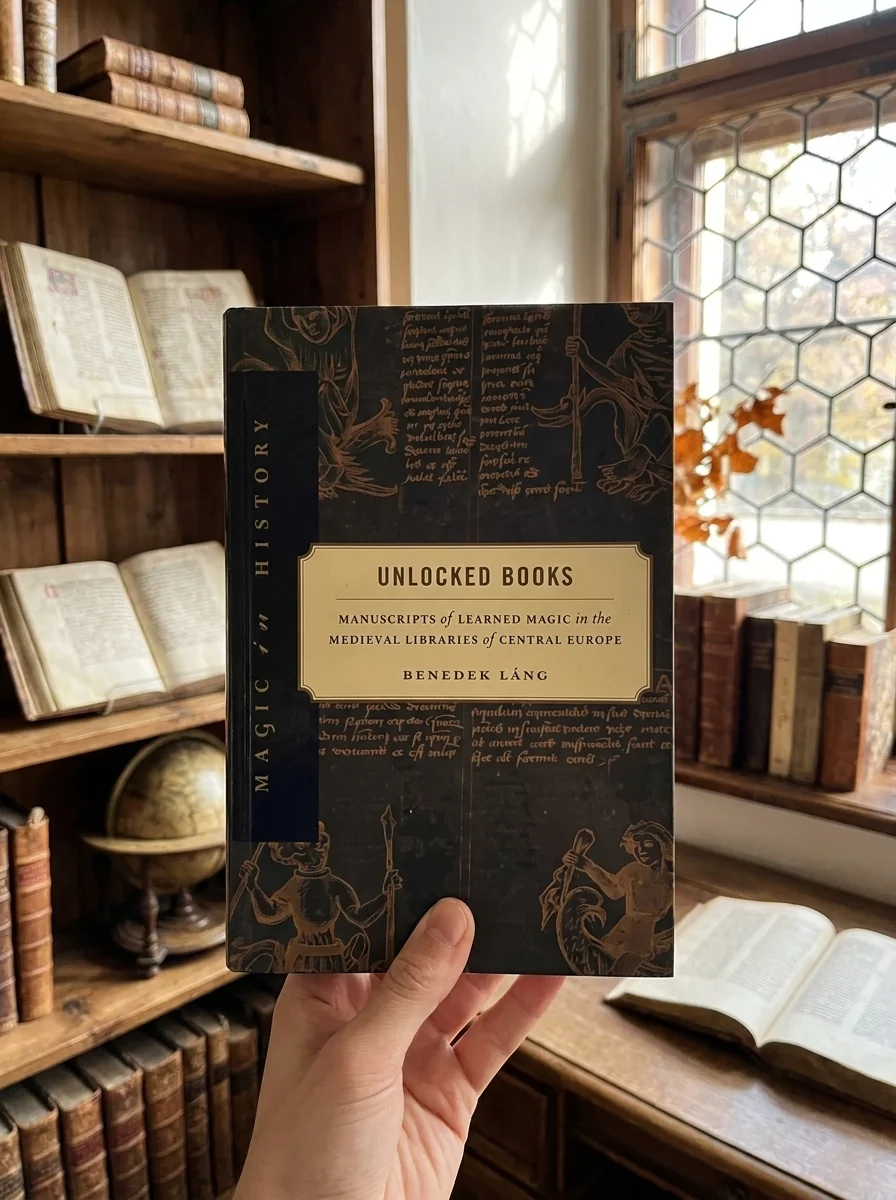
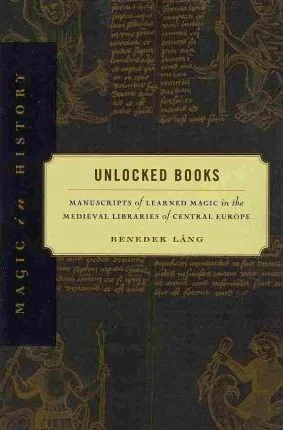
Unlocked Books: Manuscripts of Learned Magic in the Medieval Libraries of Central Europe (Revised) Láng, Benedek
Benedek Láng's *Unlocked Books* delves into the surprising integration of learned magic within the intellectual circles of medieval Central Europe. Challenging popular narratives of secret "magician schools," this study reveals how esteemed clerics, courtiers, and university scholars openly housed and studied magical texts alongside scientific and religious treatises. It meticulously charts the transmission of Arabic occult knowledge into Western thought, demonstrating that the perceived boundary between rational inquiry and esoteric practice was far more fluid than commonly believed. Láng illuminates Central Europe's significant, yet often overlooked, contribution to the academic study of the arcane.


Praise for this book
“Unlocked Books demonstrates the rich possibilities of research in this field. . . . the unknown plains of Central European medieval science are truly exciting territory.”
📝 Description: Unlocked Books: Manuscripts of Learned Magic in the Medieval Libraries of Central Europe (Revised) Láng, Benedek
📑 What's inside
- List of Illustrations
- Acknowledgments
- Abbreviations
- Introduction: In Search of Magician Schools
- Part One: Magic
- 1.Definitions and Classifications
- Part Two: Texts and Handbooks
- 2.Natural Magic
- 3.Image Magic
- 4.Divination with Diagrams
- 5.Alchemy
- 6.Ritual Magic and Crystallomancy
- Part Three: Readers and Collectors
- 7.Magic in the Clerical Context
- 8.Magic in the Courtly Context
- 9.Magic in the University Context
- Conclusion: Seven Questions
- Epilogue: When Central Europe Was Finally Close to Becoming a Center for Magical Studies
- Appendixes
- Selected Bibliography
- Description of Selected Manuscripts
- Index
💎 Expert review
📖 Why choose it
Why this book is worth reading
Academic historians and serious students of Western esotericism will find immense value in Benedek Láng’s meticulous scholarship. This book dismantles the myth of isolated magician schools, revealing instead how esteemed clerics and university scholars openly integrated Arabic occult knowledge with scientific treatises. It is essential reading for those eager to understand the true curriculum of learned magic in medieval Central Europe, offering a nuanced view of how science and sorcery coexisted within the same intellectual circles without rigid separation.
⭐ Reader reviews
Reader rating
Láng provides a rigorous archival reconstruction that challenges popular narratives about secret magical societies. While intellectually robust, this text is not for casual readers seeking mystical anecdotes or practical spell instructions. It requires patience for dense historiography and may disappoint those expecting a narrative-driven exploration of sorcery rather than a scholarly analysis of library catalogs and manuscript transmission. It is strictly for those willing to engage with the complex intersection of theology, science, and arcane study in medieval academia.
❓ Frequently asked questions
📖 Who should read this
If you're fascinated by the hidden histories of magic, medieval intellectual life, or the often-surprising intersections of science and the occult, this scholarly yet accessible volume offers profound insights. Prepare to challenge your preconceived notions about academic engagement with the arcane.
🎯 Key themes and symbolism
Medieval Magic's Academic Roots
This work redefines our understanding of medieval magic, presenting it not as a fringe but as an integral part of higher learning. Láng explores how influential scholars and institutions, traditionally associated with theology and science, incorporated magical manuscripts, suggesting a sophisticated intellectual engagement with the esoteric arts.
Science and Sorcery's Overlap
Before modern distinctions, the medieval mind saw little separation between science and magic. The book illustrates how Arabic advancements in optics and astronomy arrived intertwined with occult practices like alchemy and talismancy, revealing a holistic worldview where rational and mystical inquiry coexisted.
Central Europe's Occult Legacy
While places like Toledo are famously linked to magic, Láng shifts focus to reveal Central Europe's critical, yet underappreciated, role. He unearths evidence of learned magical traditions thriving in this region, showcasing its contributions to the broader European discourse on the arcane and its unique intellectual landscape.
📜 Historical context
📚 Glossary
- Learned Magic
- Arabic Corpus
- Talismanic Magic
📔 Questions to reflect on
- How might our modern understanding of "science" and "magic" be limited by categories that didn't exist in the same way during the medieval period?
- Consider the implications of academic institutions openly housing and studying texts on what we now consider the "dark arts." How does this challenge our view of medieval intellectual freedom?
- If Central Europe was a significant center for learned magic, what might this suggest about the cultural and political interconnectedness of medieval European scholarship?