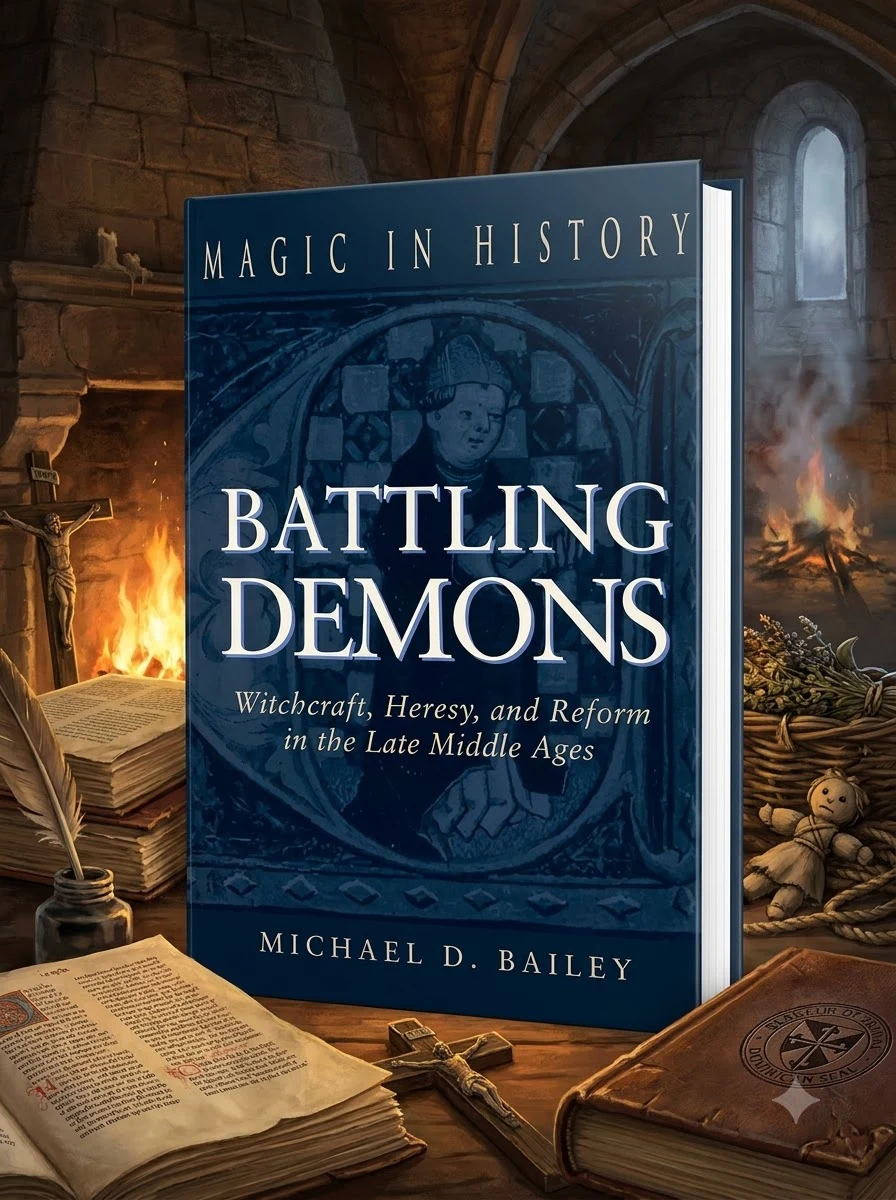

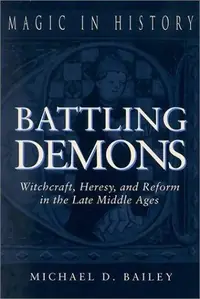
Battling Demons: Witchcraft, Heresy, and Reform in the Late Middle Ages Bailey, Michael D
Bailey, Michael DStock reported in the catalog; fulfillment is confirmed with your request.
Discover how fifteenth-century theologians forged the demonic witch stereotype that would haunt Europe.
Michael D. Bailey illuminates the critical fifteenth century, the true genesis of the European witch stereotype. Moving beyond the later hunts, this work centers on Johannes Nider, a Dominican reformer whose complex negotiations with heretics laid the groundwork for the Malleus maleficarum. Bailey argues that Nider’s influence extended far beyond demonology, reshaping late medieval religiosity. This text reveals how theological reforms and demonological fears intertwined to create the machinery of persecution, offering a nuanced look at the intellectual origins of one of history’s most enduring nightmares.
This work situates itself within the intellectual history of late medieval Europe, specifically examining the theological shifts that defined the era's approach to heresy and demonology. It explores how fifteenth-century religious reformers fundamentally reshaped the understanding of witchcraft, moving it from a peripheral concern to a central mechanism of spiritual and social control.


📝 Description: Battling Demons: Witchcraft, Heresy, and Reform in the Late Middle Ages Bailey, Michael D
💎 Expert review
📖 Why choose it
Why this book is worth reading
Scholars of medieval religion, historians of gender and power, and enthusiasts of esoteric intellectual history will find immense value in this nuanced exploration. Bailey offers a critical corrective to popular narratives that focus solely on the peak of witch hunts, instead revealing the quiet, theological groundwork laid by figures like Johannes Nider. If you are fascinated by how abstract doctrinal debates materialize into concrete social persecution, this book provides essential context. It is particularly rewarding for readers who appreciate deep dives into primary source interpretation and the complex interplay between religious reform and demonological fear. You will gain a profound appreciation for the intellectual machinery that constructed the 'witch' stereotype, understanding not just the 'what' of history, but the intricate 'how' and 'why' behind the enduring nightmare of European witchcraft.
⭐ Reader reviews
Reader rating
Needed this for my research. It connects ideas I'd only seen treated separately elsewhere. Highly recommend to serious students.
Been hunting for a decent copy of this text for ages. Not a light read, but far more accessible than I feared. Challenging in places, but never needlessly obscure. Recommended with reservations.
Perfect companion for my morning study sessions. The text itself is dense but rewarding — you get out what you put in. It pairs well with more modern commentaries on the same tradition. One of my better finds this year.
This edition finally does the material justice. I appreciated how the argument builds steadily from first principles. If you're drawn to this subject, don't hesitate.
I collect works on this subject and this is a worthy addition. You can tell why this work has endured. It reads better in small doses — a chapter at a time with notes. One of my better finds this year.
This exceeded my expectations. The language takes some getting used to, but it becomes part of the charm. Not a light read, but far more accessible than I feared. Delivery took a bit longer than quoted. Recommended with reservations.
Bailey delivers a rigorous, scholarly examination of the fifteenth-century origins of witchcraft ideology, focusing heavily on Dominican reformer Johannes Nider. While intellectually robust and essential for understanding the genesis of the Malleus maleficarum, this text is strictly academic in tone and scope. It will likely frustrate casual readers seeking sensational tales of hunts or clear-cut narratives of victimization. Those looking for accessible storytelling or popular history will find the dense theological analysis and focus on intellectual reform dry and impenetrable. This book is not for entertainment; it is a specialized study for those willing to engage with complex historical theology without distraction.
❓ Frequently asked questions
📖 Who should read this
Scholars of medieval theology, historians of religious persecution, and readers fascinated by the intellectual evolution of demonic lore and early modern witch trials.
🎯 Key themes and symbolism
Johannes Nider
Late Medieval Reform
Demonology Origins
💬 Quotes from the book
“The fifteenth century is more than any other the century of the persecution of witches.”
“Nider was by far the most important church authority to write on witchcraft in the early fifteenth century.”
📜 Historical context
📚 Glossary
- Malleus maleficarum
- Johannes Nider
- Late Middle Ages
📔 Questions to reflect on
- How does the theological fear of heresy in the fifteenth century mirror modern anxieties about societal purity?
- In what ways did the authority of religious reformers shape public perception of evil?
- How might the historical development of 'demons' reflect the cultural fears of the medieval mind?
✍️ More books by this author Bailey, Michael D
All books by this author →
 91
91
 91
91
🏛 Books from this publisher Penn State University Press
All books from this publisher →

You might also like
See more →
 84
84