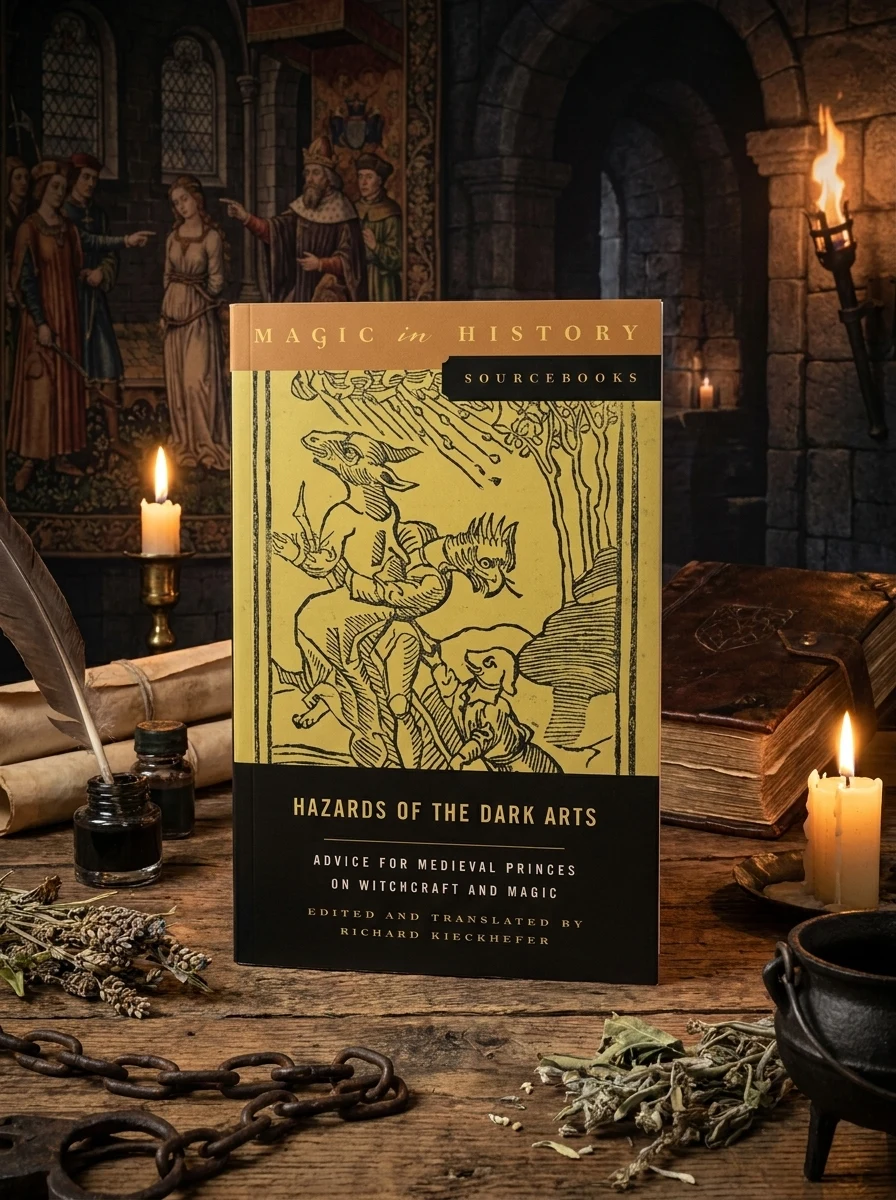
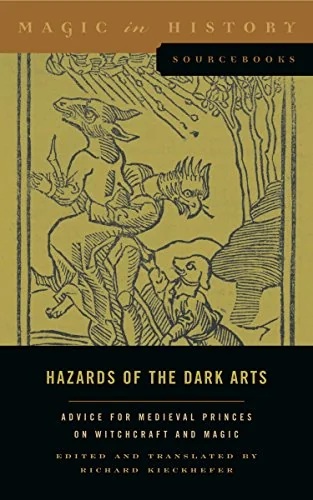
Hazards of the Dark Arts: Advice for Medieval Princes on Witchcraft and Magic Kieckhefer, Richard
✍️ Kieckhefer, RichardThis compelling volume translates two pivotal 15th-century tracts: Johannes Hartlieb’s "Book of All Forbidden Arts" and Ulrich Molitoris’s "On Witches and Pythonesses." Penned by laymen, these works directly addressed secular leaders, urging them to aggressively pursue and punish those practicing magic and witchcraft. Kieckhefer’s compilation illuminates a crucial period where secular power was rallied against perceived occult threats, challenging princely skepticism and personal dabbling. It offers a rare glimpse into the arguments that fueled the escalating persecution of magic in late medieval Europe.


Praise for this book
“The two essays presented for the first time in English in Richard Kieckhefer's Hazards of the Dark Arts show a comparable but refracted view of early modern opinion, reminding us to never underrate its intricacy.”
📝 Description: Hazards of the Dark Arts: Advice for Medieval Princes on Witchcraft and Magic Kieckhefer, Richard
📑 What's inside
- List of illustrations
- List of Abbreviations
- Acknowledgements
- Introduction
- Johannes Hartlieb, The Book of All Forbidden Arts
- [A.] Prologue
- [B.] Powers of the Devil
- [C.] An example from Caesarius of Heisterbach
- [D.] Moral exhortation
- [E.] Nygramancy (necromancy)
- [F.] Geomancy
- [G.] Correlation of arts with elements
- [H.] Hydromancy
- [I.] Aeromancy
- [J.] Pyromancy
- [K.] Chiromancy
- [L.] Spatulamancy
- [M.] General prohibition
- Ulrich Molitoris, On witches and pythonesses, in German "Unholden" or "Hexen"
- Letter
- [Part I]
- 1.Weather magic
- 2. Harm to humans and infants
- 3. Impotence
- 4. Change of form
- 5. Riding on sticks or wolves
- 6. Intercourse of Devil with women
- 7. Children born to demons and witches
- 8. Foretelling future things
- [Part II]
- Chaps. 1-3 resumed
- Chap. 4 resumed
- Chap. 5 resumed
- Chaps. 6-7 resumed
- Epilogue
- Short bibliography
💎 Expert review
📖 Why choose it
Why this book is worth reading
Scholars of late medieval history and legal studies will find immense value in this text, as it provides a rare, direct look at the secular arguments used to justify the persecution of magic. Readers interested in the intersection of political power and religious fear will appreciate how laymen urged rulers to aggressively target practitioners, challenging both skepticism and personal dabbling among the elite. It is essential for understanding the ideological foundations that fueled the witch trials, offering a chilling yet crucial perspective on how secular leaders were rallied against the dark arts during this transformative period in European history.
⭐ Reader reviews
Reader rating
Kieckhefer’s compilation is an indispensable resource for historians analyzing the legal and political mechanisms of late medieval witch persecution. By translating Hartlieb’s and Molitoris’s tracts, he reveals how secular authority was mobilized against occult practices. However, this volume is NOT suitable for casual readers seeking narrative drama or general interest in Wicca; it is a dense academic study of historical texts aimed at specialists. Those expecting modern esoteric guidance or entertaining folklore will likely find the rigorous focus on princely counsel and legalistic arguments dry and overly technical. It demands patience and a specific scholarly interest in medieval state-building.
❓ Frequently asked questions
📖 Who should read this
For scholars of medieval history, students of esoteric traditions, and anyone fascinated by the origins of witchcraft panics, this book offers essential primary source material. Delve into the arguments that shaped the persecution of magic and the role of secular power.
🎯 Key themes and symbolism
Princely Power & Persecution
This collection reveals how influential lay authors sought to steer medieval princes and town councils toward zealous prosecution of magic. It highlights the tension between ecclesiastical and secular power in defining and punishing occult practices, showcasing efforts to overcome rulers' skepticism or their own involvement with the arcane.
Cataloging Forbidden Arts
Hartlieb's systematic survey details the "seven occult arts," providing a framework for identifying and condemning various forms of magic and superstition. Molitoris's dialogue, conversely, vividly portrays the perceived activities of witches, from malevolent sorcery to diabolical pacts, shaping public and official understanding of their threats.
Non-Clerical Anti-Magic
Unlike many anti-witchcraft treatises from theologians, these texts originated from lay perspectives, specifically targeting secular governance. They demonstrate the widespread societal anxiety regarding magic beyond clerical circles, illustrating how ordinary, albeit educated, individuals contributed significantly to the intellectual and legal foundations of witch hunts.
📜 Historical context
📚 Glossary
- Pythonesses
- Heresy
- Secular Authority
📔 Questions to reflect on
- How might medieval secular leaders have balanced their skepticism regarding magic with the growing societal pressure to prosecute perceived witches?
- In what ways do these 15th-century arguments against magic resonate with or diverge from modern perceptions of "forbidden arts" or spiritual dangers?
- Reflect on the historical implications of lay authors, rather than just clergy, advocating for the persecution of individuals accused of witchcraft.