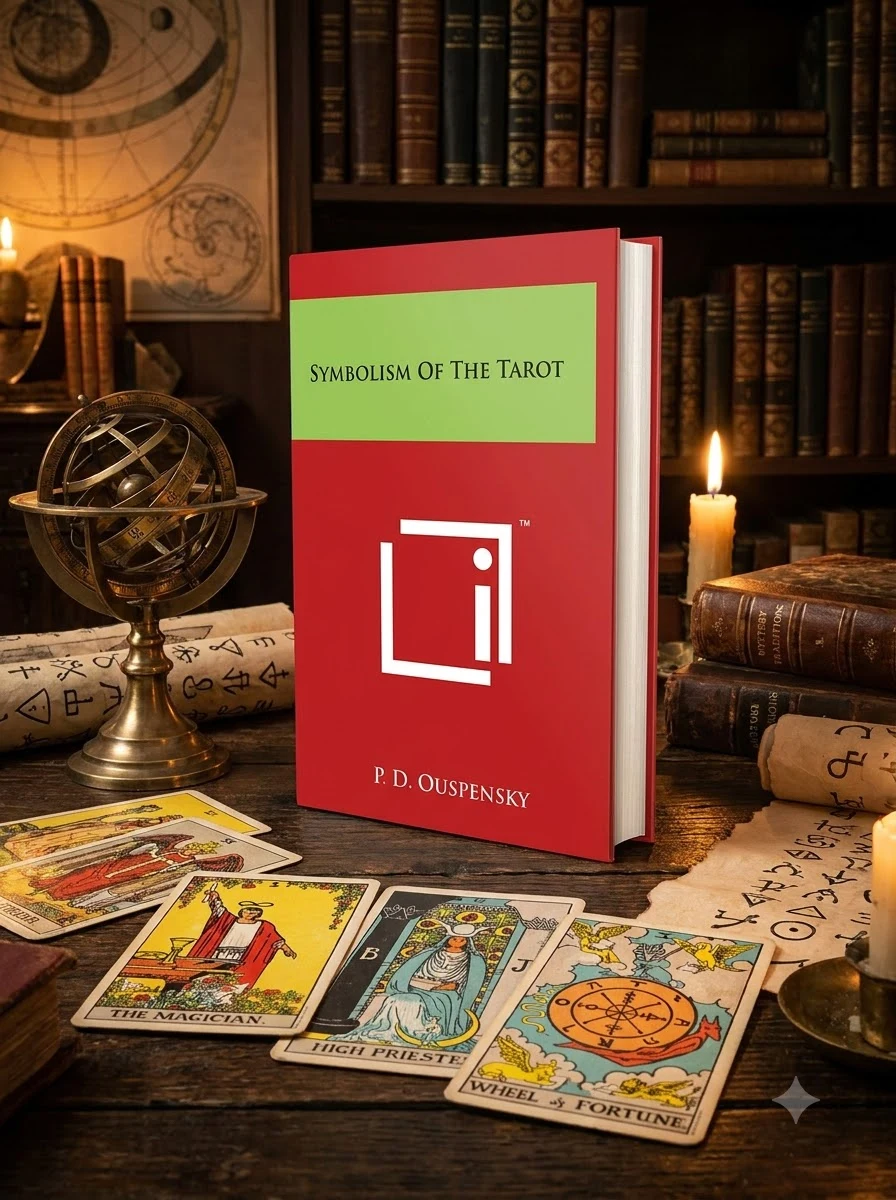
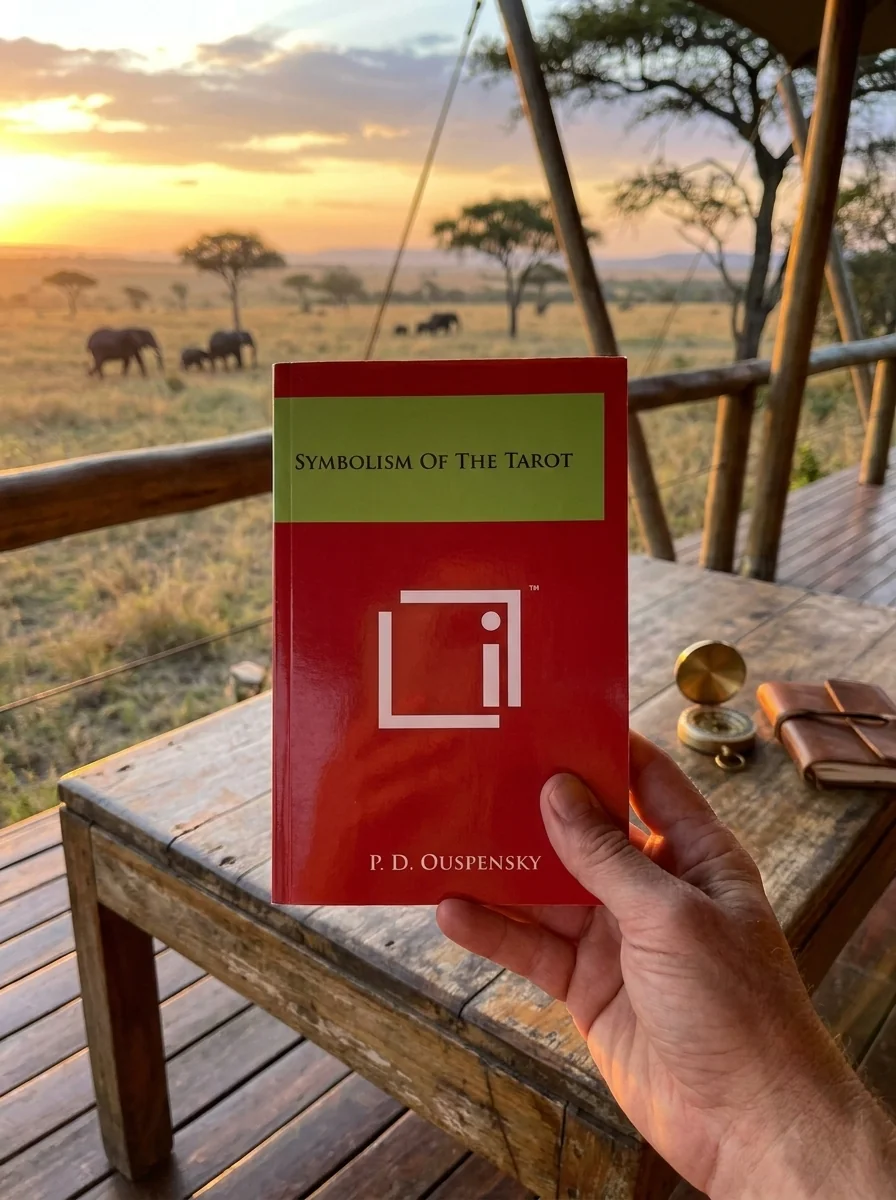
Symbolism Of The Tarot
✍️ Ouspensky, P DP. D. Ouspensky's "Symbolism of the Tarot" invites readers to journey into the profound esoteric underpinnings of this ancient system. Far from a practical guide to divination, this seminal work meticulously unpacks the cards' intricate symbolic language, tracing their connections to venerable mystery traditions and broader spiritual philosophies. Ouspensky illuminates how the Tarot serves as a condensed representation of universal laws and human spiritual evolution, offering a unique intellectual framework for understanding its enduring power.


📝 Description: Symbolism Of The Tarot
💎 Expert review
📖 Why choose it
Why this book is worth reading
Readers seeking a profound intellectual framework for understanding the Tarot’s enduring power will find immense value in this text. It is ideal for those who wish to move beyond superficial fortune-telling and delve into the mysterious, philosophical depths of the cards. Ouspensky offers a unique journey into universal laws and human spiritual evolution, making it perfect for scholars of esoteric traditions. If you are fascinated by how ancient systems encode profound truths about existence, this book provides the rigorous symbolic analysis necessary to appreciate the Tarot as a condensed representation of wisdom rather than just a divination tool.
⭐ Reader reviews
Reader rating
This seminal work meticulously unpacks the intricate symbolic language of the Tarot, tracing connections to venerable mystery traditions. It is an essential text for those interested in the philosophical underpinnings of esotericism and the spiritual evolution encoded within the cards. However, it is candidly not suited for casual readers seeking practical divination tips or simple, easy-to-digest fortune-telling guides. The dense intellectual framework may alienate those looking for immediate mystical experiences rather than academic understanding. It stands as a rigorous exploration of universal laws, demanding patience and a serious interest in the historical and philosophical contexts that give the Tarot its profound cultural weight.
❓ Frequently asked questions
📖 Who should read this
If you seek to understand the Tarot not as a parlor trick, but as a profound philosophical text and a key to ancient esoteric wisdom, this book is for you. Ideal for serious students of mysticism, symbolism, and those looking for intellectual depth in their spiritual studies.
🎯 Key themes and symbolism
Tarot's Esoteric Roots
Ouspensky meticulously explores the hidden origins of the Tarot, positing its connection not to mere games, but to ancient schools of wisdom and mystery traditions. He suggests the cards are a preserved fragment of a universal symbolic language, designed to convey profound spiritual truths that transcend specific cultures or eras, linking them to a vast, forgotten knowledge.
Symbolic Philosophy Unveiled
This work delves deeply into the philosophical meaning embedded within each Tarot card. Rather than focusing on simple interpretations, Ouspensky treats the Tarot as a complete philosophical system, where every symbol, number, and image contributes to a grander narrative of consciousness, cosmic principles, and the human journey toward self-realization. It's an intellectual dissection of its symbolic architecture.
Mysticism and Universal Laws
The book positions the Tarot as a mystical tool for understanding universal laws and the structure of reality itself. Ouspensky argues that the cards represent a diagram of cosmic forces and psychological archetypes. Through this lens, the Tarot becomes a pathway not just to predicting events, but to apprehending the deeper, unseen mechanisms that govern existence and spiritual development.
📜 Historical context
📚 Glossary
- Esotericism
- Mysticism
- Archetype
📔 Questions to reflect on
- Consider a major arcana card you know well. How does Ouspensky's idea of the Tarot as a 'philosophical system' deepen your understanding of its symbolism beyond conventional interpretations?
- Ouspensky suggests the Tarot connects to 'ancient mystery traditions.' Reflect on how a symbolic system like the Tarot could preserve and transmit esoteric knowledge across centuries, even without explicit texts.
- How might approaching the Tarot through a lens of 'universal laws' and 'mysticism' change your personal relationship with the cards or your broader spiritual outlook?