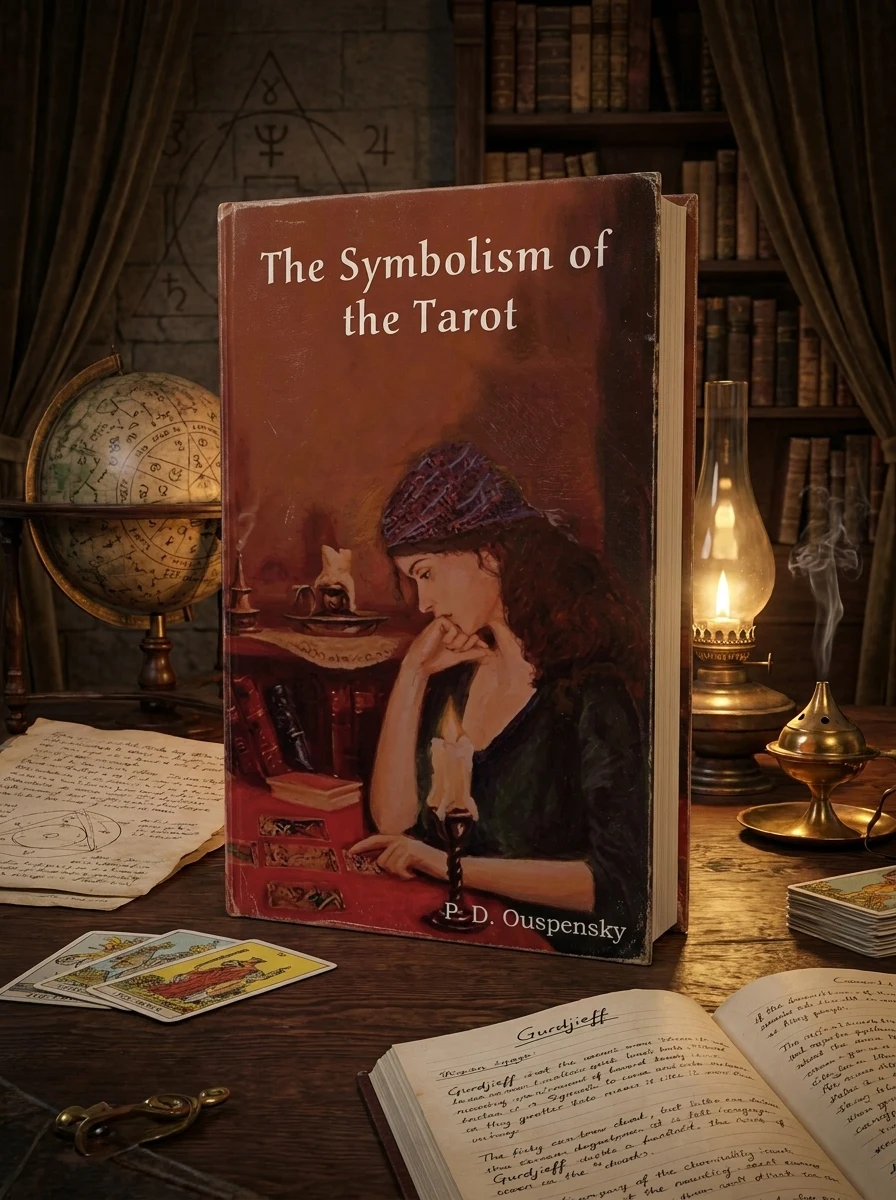
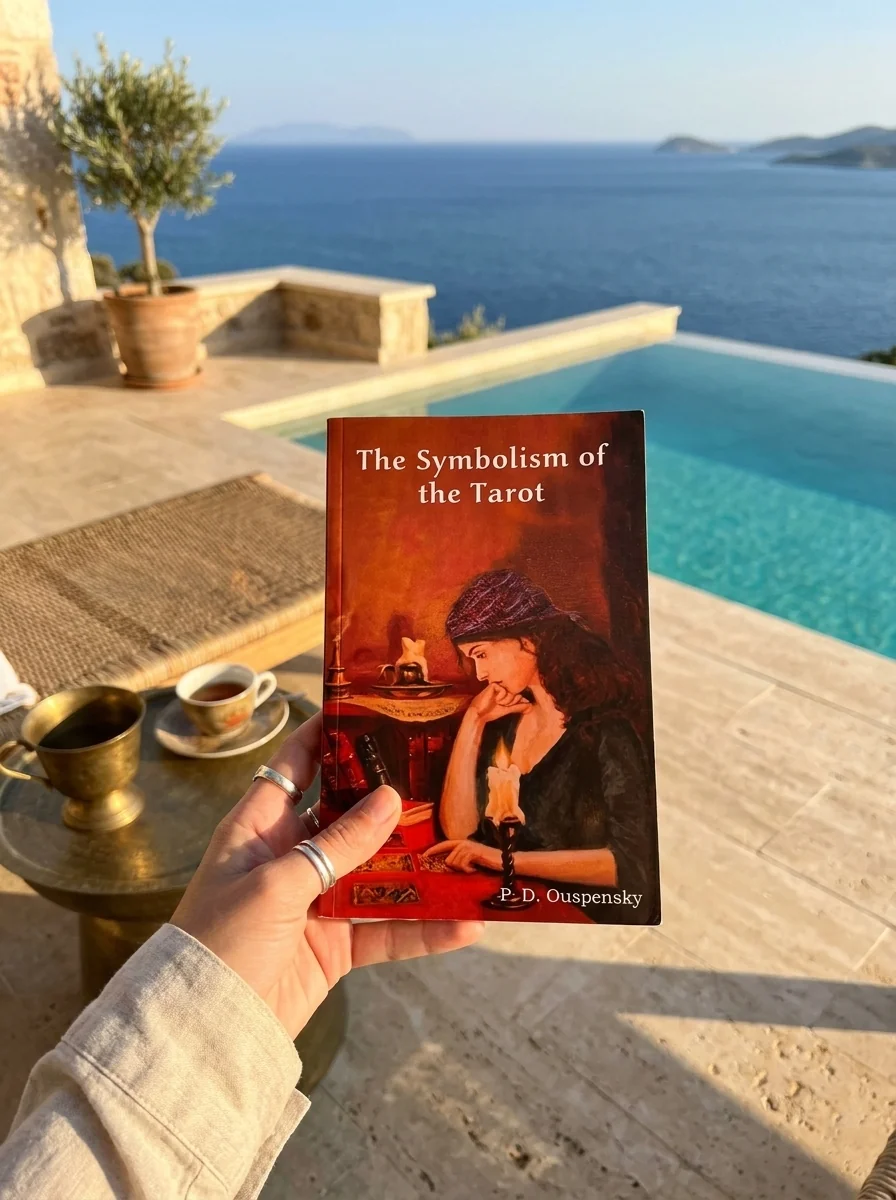
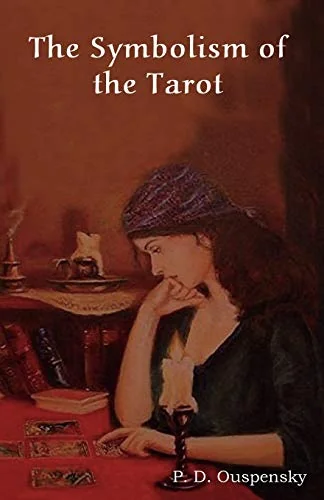
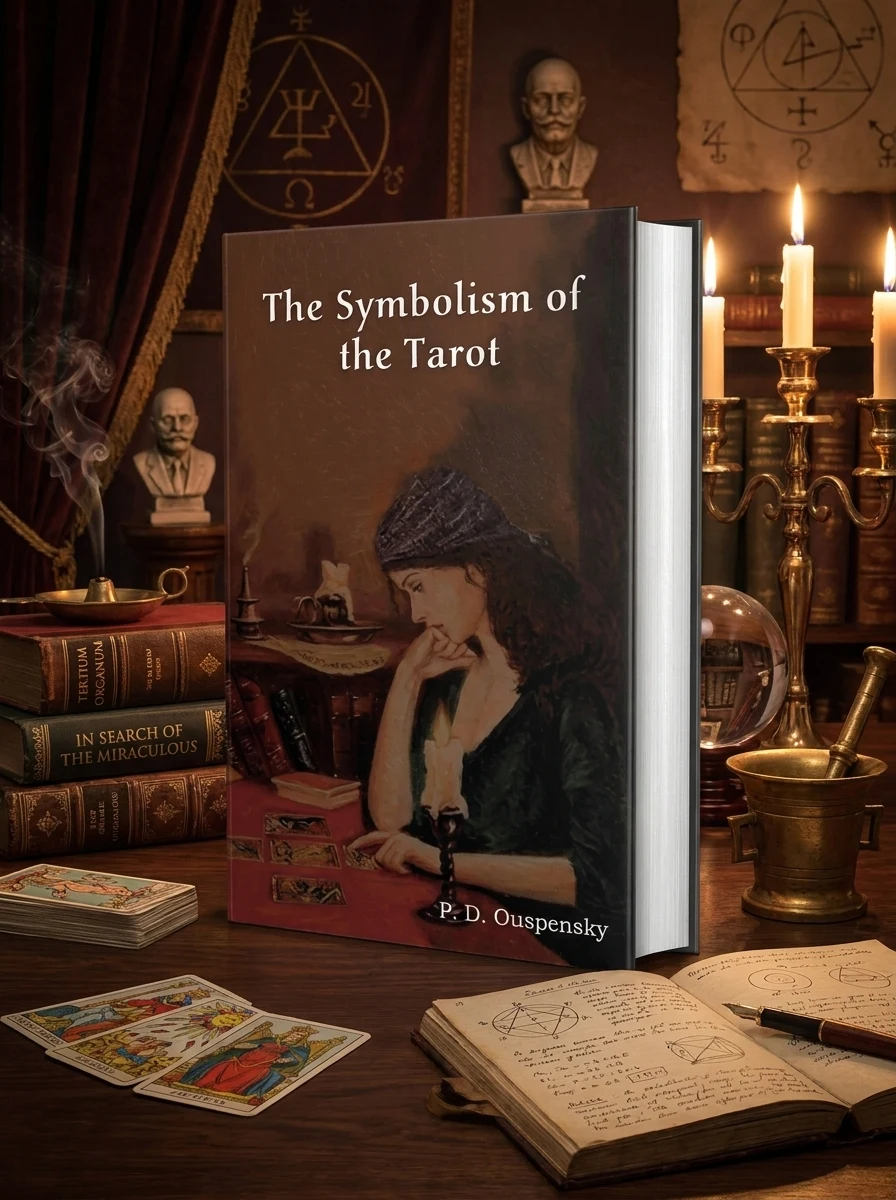
The Symbolism of the Tarot
✍️ Ouspensky, P DOuspensky explains tarot symbolism through his philosophical lens in this brief 1947 work.
This volume presents Peter D. Ouspensky’s interpretation of tarot imagery as a system of spiritual knowledge. He connects the cards to Eastern philosophy and mystical traditions. The text is not a guide for casual divination but a serious examination of symbolic meaning. It reflects his earlier interest in Tertium Organum and his later association with Gurdjieff. The work is short, containing only sixty-two pages. It does not cover the history of tarot decks or offer practical reading advice. Instead, it focuses on the metaphysical implications of each symbol. Readers should expect a dense, philosophical approach rather than an accessible introduction to card reading.
Ouspensky popularized occult ideas in the early twentieth century through works like Tertium Organum and In Search of the Miraculous. This book reflects his posthumous 1949 engagement with Gurdjieff’s teachings, bridging Russian esoteric thought with broader mystical interests.


📝 Description: The Symbolism of the Tarot
💎 Expert review
📖 Why choose it
Why this book is worth reading
Readers seeking a profound intellectual journey into the soul of the Tarot will find immense value in this seminal work. It is ideal for those who wish to transcend typical divination and explore the hidden philosophical wisdom woven into the fabric of the cards. Ouspensky’s unique insights offer a key to understanding deeper esoteric principles, making it essential for anyone interested in consciousness, reality, and the psychological underpinnings of ancient symbols. If you view the Tarot as a map for spiritual growth rather than a predictive tool, this book provides the sophisticated framework necessary for that exploration.
⭐ Reader reviews
Reader rating
Ouspensky delivers a rigorous philosophical investigation that serves as a stark alternative to superficial card-reading guides. While it successfully frames the Major Arcana as a key to universal truths, it demands significant intellectual engagement from its audience. This text is decidedly NOT suitable for casual hobbyists seeking quick divination tips or those uninterested in abstract metaphysical theory. It may frustrate readers looking for practical instruction on spreads or interpretations. However, for the serious student of esotericism, it offers a rare, dense, and rewarding synthesis of ancient symbolism and modern psychological insight, standing as a testament to the Tarot's depth.
❓ Frequently asked questions
📖 Who should read this
This is essential for serious students of esoteric philosophy, Gurdjieffian thought, and those seeking to move beyond superficial Tarot interpretations. If you desire a rigorous, intellectual exploration of the Tarot’s hidden dimensions rather than a simple fortune-telling guide, this book awaits you.
🎯 Key themes and symbolism
Esoteric Foundations of Tarot
Ouspensky meticulously uncovers the veiled wisdom embedded within the Tarot's imagery. He presents the cards not as random pictures, but as a coherent system of profound esoteric knowledge, designed to communicate universal laws and spiritual archetypes to the initiated seeker.
Philosophical Unveiling of Arcana
This volume offers a rigorous philosophical lens through which to examine the Tarot. Ouspensky connects the Major Arcana to broader metaphysical concepts, inviting readers to perceive the cards as a sequential narrative of existence, consciousness, and the individual's path towards self-realization.
Symbolic Consciousness & Self-Discovery
The work explores how the Tarot's rich symbolism can awaken deeper levels of understanding within the reader. By engaging with these ancient archetypes, Ouspensky suggests, one can begin to decode the hidden patterns of the universe and, in turn, gain profound insights into one's own inner world.
📜 Historical context
📚 Glossary
- Major Arcana
- Esotericism
- Symbolism
📔 Questions to reflect on
- Consider a Major Arcana card you are drawn to. What universal principle might it represent beyond its common divinatory meaning?
- How might viewing the Tarot as a philosophical system, rather than a predictive tool, change your approach to its study?
- Reflect on a personal challenge or insight. Which Major Arcana card best symbolizes this experience, and what deeper lesson does it convey?
📖 Read on the blog
✍️ More books by this author Ouspensky, P D
All books by this author →


🏛 Books from this publisher Bibliotech Press
All books from this publisher →
You might also like
See more →


Have a question about this item?
Ask about the edition, condition, delivery or anything else — we reply by email or phone, usually within a day.
