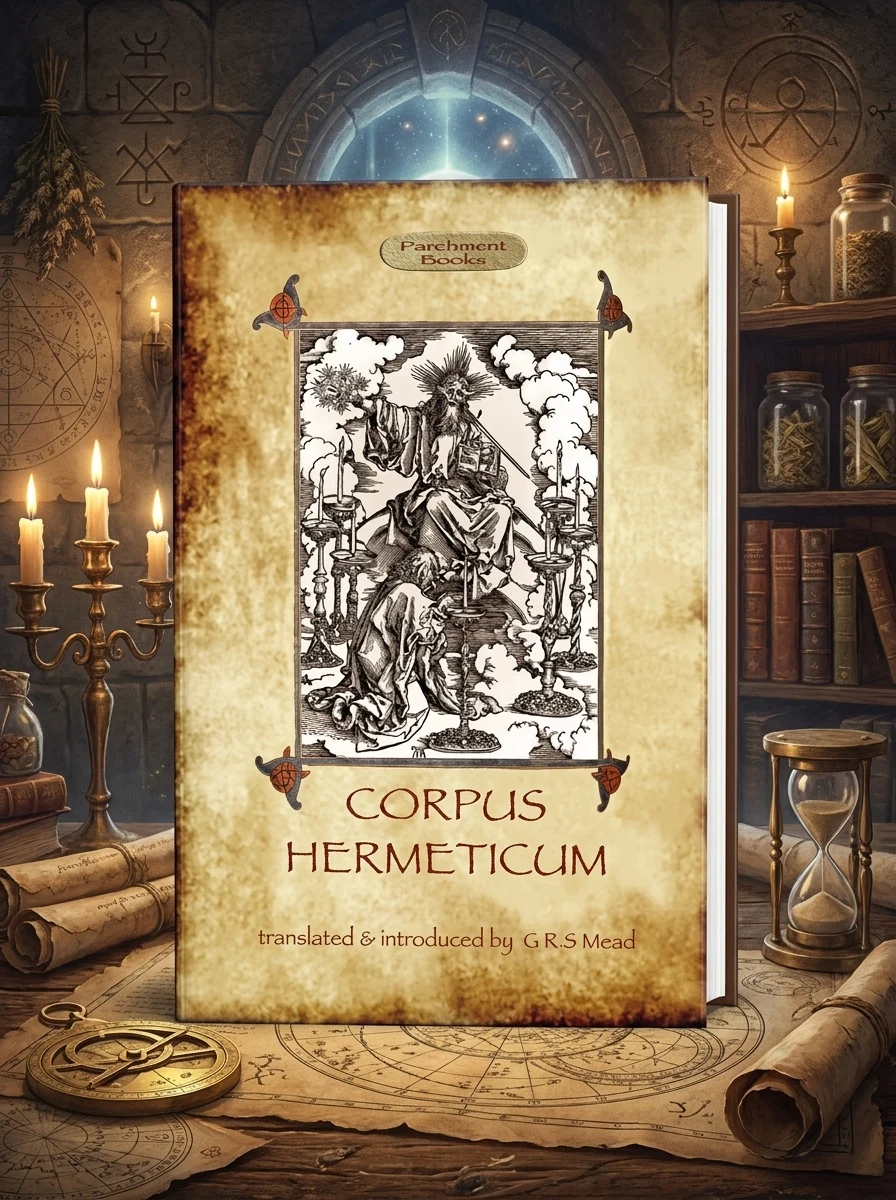
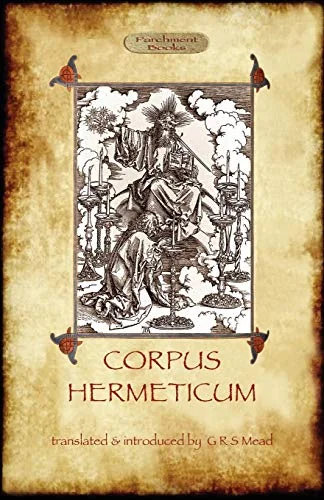
The Corpus Hermeticum
Surviving the systematic destruction of the early Catholic Church, this collection of second or third century treatises represents a foundation document for all students of the Hermetic tradition. Presented in the form of dialogues between Hermes and a human interlocutor, the text transmits sacred knowledge regarding the origins, nature, and moral properties of the divine. It establishes the foundational principle of as above, so below, as below, so above, showing how these spiritual dynamics apply directly to humanity and all other spiritual beings across the cosmos.


📝 Description: The Corpus Hermeticum
💎 Expert review
📖 Why choose it
Why this book is worth reading
Seekers drawn to the foundational currents of Western esotericism will find immense value in this seminal collection. It offers profound insights into the divine order and humanity's specific place within it, presented through intimate dialogues between Hermes Trismegistus and his students. Those interested in uncovering forbidden wisdom from antiquity, which was miraculously preserved despite centuries of suppression, will appreciate its guidance on transcending the material realm. The text articulates core Hermetic principles essential for connecting with higher consciousness, making it an indispensable resource for understanding the soul's journey and the fundamental nature of the cosmos.
⭐ Reader reviews
Reader rating
This volume is a vital artifact for serious students of occult history and philosophy, offering a direct line to the dialogues that shaped esoteric thought. However, it does not suit casual readers or those seeking practical, step-by-step magical rituals. The abstract nature of its exploration into the soul's journey and cosmic order may feel inaccessible to readers who prefer narrative-driven plots or modern scientific explanations. It demands patience and a willingness to engage with dense metaphysical concepts. While essential for understanding the 'as above, so below' principle, it is not a light read but a rigorous intellectual and spiritual exercise for those ready to confront the nature of higher consciousness.
❓ Frequently asked questions
📖 Who should read this
If you are drawn to the mystical traditions of antiquity, seeking foundational texts that illuminate the Western esoteric path, or wish to understand the spiritual roots of alchemy and magic, then these profound dialogues will serve as an indispensable guide and source of inspiration.
🎯 Key themes and symbolism
Divine Knowledge & Origins
These dialogues delve into the very genesis and inherent qualities of the divine. They posit a universal consciousness, exploring its manifestations across creation and offering a glimpse into the ultimate source of existence, laying the groundwork for understanding the spiritual architecture of the cosmos.
Humanity's Spiritual Ascent
Central to the Corpus is the belief in humanity's potential for spiritual elevation. It outlines a path for individuals to transcend the limitations of the physical world through gnosis and inner transformation, ultimately achieving a state of divine union or illumination, rising beyond base materiality.
Cosmic Correspondence
This foundational Hermetic principle is thoroughly explored, illustrating the interconnectedness between all planes of existence. The texts demonstrate how understanding the macrocosm (divine, cosmic) provides insight into the microcosm (human, earthly), and vice-versa, revealing universal patterns and correspondences.
📜 Historical context
📚 Glossary
- Hermes Trismegistus
- Gnosis
- As Above, So Below
📔 Questions to reflect on
- How might understanding the principle of "as above, so below" change your perception of your daily experiences and challenges?
- The texts speak of humanity's potential for divine ascent. What practical steps could you take in your own life to cultivate a deeper spiritual connection?
- Reflect on the idea of the mind as a "portion of God." How does this perspective influence your understanding of consciousness and personal agency?