US shipping Secure card payment Occult and esoteric books

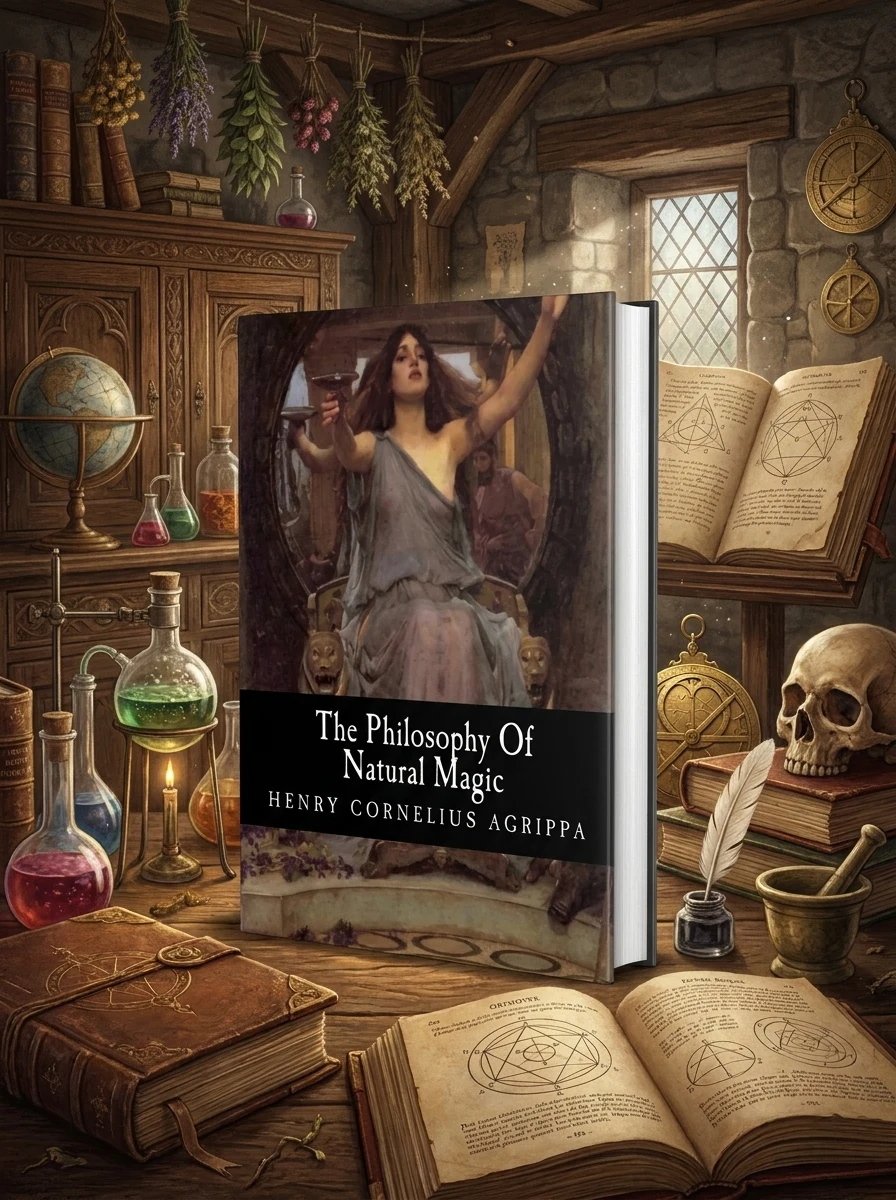
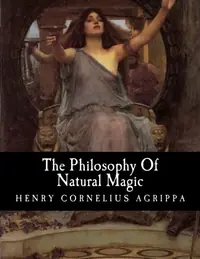
The Philosophy Of Natural Magic

Agrippa, Henry Cornelius
Reader rating
4.8
(1 reviews) 156 sold
In stock

Stock reported in the catalog; fulfillment is confirmed with your request.

📚 ABOUT THE BOOK

Uncover the hidden forces of the cosmos through a Renaissance master's eyes.

Step into the profound mind of Heinrich Cornelius Agrippa, a pivotal figure of Renaissance esotericism, as he meticulously compiles the vast tapestry of occult and magical thought. This foundational work, often considered a comprehensive summation, explores the interconnectedness of the natural world, celestial influences, and the human spirit. Agrippa’s magnum opus serves as a guide to understanding the unseen principles governing the universe, offering a systematic framework for practitioners and scholars alike who seek to delve into the mysteries of traditional magic, from planetary correspondences to ritual practice.

Key themes
Occult Philosophy Synthesis Natural Magic Principles Renaissance Esoteric Thought
Historical context

This text stands as a foundational pillar of Renaissance esotericism, synthesizing the era's complex blend of natural philosophy and occult thought. It reflects the intellectual climate where the boundaries between science, magic, and spirituality were deeply intertwined.

Difficulty
●●● Demanding
Fans will love it
Paracelsus · John Dee · The Hermetic Corpus · Pico della Mirandola
🕯️ Occult Philosophy
🏛 Createspace Independent Publishing Platform 📅 2011 📖 200 pages 📔 Paperback 📐 Paperback ISBN: 9781463525842
Fun fact
Agrippa's 'The Philosophy of Natural Magic' stands as a towering achievement in the history of Western esotericism. It masterfully synthesizes a vast array of ancient and Renaissance thought, providing an unparalleled intellectual foundation for understanding magical philosophy. While it may disappoint those seeking a simple 'how-to' guide, its depth and breadth offer profound insights into the mind of a pivotal figure and the intricate worldview of Renaissance occultism. Essential reading for any serious student of the arcane.

📝 Description: The Philosophy Of Natural Magic

Heinrich Cornelius Agrippa von Nettesheim (September 14, 1486 - February 18, 1535) was a German magician, occult writer, theologian, astrologer, and alchemist. Agrippa is perhaps best known for his books. An incomplete list: * De incertitudine et vanitate scientiarum atque artium declamatio invectiva (Declamation Attacking the Uncertainty and Vanity of the Sciences and the Arts, 1526; printed in Cologne 1527), a skeptical satire of the sad state of science. This book, a significant production of the revival of Pyrrhonic skepticism in its fideist mode, was to have a significant impact on such thinkers and writers as Montaigne, Rene Descartes, and Goethe.[citation needed] * Declamatio de nobilitate et praecellentia foeminei sexus (Declamation on the Nobility and Preeminence of the Female Sex, 1529), a book pronouncing the theological and moral superiority of women. Edition with English translation, London 1670. * De occulta philosophia libri tres (Three Books Concerning Occult Philosophy, Book 1 printed Paris 1531; Books 1-3 in Cologne 1533). This summa of occult and magical thought, Agrippa's most important work in a number of respects, sought a solution to the skepticism proposed in De vanitate. In short, Agrippa argued for a synthetic vision of magic whereby the natural world combined with the celestial and the divine through Neoplatonic participation, such that ordinarily licit natural magic was in fact validated by a kind of demonic magic sourced ultimately from God. By this means Agrippa proposed a magic that could resolve all epistemological problems raised by skepticism in a total validation of Christian faith. One example of the text, not especially indicative of its broader contents, is Agrippa's analysis herbal treatments for malaria in numeric terms: "Rabanus also, a famous Doctor, composed an excellent book of the vertues of numbers: But now how great vertues numbers have in nature, is manifest in the hearb which is called Cinquefoil, i.e. five leaved Grass; for this resists poysons by vertue of the number of five; also drives away divells, conduceth to expiation; and one leafe of it taken twice in a day in wine, cures the Feaver of one day: three the tertian Feaver: foure the quartane. In like manner four grains of the seed of Turnisole being drunk, cures the quartane, but three the tertian. In like manner Vervin is said to cure Feavers, being drunk in wine, if in tertians it be cut from the third joynt, in quartans from the fourth."

💎 Expert review

💎
Esoterica Books editorial team
Occult literature desk
Agrippa’s magnum opus provides a comprehensive summation of occult thought that remains unparalleled in its scope. It serves as an indispensable reference for anyone serious about studying traditional magic, offering a clear structure for understanding cosmic forces. However, this text is not suited for casual readers seeking quick entertainment or simple self-help advice. Its dense, academic nature may alienate those expecting straightforward instructions without historical context. Furthermore, modern skeptics might find its metaphysical assertions difficult to accept. It demands patience and a genuine interest in esoteric history. While it is a monumental achievement in cataloging magical theory, it requires a specific type of intellectual engagement that only dedicated students of the occult will truly appreciate.
✓ EDITOR'S REVIEW

📖 Why choose it

📖

Why this book is worth reading

This volume is an essential treasure for scholars and practitioners dedicated to understanding the historical roots of Western esotericism. Readers who seek a systematic framework for traditional magic will find immense value in Agrippa’s meticulous compilation of planetary correspondences and ritual practices. It offers a unique window into the Renaissance mindset, revealing how thinkers of that period viewed the interconnectedness of the human spirit, celestial influences, and the natural world. By exploring these unseen principles governing the universe, devotees of occult philosophy can ground their own spiritual inquiries in a rigorous, historical context. This work is not merely a collection of spells but a profound intellectual guide for those eager to unravel the mysteries of the cosmos through the eyes of a pivotal master.

⭐ Reader reviews

The starting rating comes from the team Esoterica Books —
⭐ Esoterica editorial review Editorial rating 4.8/5
★★★★
For those captivated by the history of magic, Hermeticism, and the philosophical underpinnings of occult practice, this book is indispensable. Scholars of Renaissance thought and anyone seeking a comprehensive, foundational text on the theoretical aspects of traditional magic will find it immensely…

Reader rating

4.8
Based on 1 reviews
5
0
4
1
3
0
2
0
1
0
E
Esoterica Books editorial team

Agrippa’s magnum opus provides a comprehensive summation of occult thought that remains unparalleled in its scope. It serves as an indispensable reference for anyone serious about studying traditional magic, offering a clear structure for understanding cosmic forces. However, this text is not suited for casual readers seeking quick entertainment or simple self-help advice. Its dense, academic nature may alienate those expecting straightforward instructions without historical context. Furthermore, modern skeptics might find its metaphysical assertions difficult to accept. It demands patience and a genuine interest in esoteric history. While it is a monumental achievement in cataloging magical theory, it requires a specific type of intellectual engagement that only dedicated students of the occult will truly appreciate.

❓ Frequently asked questions

Agrippa's 'natural magic' refers to the art of understanding and utilizing the hidden sympathies and antipathies between natural objects, drawing upon the inherent virtues of plants, minerals, and celestial influences without invoking spirits.
While it lays the theoretical groundwork for magical practice, Agrippa's work is primarily a philosophical treatise. It explains the principles behind magic rather than providing step-by-step instructions for specific spells, offering a deep intellectual foundation.

📖 Who should read this

For those captivated by the history of magic, Hermeticism, and the philosophical underpinnings of occult practice, this book is indispensable. Scholars of Renaissance thought and anyone seeking a comprehensive, foundational text on the theoretical aspects of traditional magic will find it immensely rewarding.

🎯 Key themes and symbolism

Occult Philosophy Synthesis

Agrippa endeavors to systematize the disparate threads of ancient and contemporary magical knowledge into a coherent philosophical framework. He seeks to reveal the underlying unity connecting various magical traditions, demonstrating how seemingly disparate practices share common cosmological principles and energetic foundations, making complex ideas accessible.

Natural Magic Principles

This work delves into the concept of 'natural magic,' exploring how practitioners can harness the inherent virtues and sympathies found within the natural world. It discusses the hidden powers of herbs, stones, and celestial bodies, providing insights into how these elements can be effectively employed for various purposes, from healing to divination.

Renaissance Esoteric Thought

The book stands as a testament to the intellectual ferment of the Renaissance, where scholars sought to reconcile ancient wisdom with emerging scientific inquiry. Agrippa bridges Neoplatonism, Kabbalah, and Hermeticism, reflecting the era's ambition to rediscover and reinterpret the esoteric traditions of antiquity, shaping subsequent occult currents.

💬 Quotes from the book

“For there is no part of the world so contemptible, which may not be made a fit vessel for some divine influence.”

“The human mind, being a particle of the divine, possesses the power to draw down celestial virtues and operate wonders.”

📜 Historical context

Published in the early 16th century, Agrippa's 'Philosophy of Natural Magic' emerged during a period of intense intellectual curiosity and religious upheaval. It synthesized centuries of esoteric knowledge, from ancient Greek philosophy to medieval Kabbalah, providing a systematic approach to magic that profoundly influenced later occultists and philosophers, solidifying his place as a seminal figure in Western esotericism.

📚 Glossary

Occultism
Hermeticism
Neoplatonism

📔 Questions to reflect on

  1. How do you perceive the interconnectedness of natural phenomena and human experience in your own life?
  2. Reflect on how modern scientific understanding might intersect with or diverge from Agrippa's 'natural magic' principles.
  3. Consider the ethical implications of seeking to 'draw down celestial virtues' or manipulate hidden forces, as discussed in occult philosophy.

🏛 Books from this publisher Createspace Independent Publishing Platform

All books from this publisher →

You might also like

See more →