
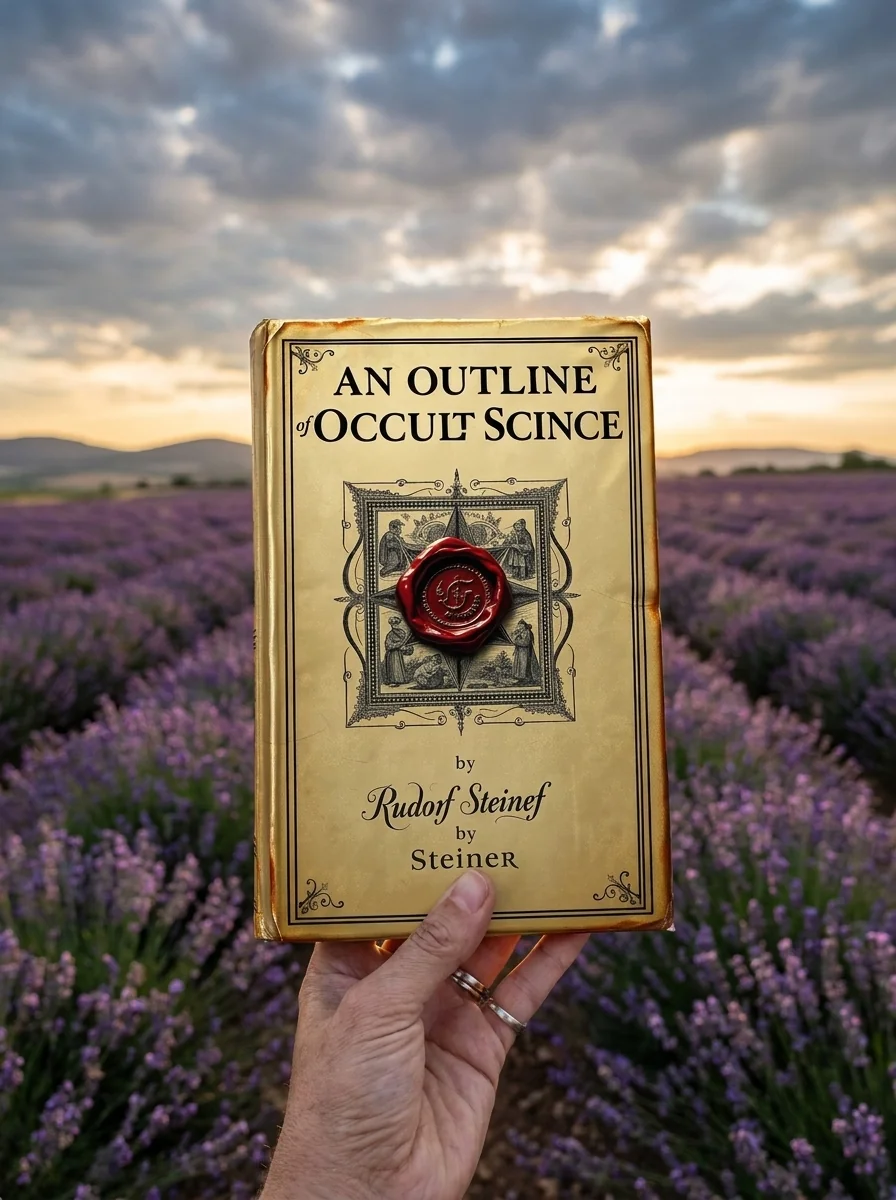

An Outline of Occult Science
✍️ Steiner, RudolfAn authorized translation of Rudolf Steiner's work introducing scientific spiritual research and superphysical knowledge.
This edition brings together Rudolf Steiner's core defense of non-physical inquiry, translated directly from the fourth edition of his text. Holding a Ph.D., Steiner examines why standard scientific research fails to recognize superphysical reality. He responds to severe criticisms regarding physical concepts such as heat, offering an alternative framework for spiritual investigation. Rather than accepting the boundaries set by exact thinkers, the text aims to show how human intelligence can validly cross into superphysical realms.
The work sits at the intersection of early spiritual research and modern physical science, written by Steiner to address exact thinkers who declared superphysical investigation impossible.


📝 Description: An Outline of Occult Science
💎 Expert review
📖 Why choose it
Why this book is worth reading
Readers seeking a rigorous, systematic approach to spiritual development will find immense value in this text. It appeals to those who feel constrained by purely materialist worldviews and desire a structured path to direct spiritual perception. Individuals interested in the evolution of consciousness and cosmic forces will appreciate Steiner's audacious vision. This book is ideal for seekers willing to engage with profound esoteric truths without relying on dogma. It offers a challenging yet rewarding exploration for anyone ready to transcend ordinary perception and understand humanity's place within a grander spiritual scheme, providing clarity where others offer only mystery.
⭐ Reader reviews
Reader rating
Steiner’s text demands serious intellectual engagement, making it unsuitable for casual readers or those seeking quick mystical fixes. It may frustrate individuals who prefer intuitive or emotional approaches to spirituality over systematic analysis. Those uninterested in the intersection of empirical science and esoteric wisdom might find the tone overly academic or dense. The book is not for skeptics who dismiss spiritual perception entirely, nor for those who wish to avoid rigorous mental discipline. However, for dedicated students of occult philosophy, it remains an essential, foundational resource that bridges the gap between rational thought and profound inner experience with remarkable precision.
❓ Frequently asked questions
📖 Who should read this
If you're ready to question conventional wisdom and explore profound spiritual truths through a systematic lens, this book is for you. Seekers of rigorous esoteric knowledge, students of Anthroposophy, and those open to a radical reinterpretation of science will find this an indispensable guide.
🎯 Key themes and symbolism
Uniting Science and Spirit
Steiner boldly attempts to construct a 'spiritual science' that parallels and expands upon conventional empirical research. He proposes methods for investigating non-physical realms with a rigor akin to scientific inquiry, suggesting that true understanding requires integrating both material observation and direct spiritual perception.
Cosmic & Human Evolution
The book delves into the expansive sweep of cosmic and human development, charting the progression of consciousness through various stages. Steiner elucidates how spiritual forces have shaped our past and continue to guide our future, presenting a dynamic view of existence far beyond mere biological or historical narratives.
Cultivating Inner Vision
Steiner outlines the path to developing higher faculties of perception, enabling individuals to directly apprehend spiritual realities. He describes the disciplined training required to access hidden knowledge, offering practical insights into meditation and inner development as tools for expanding consciousness beyond sensory limitations.
📜 Historical context
📚 Glossary
- Anthroposophy
- Supersensible
- Akashic Record
📔 Questions to reflect on
- How might a 'spiritual science' differ fundamentally from conventional empirical science in its methods and aims?
- Consider a phenomenon conventionally explained by science. How might Steiner's 'occult science' offer an alternative or deeper interpretation?
- What personal disciplines or inner work might be necessary to cultivate the 'supersensible perception' Steiner discusses?
📖 Read on the blog
✍️ More books by this author Steiner, Rudolf
All books by this author →






🏛 Books from this publisher Createspace Independent Publishing Platform
All books from this publisher →






You might also like
See more →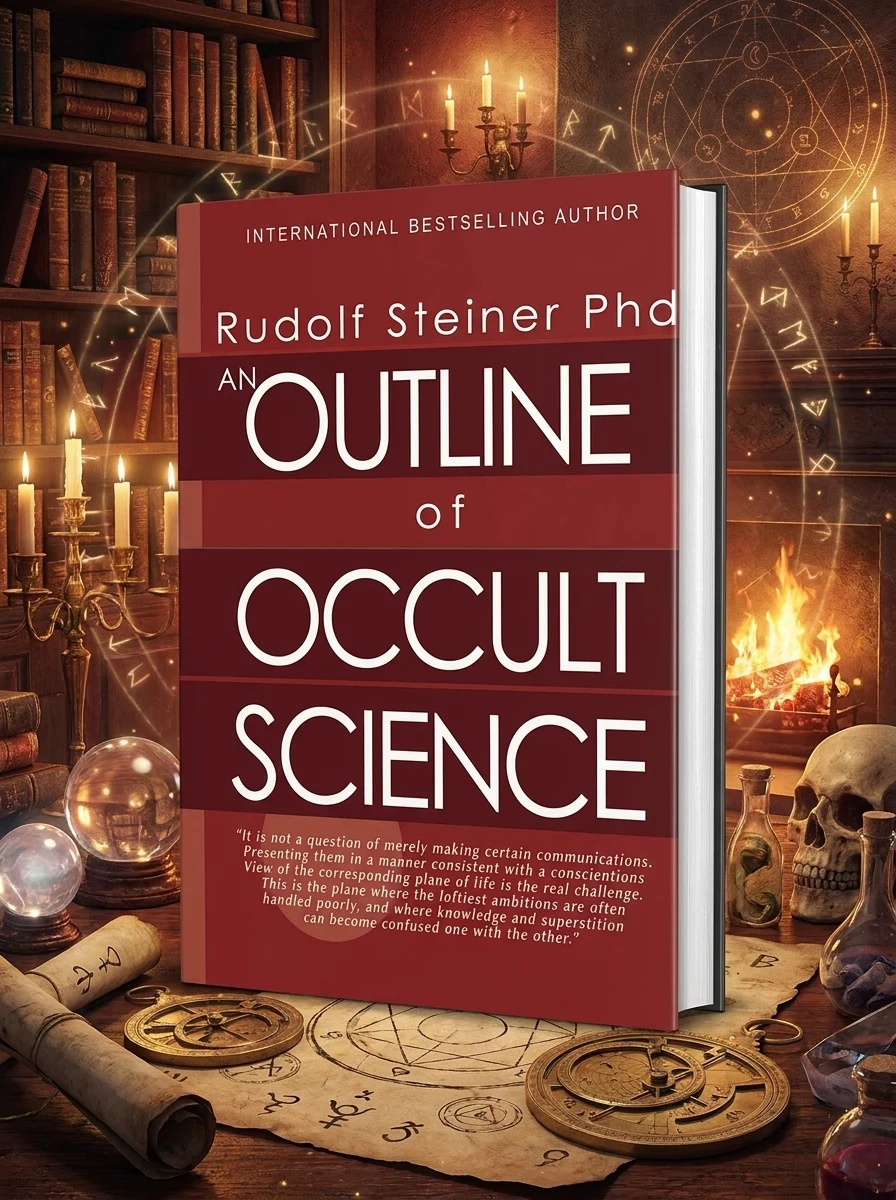







Have a question about this item?
Ask about the edition, condition, delivery or anything else — we reply by email or phone, usually within a day.
A teacher featured in this book: Rudolf Steiner
