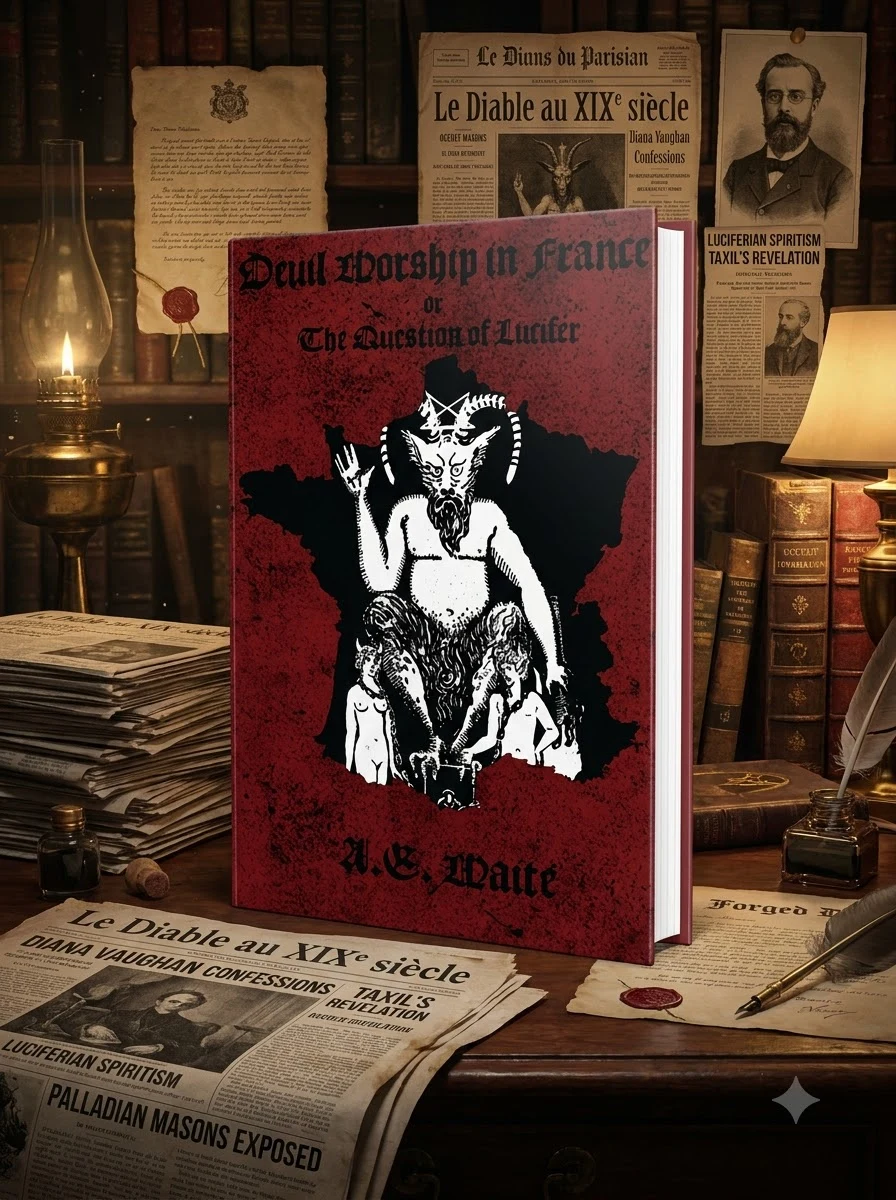
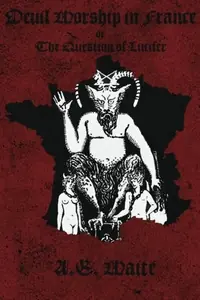
Devil Worship in France: The Question of Lucifer
Stock reported in the catalog; fulfillment is confirmed with your request.
Unmasking the devilish deceptions of a sensational fin-de-siècle occult hoax.
This seminal work by Arthur Edward Waite dissects the infamous Leo Taxil hoax, a grand deception that gripped 19th-century France. Rather than a guide to forbidden rites, Waite’s book serves as a sharp examination of how Taxil fabricated a secret society, the "Palladian Masons," to propagate lurid tales of "Luciferian Spiritism." It meticulously unravels the sensationalism and public hysteria Taxil engineered, which unfairly targeted genuine occult and Masonic groups. Waite's response is a masterclass in satirical debunking, revealing the absurdity of the claims and the societal anxieties they exploited.
This text emerges from the fin-de-siècle period of French occultism, serving as a critical rebuttal within the broader tradition of Masonic history and anti-demonic polemic. It anchors itself in the late 19th-century intellectual climate where sensationalist hoaxes frequently manipulated public perception of esoteric societies.


📝 Description: Devil Worship in France: The Question of Lucifer
💎 Expert review
📖 Why choose it
Why this book is worth reading
Readers fascinated by the intersection of occultism, history, and media manipulation will find this work indispensable. It offers a fascinating glimpse into how fabricated narratives can ignite public hysteria and distort the truth about genuine esoteric practices. By dissecting Leo Taxil’s elaborate deception, Waite provides a sharp tool for understanding societal anxieties of the era. This book is particularly valuable for those who wish to separate myth from reality in occult studies. It appeals to anyone interested in the mechanics of hoaxes and the defense of reputations against baseless accusations. Ultimately, it serves as an educational guide on how sensationalism exploits ignorance, making it a compelling read for critical thinkers seeking clarity amidst historical noise.
⭐ Reader reviews
Reader rating
While Waite’s satirical debunking is intellectually rigorous and historically significant, this book may not suit readers seeking practical occult instructions or atmospheric horror tales. It is a dry, analytical dissection of a hoax rather than an immersive narrative experience. Those expecting lurid descriptions of forbidden rites will be disappointed by the focus on logical unraveling and societal context. However, for students of history and media studies, it remains a vital resource. The text effectively highlights the absurdity of the claims without succumbing to them, offering a necessary corrective to earlier sensationalist literature that fueled public fear.
❓ Frequently asked questions
📖 Who should read this
If you're fascinated by the intersection of media, religion, and the occult, or seek to understand the origins of persistent 'memes' about secret societies, this work offers crucial insight. It's for those who appreciate a sharp, historical critique of spiritual sensationalism and the power of narrative to shape public perception.
🎯 Key themes and symbolism
Occult Hoaxes & Deception
Waite meticulously exposes the elaborate fraud perpetrated by Leo Taxil, illustrating how a journalist could invent a secret society and its 'diabolic acts' to manipulate public opinion. The book serves as a cautionary tale against uncritical acceptance of sensational claims within esoteric circles and beyond, highlighting the mechanics of such deceptions.
Public Hysteria & Panic
The text vividly portrays the widespread societal fear and moral outrage incited by Taxil's fabricated reports of "Luciferian Spiritism." Waite analyzes how these false narratives fueled an anti-occult backlash, causing prejudice against Freemasonry and other esoteric organizations. It's a study in how easily public sentiment can be swayed by fear-mongering.
Satirical Critique of Sensationalism
Waite's approach is distinctly satirical and farcical, employing wit to dismantle the preposterous claims of the Taxil hoax. He doesn't merely refute but ridicules the sensationalism, exposing the absurdity of the 'revelations' and their impact. This intellectual lampooning provides a unique lens through which to understand the era's spiritual controversies.
💬 Quotes from the book
“One cannot help but marvel at the sheer theatricality of the accusations, so utterly devoid of substantiation, yet so potent in their capacity to ignite public frenzy.”
“The supposed 'revelations' of infernal rites and diabolic pacts, when scrutinized, dissolve into a vapor of ludicrous fantasy, suitable only for the most credulous imagination.”
📜 Historical context
📚 Glossary
- Luciferian Spiritism
- Palladian Masons
- Occult Hysteria
📔 Questions to reflect on
- How do modern 'conspiracy theories' mirror the 'Palladian Masons' hoax in their construction, spread, and public impact?
- Consider Waite's use of satire and intellectual rigor: how effective is humor and scholarly critique in discrediting sensational claims compared to direct refutation?
- Reflect on the societal anxieties of the late 19th century that made the Taxil hoax so successful. What parallels can you draw to contemporary fears or moral panics?
🏛 Books from this publisher Createspace Independent Publishing Platform
All books from this publisher →


You might also like
See more →
 91
91