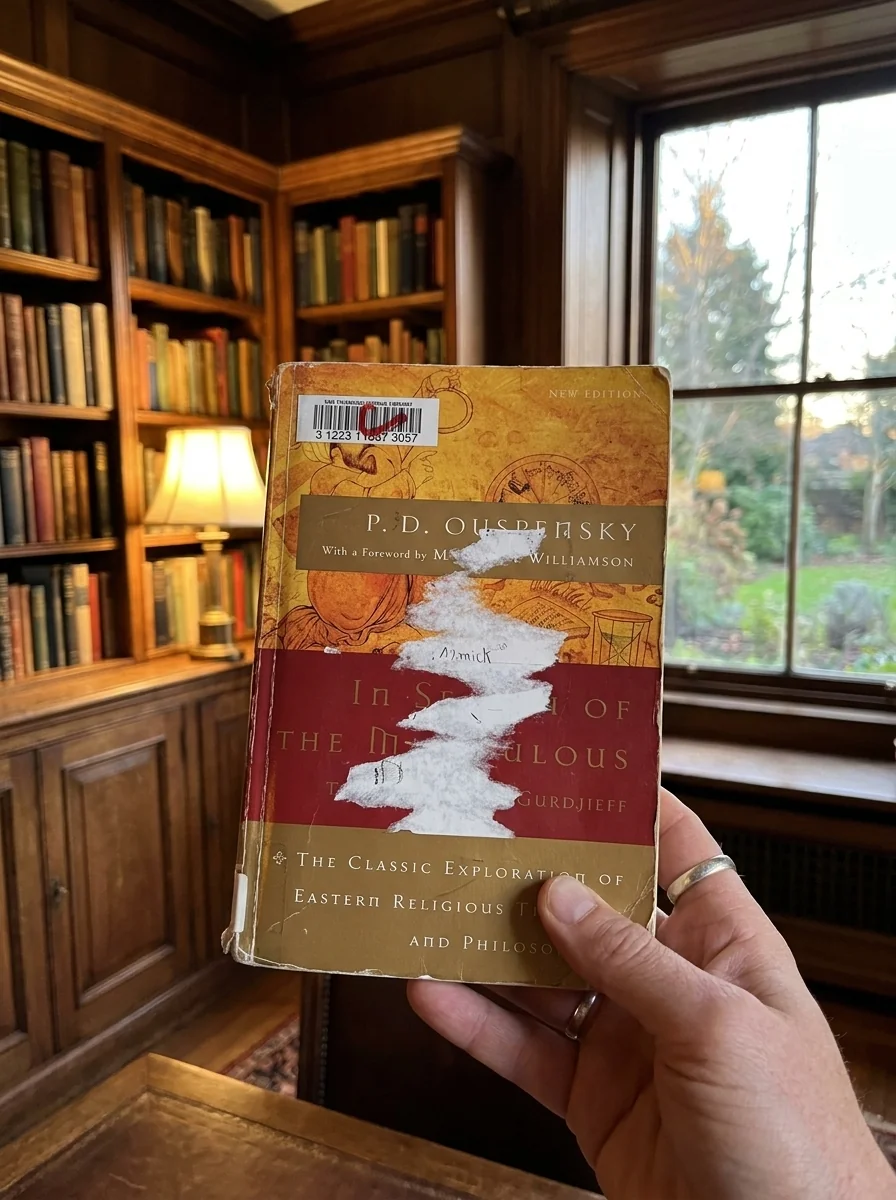
In Search of the Miraculous: The Definitive Exploration of G. I. Gurdjieff's Mystical Thought and Universal View (Revised)
✍️ Ouspensky, P DBorn in Moscow in 1878, mathematician and journalist P. D. Ouspensky became a prominent student of G. I. Gurdjieff before his death in 1947. This trade paperback volume from Harper Paperbacks presents Ouspensky's documentation of Gurdjieff's oral traditions, bringing esoteric Eastern thought to Western audiences. The work covers metaphysics, spiritualism, and modern history of philosophy while outlining the foundational principles of the Work. Featuring introductory material by Marianne Williamson, the volume places Ouspensky alongside his other writings such as The Fourth Dimension, Tertium Organum, and A New Model of the Universe.


Praise for this book
“The New York Times Book Review A very provocative book that can lead to a complete reassessment of what a reader takes to be his knowledge.”
📝 Description: In Search of the Miraculous: The Definitive Exploration of G. I. Gurdjieff's Mystical Thought and Universal View (Revised)
💎 Expert review
📖 Why choose it
Why this book is worth reading
You should read this if you are deeply committed to the arduous path of inner awakening and seek a rigorous, systematic approach to human development. Ouspensky offers an unparalleled window into Gurdjieff’s radical teachings on consciousness, providing essential context for anyone interested in the intersection of mathematics, journalism, and mystical practice. It is ideal for those eager to understand how ancient wisdom was adapted for Western audiences, offering a universal view that has profoundly influenced subsequent spiritual movements. If you value detailed accounts of esoteric systems and wish to explore the secrets of the 'Work' through the eyes of a faithful interpreter, this definitive exploration will illuminate your journey toward self-transformation with clarity and depth.
⭐ Reader reviews
Reader rating
This seminal work is an indispensable gateway for serious students of Gurdjieff’s system, meticulously chronicling his enigmatic teachings on consciousness. Ouspensky’s background as a mathematician lends a unique structural precision to the exposition of these radical ideas. However, it is not suited for casual readers seeking light spiritual inspiration or quick fixes. Those expecting conventional religious dogma or simple narratives will likely find its dense, philosophical nature inaccessible. The book demands patience and intellectual engagement, making it less appropriate for those uninterested in the rigorous, often counter-intuitive methods required for genuine inner awakening within this specific esoteric tradition.
❓ Frequently asked questions
📖 Who should read this
If you are drawn to profound philosophical inquiry, esoteric traditions, or the quest for genuine self-knowledge, this book is an indispensable guide. It's for serious seekers ready to engage with challenging ideas about human consciousness and potential.
🎯 Key themes and symbolism
The Fourth Way Teaching
Ouspensky meticulously unpacks Gurdjieff's unique synthesis of esoteric traditions, detailing the principles and practices of "The Work." Readers will find a systematic presentation of concepts aimed at awakening latent human potential and achieving higher states of consciousness.
Self-Observation & Awakening
The book emphasizes Gurdjieff’s insistence on rigorous self-study and objective self-awareness as the foundation for inner change. It explores methods designed to expose mechanicality and foster genuine individuality, moving beyond ordinary states of sleep-like existence.
Universal Cosmology
Beyond personal development, Ouspensky conveys Gurdjieff’s expansive worldview, presenting a comprehensive understanding of cosmic laws governing life and humanity. This grand perspective offers a framework for comprehending one’s place within a larger, interconnected reality.
📜 Historical context
📚 Glossary
- The Work
- Gurdjieff, G.I.
- Ouspensky, P.D.
📔 Questions to reflect on
- Reflect on a recent instance where you acted mechanically or unconsciously. How might greater self-awareness have altered your response?
- Consider Gurdjieff's idea of "conscious labor and intentional suffering." What personal practices might cultivate such a disciplined approach in your own life?
- How does the concept of a "universal view" or cosmic laws presented in the book resonate with or challenge your current understanding of existence?