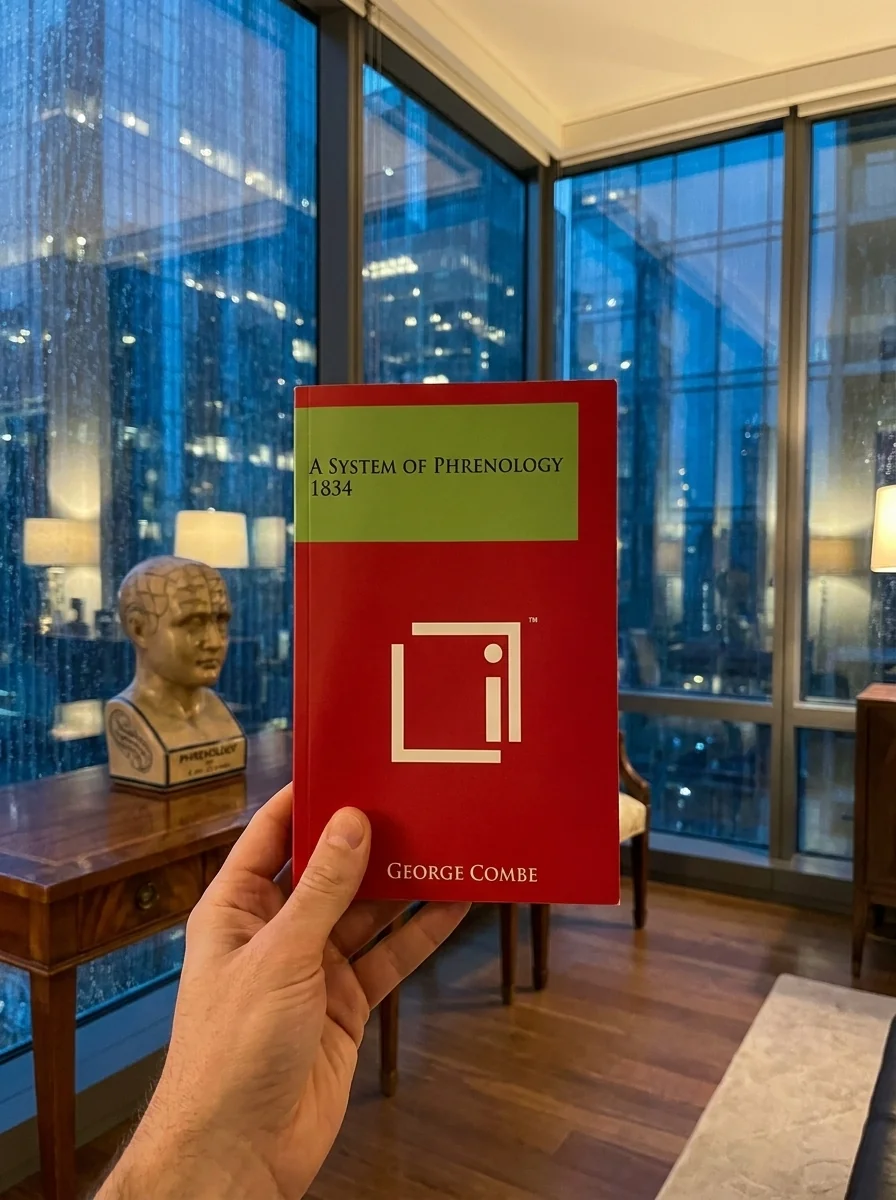

A System of Phrenology 1834
Delve into the foundational principles of phrenology with George Combe's landmark 1834 treatise. This comprehensive work meticulously outlines the controversial yet historically significant science of discerning an individual's character and intellectual capacities by examining the shape and protuberances of the skull. Combe, a prominent advocate, systematically categorizes various mental faculties and their supposed cranial locations, offering a unique window into 19th-century attempts to quantify and understand human nature. It's an essential document for tracing the evolution of psychological thought and the enduring quest to map the mind.


📝 Description: A System of Phrenology 1834
💎 Expert review
📖 Why choose it
Why this book is worth reading
Readers fascinated by the historical evolution of psychological theory will find immense value in this foundational text. It offers a unique window into how 19th-century thinkers attempted to quantify and understand human nature through physical contours rather than abstract philosophy. If you are interested in tracing the lineage of modern psychology or understanding the cultural context of early neurology, this treatise provides essential insight. It is particularly rewarding for those who appreciate the intellectual rigor of past scientific endeavors, even when their conclusions were later debunked. The systematic categorization of mental faculties offers a fascinating glimpse into the era's obsession with mapping the soul to the skull.
⭐ Reader reviews
Reader rating
While historically significant, this book demands patience from modern readers accustomed to evidence-based neuroscience. It is not suitable for those seeking practical self-help or contemporary psychological advice, as its methods are rooted in discredited anatomical assumptions. The dense categorization of faculties may feel tedious to casual readers uninterested in the specifics of cranial mapping. However, for scholars of esoteric history and the development of scientific thought, it remains an indispensable primary source. It serves best as a reference for understanding the transition from spiritualist interpretations of character to early biological determinism, offering candid perspectives on how society once viewed the mind-body connection.
❓ Frequently asked questions
📖 Who should read this
If you're captivated by historical attempts to decode human nature, the intersection of mind and body theories, or the intricate paths of forgotten sciences, this foundational phrenological text offers a compelling journey. An indispensable volume for students of intellectual history and esoteric thought.
🎯 Key themes and symbolism
Mapping the Mind
Combe's work presents a detailed anatomical correlation between mental faculties and specific brain areas, asserting that these manifest externally on the skull. He systematically categorizes human traits—from benevolence to destructiveness—and assigns them precise locations, offering a pseudo-scientific cartography of the intellect and personality that captivated 19th-century thinkers.
Character Analysis
At its core, phrenology, as articulated by Combe, was a system for understanding and predicting human behavior and disposition. The book provides a practical guide for assessing an individual's moral inclinations, talents, and temperament based on cranial measurements, aiming to offer insights into self-improvement and social harmony through physiological interpretation.
Science and Society
This text reflects a pivotal moment in the history of science, where nascent physiological theories intersected with philosophical inquiries into human nature. Combe championed phrenology not just as a medical diagnostic tool but as a framework for education, criminal justice, and social reform, illustrating its profound influence on 19th-century intellectual and cultural discourse despite its later scientific discreditation.
📜 Historical context
📚 Glossary
- Phrenology
- Organology
- Cranioscopy
📔 Questions to reflect on
- How might the popularity of phrenology in the 19th century reflect the scientific and philosophical anxieties of that era regarding human nature?
- Consider how systems like phrenology, despite being debunked, influenced later scientific inquiries into brain localization and the study of individual differences.
- If phrenology were true, how might our understanding of personal responsibility, education, and social structure be fundamentally altered?