US shipping Secure card payment Occult and esoteric books

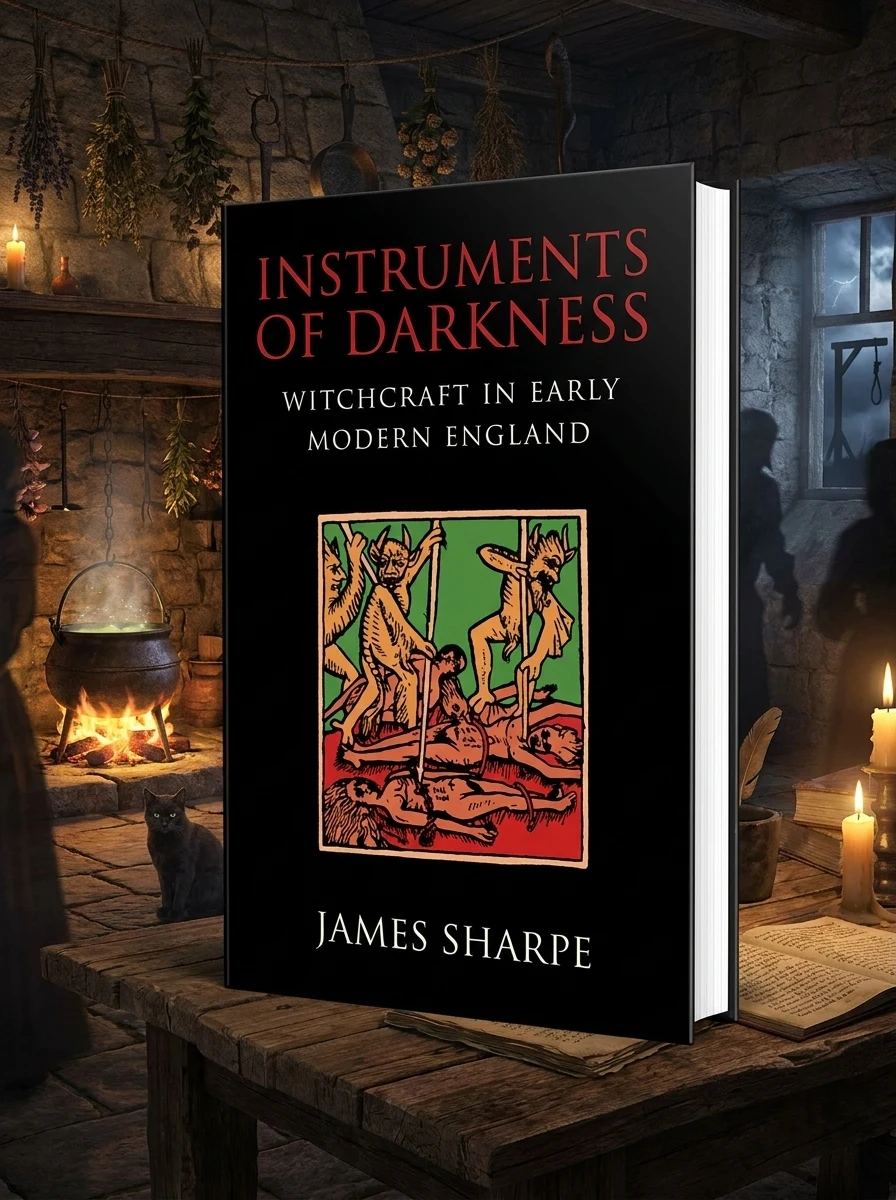
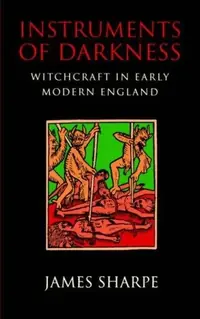
Instruments of Darkness: Witchcraft in Early Modern England

Sharpe, James
Reader rating
4.4
(2 reviews) 103 sold
In stock

Stock reported in the catalog; fulfillment is confirmed with your request.

📚 ABOUT THE BOOK

Sharpe uncovers the terrifying reality of early modern English witchcraft through original legal records.

James Sharpe revitalizes the study of English witchcraft by analyzing extensive legal archives, moving beyond simplistic gendered narratives. He demonstrates how belief in the supernatural permeated every social class, driven by deep-seated anxieties within church, state, and community structures. The work details specific tragedies, such as the East Anglian trials, while challenging modern feminist interpretations by highlighting the significant role women played as accusers. This scholarly overview reveals the complex interplay of fear and power that defined an era when the devil was considered an undeniable neighbor.

Key themes
Legal History Social Anxiety Gender Dynamics
Historical context

This work anchors itself in the historical study of early modern English society, specifically examining the legal and social mechanisms that defined witchcraft accusations during that era. It serves as a scholarly intervention within the broader tradition of esoteric history, challenging romanticized or purely gendered narratives with rigorous archival evidence.


Difficulty
●●● Demanding
Fans will love it
Carole Levitt · Brian Levack · Ruth MacKay
🌙 Witchcraft & Wicca
🏛 University of Pennsylvania Press 📖 384 pages 📔 Paperback 📐 Paperback ISBN: 9780812216332
Fun fact
Sharpe delivers a rigorous, evidence-based corrective to romanticized views of witchcraft. His use of court records provides an authoritative voice, making this a cornerstone text for serious students of history. However, readers seeking sensationalist ghost stories or purely feminist critiques may find its academic tone dry. It sits firmly as a definitive sociological study, prioritizing historical accuracy over narrative flair.
📚 This book appears in Esoterica Books

📝 Description: Instruments of Darkness: Witchcraft in Early Modern England

They flew through the air, consorted with animals, and made pacts with the devil. Witches were as unquestioned as alchemy or astrology in medieval England; yet it wasn't until the midsixteenth century that laws were passed against them. Now a leading historian of crime and society in early modern England offers the first scholarly overview of witchcraft in that country in over eighty years, examining how tensions between church, state, and society produced widespread distrust among fearful people. Instruments of Darkness takes readers back to a time when witchcraft was accepted as reality at all levels of society. James Sharpe draws on legal records and other sources to reveal the interplay between witchcraft beliefs in different partts in the social hierarchy. Along the way, he offers disturbing accounts of witch-hunts, such as the East Anglian trials of 1645-47 that sent more than 100 people to the gallows. He tells how poor, elderly women were most often accused of witchcraft and challenges feminist claims that witch-hunts represented male persecution by showing that many accusers were themselves women. Prosecution of witches gradually declined with increasing skepticism among jurists, new religious attitudes, and scientific advances that explained away magic. But for two hundred years, thousands participated in one of history's most notorious persecutions. Instruments of Darkness is a fascinating case study that deepens our understanding of this age-old cultural phenomenon and sheds new light on one society in which it occurred.

💎 Expert review

💎
Esoterica Books editorial team
Occult literature desk
This volume is a dense, academic exercise in archival recovery rather than a casual exploration of magical practice. It demands patience from readers seeking narrative drama or practical witchcraft insights, as it focuses strictly on legal archives and sociological analysis. Those expecting a romanticized view of early modern witches or a straightforward feminist critique will likely find the text dry and corrective. However, for historians and those willing to engage with complex arguments about gendered narratives and community structures, it provides an indispensable, albeit rigorous, correction to popular misconceptions regarding the East Anglian trials and broader societal anxieties.
✓ EDITOR'S REVIEW

📖 Why choose it

📖

Why this book is worth reading

Scholars and serious enthusiasts of occult history will find immense value in this text, as it offers a grounded, evidence-based perspective often missing from popular accounts. By utilizing original legal records, the author dismantles modern assumptions about victimhood and power dynamics, revealing how supernatural belief permeated all social classes. Readers interested in the intersection of church, state, and community anxiety will appreciate the nuanced view of accusers and accused alike. It is essential for those seeking to understand the terrifying reality of the period beyond simplistic feminist interpretations, providing a complex map of fear and power that defined an age when the devil was considered an undeniable neighbor.

⭐ Reader reviews

The starting rating comes from the team Esoterica Books —
⭐ Esoterica editorial review Editorial rating 4.4/5
★★★★
Readers interested in the sociology of fear, early modern legal systems, and the intersection of religion and crime. This is essential for historians seeking nuanced perspectives on witchcraft beyond modern myth-making.

Reader rating

4.4
Based on 2 reviews
5
0
4
2
3
0
2
0
1
0
J
Josephine V. ✓ Verified purchase
October 26, 2025
Almost perfect

Took a chance on this and glad I did. It connects ideas I'd only seen treated separately elsewhere. The material is presented clearly and the structure makes it easy to revisit key passages. Recommended with reservations.

E
Esoterica Books editorial team

This volume is a dense, academic exercise in archival recovery rather than a casual exploration of magical practice. It demands patience from readers seeking narrative drama or practical witchcraft insights, as it focuses strictly on legal archives and sociological analysis. Those expecting a romanticized view of early modern witches or a straightforward feminist critique will likely find the text dry and corrective. However, for historians and those willing to engage with complex arguments about gendered narratives and community structures, it provides an indispensable, albeit rigorous, correction to popular misconceptions regarding the East Anglian trials and broader societal anxieties.

❓ Frequently asked questions

No, Sharpe challenges this by showing that women frequently acted as the primary accusers, complicating simple gender-based explanations.
It is scholarly but engaging, relying heavily on vivid primary source accounts that make the historical reality palpable.

📖 Who should read this

Readers interested in the sociology of fear, early modern legal systems, and the intersection of religion and crime. This is essential for historians seeking nuanced perspectives on witchcraft beyond modern myth-making.

🎯 Key themes and symbolism

Legal History

Social Anxiety

Gender Dynamics

💬 Quotes from the book

“Witches were as unquestioned as alchemy or astrology in medieval England.”

“They flew through the air, consorted with animals, and made pacts with the devil.”

📜 Historical context

While witchcraft accusations peaked in the seventeenth century, legal frameworks evolved significantly from the mid-sixteenth century onward. Sharpe situates his analysis within the broader Renaissance context, where skepticism was slowly replacing absolute belief. The book bridges the gap between popular folklore and official state policy, showing how localized hysteria was managed by centralizing legal authorities.

📚 Glossary

East Anglian Trials
Legal Records
Social Hierarchy

📔 Questions to reflect on

  1. How does the fear of the 'other' manifest in your own community's history?
  2. In what ways do legal systems reflect the moral anxieties of their time?
  3. How might personal grievances be masked as supernatural accusations?

🏛 Books from this publisher University of Pennsylvania Press

All books from this publisher →
You might also like

See more →