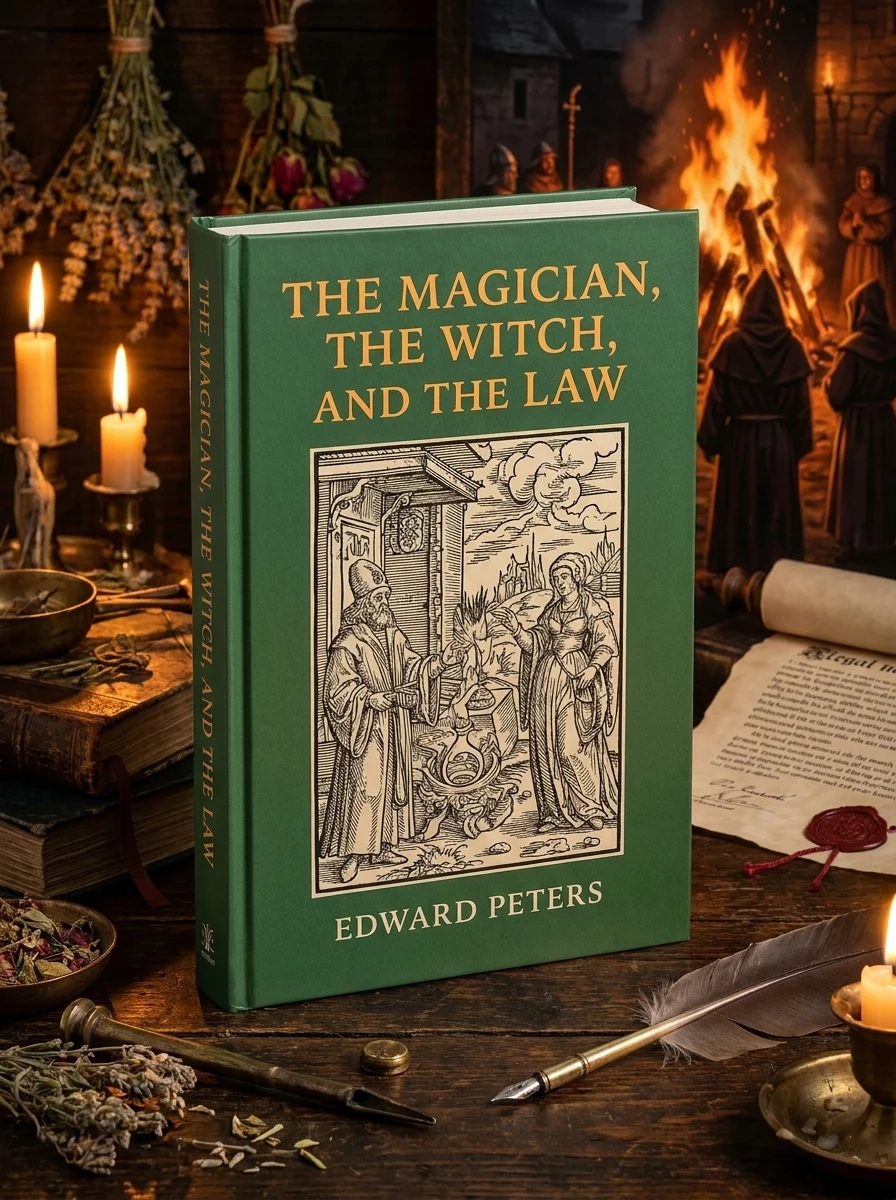
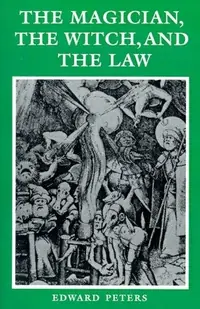
The Magician, the Witch, and the Law - Ingram Academic Peters, Edward


Stock reported in the catalog; fulfillment is confirmed with your request.
From scientific pursuit to heretical damnation, trace magic's perilous journey through medieval European law.
Edward Peters masterfully charts the dramatic transformation of magic's perception throughout the medieval era. Initially respected as a pragmatic discipline requiring learned skill, its status profoundly shifted as European societies matured. This scholarly work meticulously details how evolving legal and religious frameworks reclassified magic, associating it with dangerous heresy and malevolent sorcery, fundamentally altering its place in intellectual and social life and laying groundwork for future persecutions.
This academic work situates the historical evolution of magic within medieval European legal and religious frameworks, tracing its shift from pragmatic skill to heretical crime.


📝 Description: The Magician, the Witch, and the Law - Ingram Academic Peters, Edward
💎 Expert review
📖 Why choose it
Why this book is worth reading
This book is essential for readers fascinated by the intricate relationship between law, religion, and social perception in medieval Europe. It offers a rigorous academic exploration of how magic transitioned from a respected discipline to a dangerous heresy. Scholars and serious enthusiasts will appreciate Peters' meticulous documentation of this perilous journey. The text provides crucial context for understanding the intellectual groundwork that enabled future persecutions. By examining evolving legal frameworks, it reveals how societal maturity altered the status of magical practice. It is ideal for those seeking depth over narrative flair, offering a comprehensive view of magic's reclassification in social life.
⭐ Reader reviews
Reader rating
Peters delivers a dense, scholarly analysis suitable only for those committed to academic rigor. The text prioritizes historical precision and legal framework evolution over accessible storytelling or mystical intrigue. Readers seeking entertaining narratives, practical magical instruction, or spiritual guidance will find this volume dry and inaccessible. It is a specialized study for historians and legal theorists rather than general occult practitioners. While invaluable for understanding the legal reclassification of magic, it lacks the warmth or narrative engagement expected in popular history. Avoid if you prefer immersive storytelling or immediate practical application over scholarly detachment.
❓ Frequently asked questions
📖 Who should read this
If you're fascinated by the intellectual evolution of medieval Europe, the intricate history of legal systems, or the academic study of magick, this book offers profound insights. It's for anyone eager to understand how societal norms profoundly reshape perceived realities.
🎯 Key themes and symbolism
Magic as Early Science
This section illuminates how, in the early medieval period, magical practices were often viewed not as supernatural transgressions but as a legitimate, albeit specialized, form of natural knowledge, accessible through study and application of specific principles.
Legal & Heretical Redefinition
Peters explores the crucial period when European legal systems and religious doctrines began to systematically re-evaluate and condemn magic. He traces how it became intertwined with accusations of heresy, leading to its criminalization and persecution.
Societal Self-Awareness
The book delves into how the growing "self-consciousness" of medieval European society contributed to this paradigm shift. As communities developed more sophisticated legal and theological structures, they increasingly sought to define and control practices deemed deviant or threatening to established order.
💬 Quotes from the book
“The medieval mind, in its formative years, saw little inherent contradiction in seeking knowledge of the natural world through means we would now label 'magical,' viewing it simply as a specialized craft.”
“As institutional structures solidified and theological distinctions sharpened, the once-ambiguous space of magic was systematically reclassified, driven into the dark corners of heresy and sedition.”
📜 Historical context
📚 Glossary
- Sorcery
- Heresy
- Practical Science
📔 Questions to reflect on
- Reflect on how modern society distinguishes between science, pseudoscience, and belief. Are there parallels to the medieval reclassification of magic?
- Consider the power of legal and religious institutions to define reality. How do historical shifts in these definitions impact individual freedoms and societal norms?
- How might a society's increasing "self-consciousness" lead it to both greater intellectual advancements and stricter controls over what is considered acceptable knowledge or practice?
📖 From the series “Middle Ages”
All books in the series →
🏛 Books from this publisher University of Pennsylvania Press
All books from this publisher →


You might also like
See more →