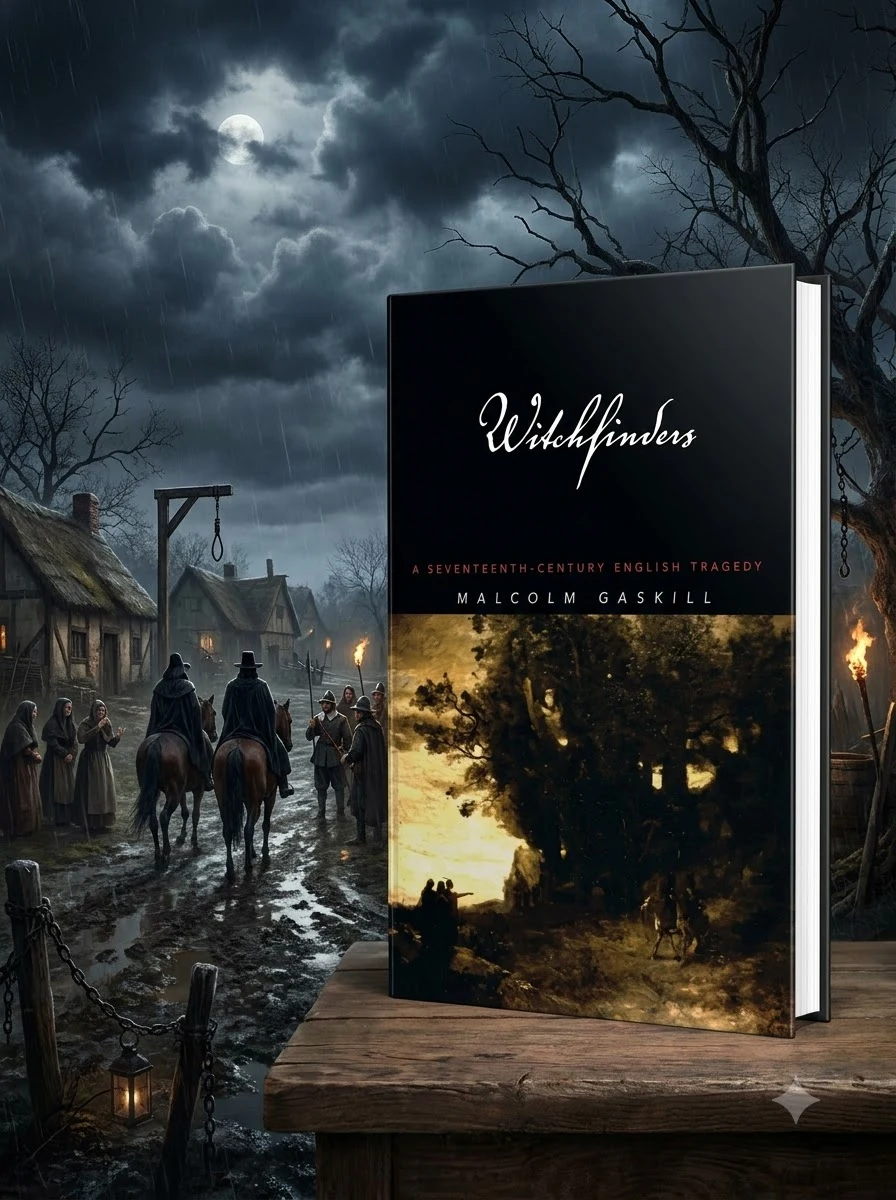
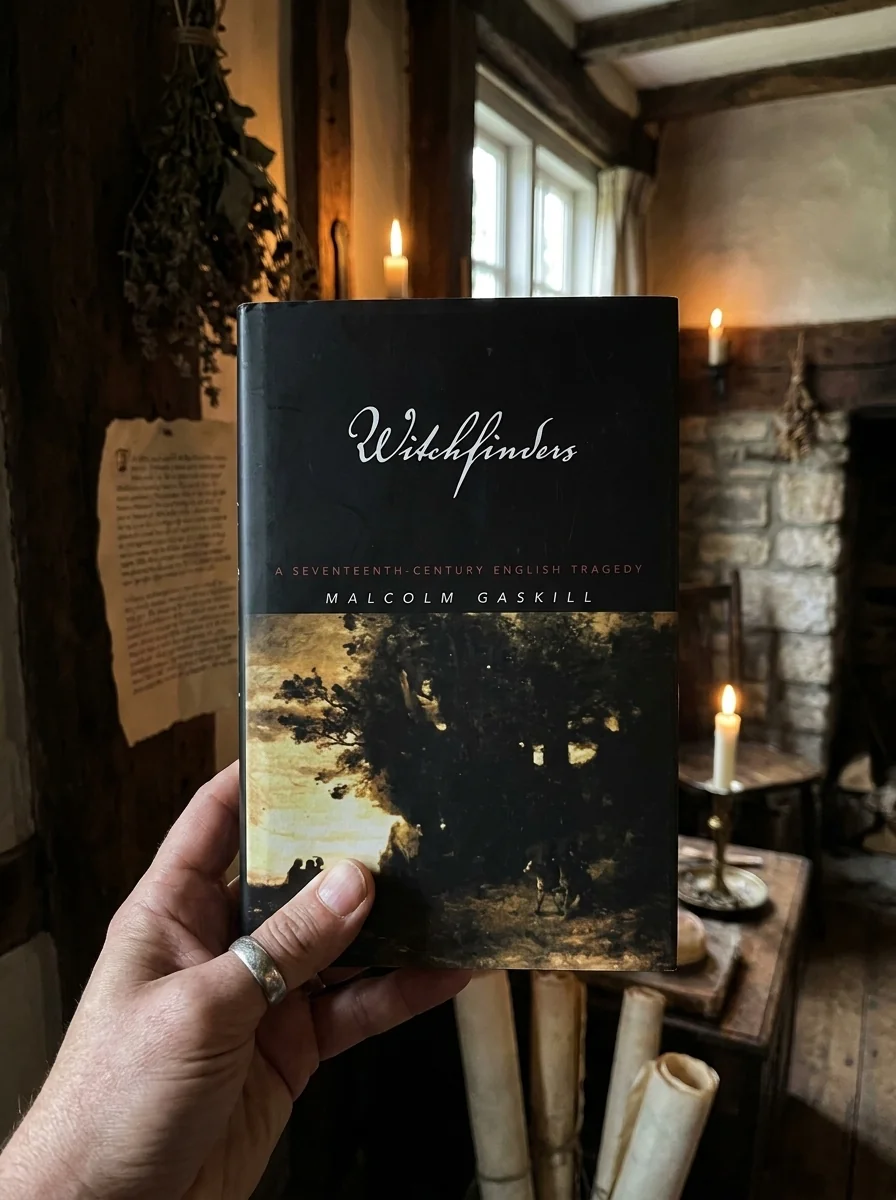
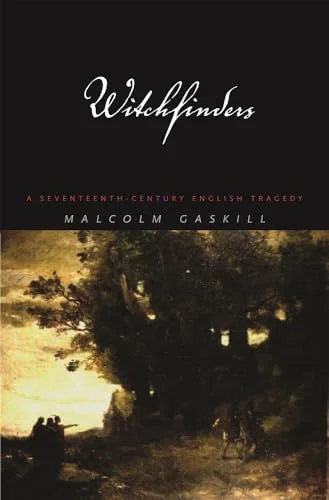
Witchfinders: A Seventeenth-Century English Tragedy
✍️ Gaskill, MalcolmAn acclaimed historian details the savage 1645 English witch-hunt led by Matthew Hopkins.
During two years of English civil war, political divisions and widespread panic allowed Matthew Hopkins and John Stearne to launch an unsanctioned campaign against presumed evil. Operating without legal authority, they secured popular support from gentry, clergy, and villagers across Essex, Suffolk, and East Anglia. Hopkins earned the moniker Witchfinder General as his illegal interrogations sent over a hundred people, mostly women, to the gallows before the campaign unravelled by autumn 1647.
This account sits in 17th-century England during a destructive civil war, amidst widespread disease, poverty, and lawlessness in 1645 Essex, Suffolk, and East Anglia.


📝 Description: Witchfinders: A Seventeenth-Century English Tragedy
📑 What's inside
- Illustrations Preface Author's Note Map Prologue
- Part One: Complication 1. Origins 2. Strange Effects 3. The Initiation 4. Dark Horizons 5. First Blood
- Part Two: Unravelling 6. Malignants 7. Hellish Invention 8. Contagion 9. Sticklers 10. The Biter Bit
- Epilogue
💎 Expert review
📖 Why choose it
Why this book is worth reading
Scholars and serious enthusiasts of historical trauma will find immense value in this meticulous reconstruction of a dark era. By focusing on the specific mechanics of Matthew Hopkins and John Stearne’s activities, Gaskill provides a critical lens through which to understand how unchecked fanaticism can dismantle legal norms during times of national fracture. Readers interested in the intersection of civil war dynamics and social hysteria will appreciate the detailed examination of popular support for such brutalities. It offers a sobering reminder of how fear, when left unregulated by authority, can lead to catastrophic human costs, making it essential for those seeking to comprehend the depths of historical injustice and the psychological underpinnings of mass persecution.
⭐ Reader reviews
Reader rating
Gaskill delivers a rigorous, albeit grim, account that will appeal primarily to academic historians and specialists in early modern English history. The depth of archival research is commendable, offering fresh insights into the operational tactics of witchfinders. However, general readers seeking narrative thrills or accessible storytelling may find the dense historical analysis dry and overwhelming. Those looking for a lighthearted exploration of Wiccan roots or supernatural mystery will be thoroughly disappointed by this sobering examination of judicial murder and political exploitation. It is a vital text for understanding the mechanics of fear, but it demands patience and a tolerance for heavy academic prose rather than providing entertainment.
❓ Frequently asked questions
📖 Who should read this
If you're fascinated by the darker currents of history, the psychology of mass hysteria, or the profound human cost of religious fervor, this book offers an essential, gripping account. It's a must-read for anyone seeking to understand one of England's most infamous historical atrocities.
🎯 Key themes and symbolism
Societal Paranoia's Grip
Gaskill expertly illustrates how the English Civil War, with its accompanying disease, poverty, and political division, cultivated an environment ripe for mass hysteria. He explores how widespread terror and uncertainty allowed figures like Hopkins to exploit public fears, projecting societal anxieties onto alleged supernatural threats within communities.
The Mechanics of Persecution
This work delves into the insidious methods employed by the witchfinders, detailing how Matthew Hopkins and John Stearne systematically interrogated and tortured accused individuals. The author reveals how these coercive tactics were designed to elicit confessions, often fabricating evidence of consorting with evil spirits, highlighting the judicial perversion of the era.
A Tragic Human Cost
The book poignantly captures the human tragedy of the witch hunts, focusing on the hundreds of lives, particularly women, who were caught in this brutal campaign. Gaskill emphasizes the devastating impact on individuals and communities, exposing the profound injustice and suffering inflicted under the guise of rooting out evil.
📜 Historical context
📚 Glossary
- Witchfinder General
- East Anglia
- English Civil War
📔 Questions to reflect on
- Reflect on how periods of intense societal upheaval or conflict might create environments where irrational fears or extreme beliefs can take hold.
- Consider the role of popular support, even from local gentry and clergy, in enabling or legitimizing acts of mass persecution. What lessons can be drawn for contemporary society?
- How do you think the gendered nature of the accusations (mostly women) impacted the dynamics of the witch hunts and their historical memory?