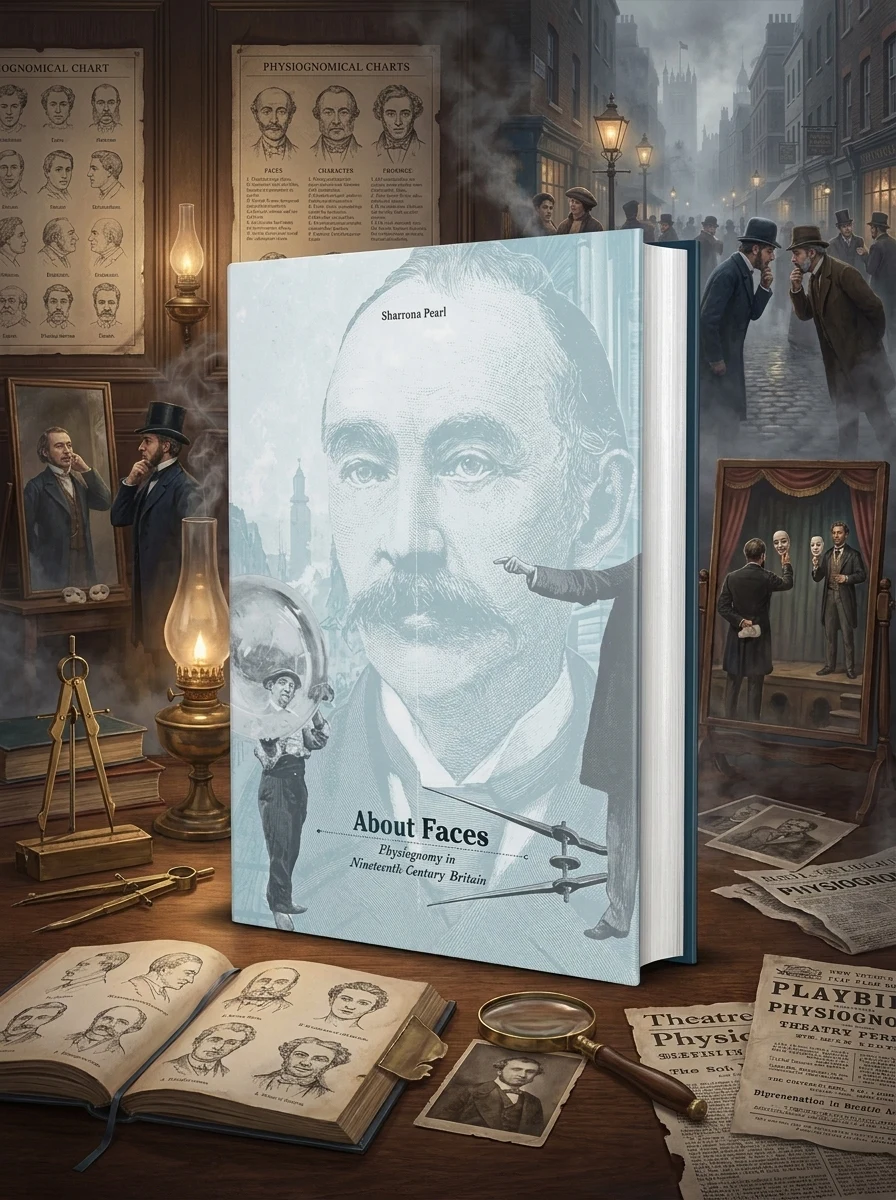
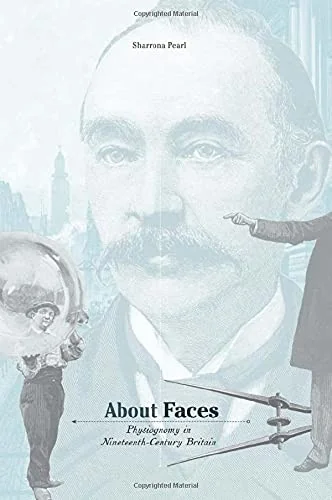
About Faces: Physiognomy in Nineteenth-Century Britain
Sharrona Pearl's "About Faces" masterfully explores how physiognomy—the art of discerning character from facial features—profoundly shaped 19th-century British society. Initially a tool for judging others, this practice evolved into a conscious method of self-expression, influencing everything from public performance to scientific discourse. Pearl navigates diverse media, revealing physiognomy's role in fostering a collective understanding of human nature. The book scrutinizes how an ancient instinct was repackaged as scientific truth, offering a vital lens through which to understand not only Victorian preoccupations but also our contemporary judgments based on appearance.


📝 Description: About Faces: Physiognomy in Nineteenth-Century Britain
📑 What's inside
- List of Figures
- Acknowledgments
- Introduction: Face Facts
- 1. Pocket Physiognomy: Sense in the City
- 2. Performing Physiognomy: Imitating Art and Life
- 3. Portrait Physiognomy: Communicating Character
- 4. Caricature Physiognomy: Imaging Communities
- 5. Photographic Physiognomy: Through a Mediated Mirror
- 6. Diagnostic Physiognomy: From Phrenology to Fingerprints
- Conclusion: Seeing Ourselves
- Notes
- Index
💎 Expert review
📖 Why choose it
Why this book is worth reading
Readers fascinated by the intersection of history, science, and social perception will find this text indispensable. It offers a profound lens for understanding how Victorians constructed identity through appearance, revealing the mechanisms behind our own modern judgments based on looks. Sharrona Pearl’s exploration transforms an obscure historical practice into a vital commentary on self-expression and public performance. Those interested in the hidden languages of society and the evolution of scientific truth will gain significant insight. It is particularly valuable for scholars and enthusiasts who wish to decode the Victorian obsession with character assessment, providing context for contemporary biases through a rigorous historical examination.
⭐ Reader reviews
Reader rating
Pearl delivers a meticulous analysis of how physiognomy functioned as both a tool for judging others and a method for self-presentation in nineteenth-century Britain. The book is intellectually dense, appealing to those who enjoy deep dives into cultural history and the construction of scientific truth. However, readers seeking light entertainment or simple historical anecdotes will likely find the academic rigor tedious. It does not suit those expecting practical advice on reading faces today; rather, it offers a critical, scholarly dissection of how such practices shaped collective understanding. The focus remains strictly on the historical repackaging of ancient instincts, making it essential for academics but potentially dry for casual readers.
❓ Frequently asked questions
📖 Who should read this
If you're fascinated by the hidden codes of social interaction, the history of perception, or how ancient ideas morph into modern beliefs, this book is for you. It's an essential read for anyone curious about the unseen forces that shape our judgments and self-presentation.
🎯 Key themes and symbolism
Physiognomy's Transformation
The book meticulously charts the journey of physiognomy from a speculative method of external assessment to a sophisticated means of self-fashioning. It explores how individuals in 19th-century Britain consciously manipulated their appearance and expressions, not just to interpret others, but to project desired traits, influencing social interactions and public identity.
Science vs. Social Instinct
Pearl delves into the Victorian era's complex endeavor to legitimize physiognomy as a rigorous science, moving it beyond mere intuition. This examination highlights the societal need to rationalize deep-seated biases and perceptions through a veneer of empirical study, reflecting broader cultural anxieties and the evolving understanding of human nature and classification.
Reflecting Our Present Selves
Beyond its historical scope, "About Faces" serves as a profound mirror, inviting readers to reflect on how we continue to interpret and judge others based on their appearance today. By dissecting Victorian attitudes towards facial cues, the book uncovers enduring patterns of human perception and the subtle, often unconscious, biases that persist in modern society.
📜 Historical context
📚 Glossary
- Physiognomy
- Shared Subjectivity
- Victorian Era
📔 Questions to reflect on
- Consider a time you formed an instant opinion of someone based solely on their appearance. How might 19th-century physiognomical ideas inform or challenge your perception?
- In what ways do contemporary social media platforms encourage a 'self-conscious presentation' of our faces, echoing the Victorian era's engagement with physiognomy?
- How does the book's revelation that physiognomy was often a 'permission to judge' others resonate with, or diverge from, modern ethical considerations of appearance and bias?