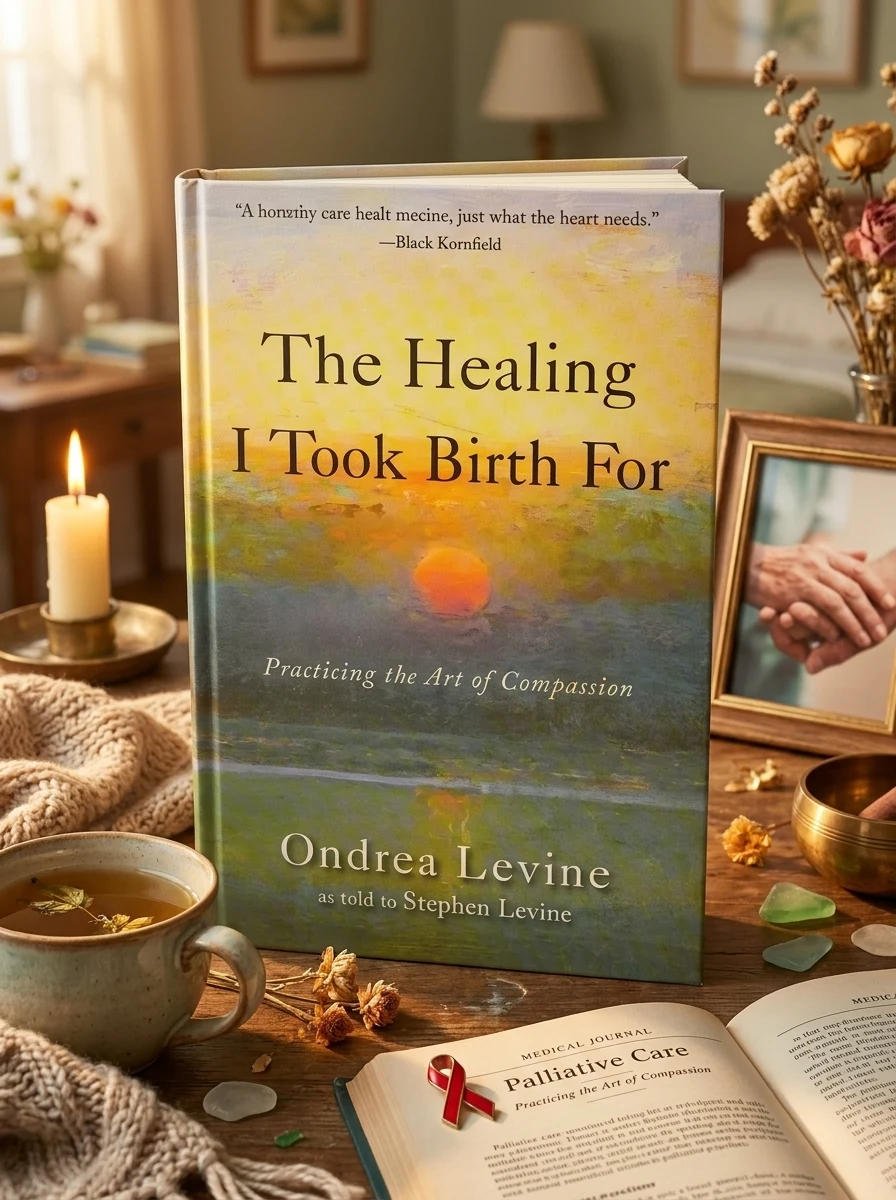
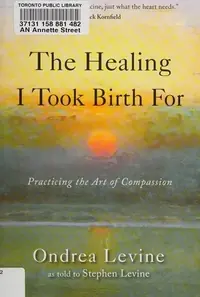
The Healing I Took Birth for: Practicing the Art of Compassion
This edition can be ordered. No arrival date is confirmed.
Ondrea Levine’s final, luminous testament transforms impending death into a sacred doorway for radical compassion.
This profound memoir chronicles Ondrea Levine’s confrontation with mortality following a terminal prognosis. Rather than succumbing to fear, she channels decades of spiritual teaching into a raw, intimate exploration of dying. The narrative weaves her personal journey with the collective grief of the AIDS crisis era, illustrating how vulnerability becomes the ultimate teacher. It is not merely a record of loss, but a masterclass in presence, showing how to meet the end of life with grace, deep self-compassion, and unwavering love for others.
This work emerges from the late twentieth-century esoteric tradition of spiritual memoirs that reframe mortality as a transformative practice rather than an end. It intersects with the historical context of the AIDS crisis, utilizing personal vulnerability to address collective grief and the sacredness of dying.


📝 Description: The Healing I Took Birth for: Practicing the Art of Compassion
💎 Expert review
📖 Why choose it
Why this book is worth reading
Readers navigating their own confrontation with mortality or supporting loved ones through terminal illness will find this text indispensable. Ondrea Levine offers a luminous testament that transforms the fear of death into a sacred doorway for radical compassion. Those seeking to deepen their practice of presence and self-compassion in the face of loss will gain profound insights from her raw, intimate exploration. It serves as a masterclass in meeting the end of life with grace, making it essential for anyone wishing to cultivate unwavering love during times of profound vulnerability and collective grief.
⭐ Reader reviews
Reader rating
Grabbed this during a weekend order. Solid binding, decent paper — holds up to heavy use. The typesetting is comfortable for study, with good margins for notes. Five stars from me.
Took a chance on this and glad I did. There's real depth here that reveals itself on a second reading. Solid binding, decent paper — holds up to heavy use.
Long-time student of the esoteric here. The symbolism is layered and generous to patient readers. My only quibble is the cover feels thinner than expected. Happy enough with the purchase.
Added this to my reference shelf. The historical context alone makes it worth the price. A text you study rather than simply read. Well worth it.
Finally got around to ordering this. There's real depth here that reveals itself on a second reading. Some archaic spellings slow things down. Good, with the caveats above.
Levine’s final testament is a powerful, luminous guide that turns impending death into a site of spiritual alchemy. Her ability to weave personal prognosis with the broader context of the AIDS crisis creates a deeply resonant narrative of shared humanity. However, readers seeking detached metaphysical theory or quick fixes for grief may find the raw emotional intensity and focus on vulnerability overwhelming. This is not a book for those wishing to avoid the messy reality of dying; it demands full engagement with pain as a teacher. It is best suited for those ready to practice radical acceptance.
❓ Frequently asked questions
📖 Who should read this
Readers facing terminal diagnoses, caregivers navigating the complexities of end-of-life care, and spiritual seekers tired of abstract theory who crave grounded, visceral wisdom on how to live and die with authentic love.
🎯 Key themes and symbolism
Somatic Spirituality
Compassionate Dying
Radical Presence
💬 Quotes from the book
“The body is not a problem to be solved, but a temple to be inhabited, even as it falls apart.”
“Compassion is not pity; it is the fierce, tender willingness to sit in the dark with another, without trying to light a candle.”
📜 Historical context
📚 Glossary
- Embodied Awareness
- Non-dual Compassion
- Surrender
📔 Questions to reflect on
- What resistance do I currently hold against the inevitable changes in my own body or life circumstances?
- How might I practice 'sitting in the dark' with a loved one’s pain without attempting to fix it?
- Where in my daily routine do I escape the present moment, and what would it feel like to stay fully with the experience?
🏛 Books from this publisher Weiser Books
All books from this publisher →




 87
87
You might also like
See more →