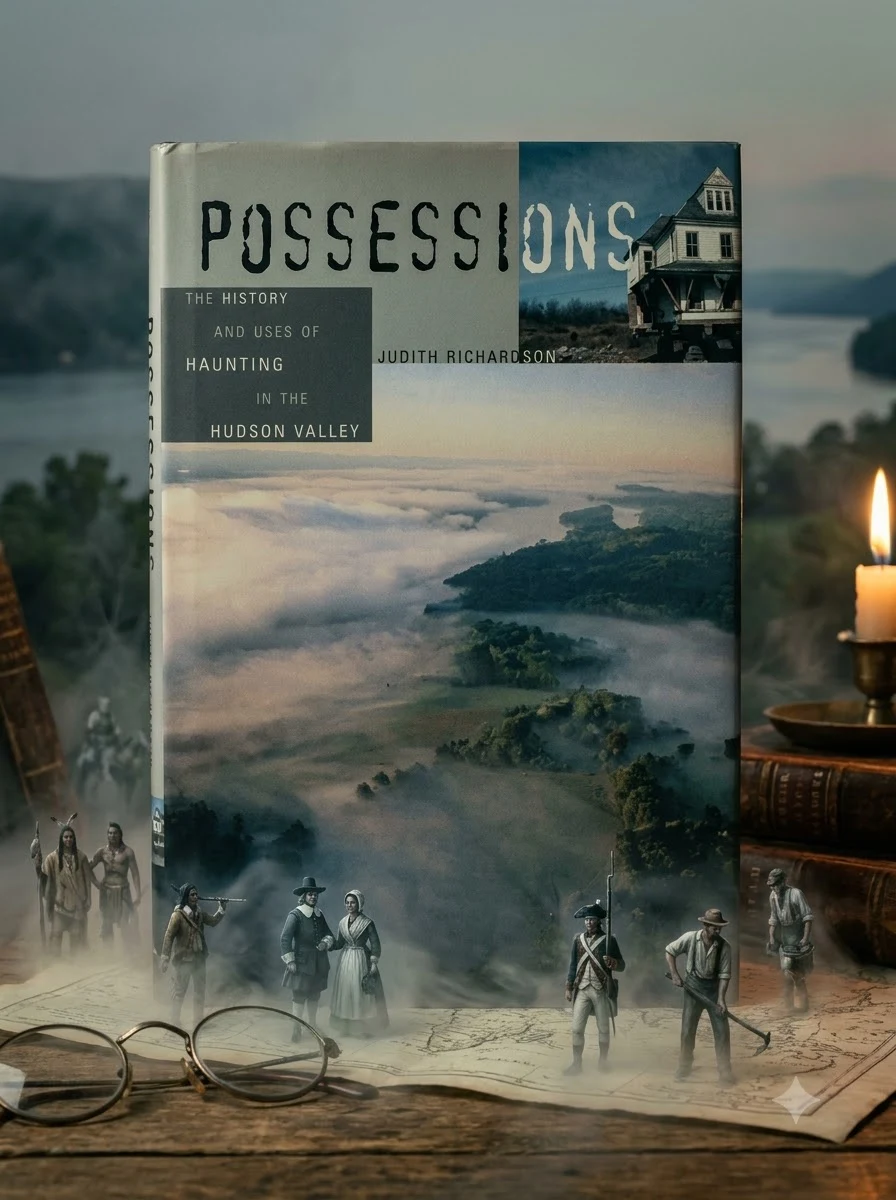
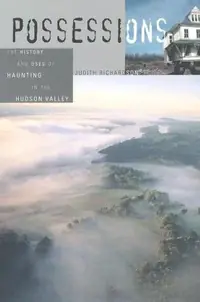
Possessions: The History and Uses of Haunting in the Hudson Valley
Stock reported in the catalog; fulfillment is confirmed with your request.
Ghosts in the Hudson Valley are not echoes, but active political claims on land and memory.
Richardson posits that the Hudson River Valley’s spectral density is a deliberate cultural construct, not random folklore. By analyzing Washington Irving alongside local oral histories, she demonstrates how hauntings serve as mechanisms for social memory. These spirits represent marginalized voices—Native Americans, enslaved people, and laborers—reclaiming territory from dominant narratives. The book argues that ghost stories are active participants in the ongoing struggle for belonging, transforming historical erasure into a tangible, present-day confrontation with the past.
This work situates itself within the tradition of esoteric history and critical folklore studies, challenging supernatural tropes through a sociological lens. It bridges academic historical analysis with the practical study of place-based memory in American cultural landscapes.


📝 Description: Possessions: The History and Uses of Haunting in the Hudson Valley
💎 Expert review
📖 Why choose it
Why this book is worth reading
Readers seeking to understand the deeper political resonance of local folklore will find this text indispensable. It is particularly valuable for those interested in how marginalized groups, including Native Americans and enslaved people, utilize haunting as a tool for reclaiming territory and asserting presence. By shifting the focus from ghostly echoes to active social memory, Richardson offers a profound framework for interpreting regional history not as erasure, but as an ongoing confrontation with the past. This book empowers readers to see spectral density as a deliberate cultural construct rather than random superstition.
⭐ Reader reviews
Reader rating
Not my usual area but wanted to branch out. There's real depth here that reveals itself on a second reading. You can tell why this work has endured. My only quibble is the cover feels thinner than expected. Recommended with reservations.
Finally got around to ordering this. Challenging in places, but never needlessly obscure. It connects ideas I'd only seen treated separately elsewhere. A keeper.
I've read excerpts online before, but having the full text is different. The language takes some getting used to, but it becomes part of the charm. Solid binding, decent paper — holds up to heavy use. Shipping was quick too.
Bought this as a gift for my sister and ended up ordering a second copy for myself. I appreciated how the argument builds steadily from first principles. My only regret is not ordering it sooner.
Bought this as a gift for my sister and ended up ordering a second copy for myself. The material is presented clearly and the structure makes it easy to revisit key passages. It connects ideas I'd only seen treated separately elsewhere.
Long-time student of the esoteric here. Every rereading turns up something I missed.
Richardson presents a compelling argument that Hudson Valley hauntings are political claims on land and memory. However, this academic approach may alienate casual paranormal enthusiasts seeking simple thrill or supernatural validation. The text is dense with historical analysis of figures like Washington Irving and oral histories, making it less suitable for readers preferring light, anecdotal ghost stories. It demands engagement with complex sociological theories of belonging and erasure. Those looking for actionable magical practices will find little here; instead, they get a rigorous examination of how spirits serve as mechanisms for social memory in a contested cultural landscape.
❓ Frequently asked questions
📖 Who should read this
Readers fascinated by the intersection of folklore, American history, and literary criticism who wish to understand how landscape shapes collective trauma and identity.
🎯 Key themes and symbolism
Social Memory
Colonial Erasure
Landscape Politics
💬 Quotes from the book
“Ghosts evolve from specific historical contexts and are conjured to serve the present needs of those they haunt.”
“These tales... function in an ongoing, contentious politics of place.”
📜 Historical context
📚 Glossary
- Social Memory
- Politics of Place
- Hudson Valley Gothic
📔 Questions to reflect on
- What 'ghosts' of history or personal experience do you feel are currently claiming space in your local community?
- How does the physical landscape of your hometown shape the stories its residents tell about the past?
- In what ways do you think marginalized groups use storytelling to reclaim a sense of ownership over their history?
🏛 Books from this publisher Harvard University Press
All books from this publisher →
 88
88
You might also like
See more →

 91
91
 91
91