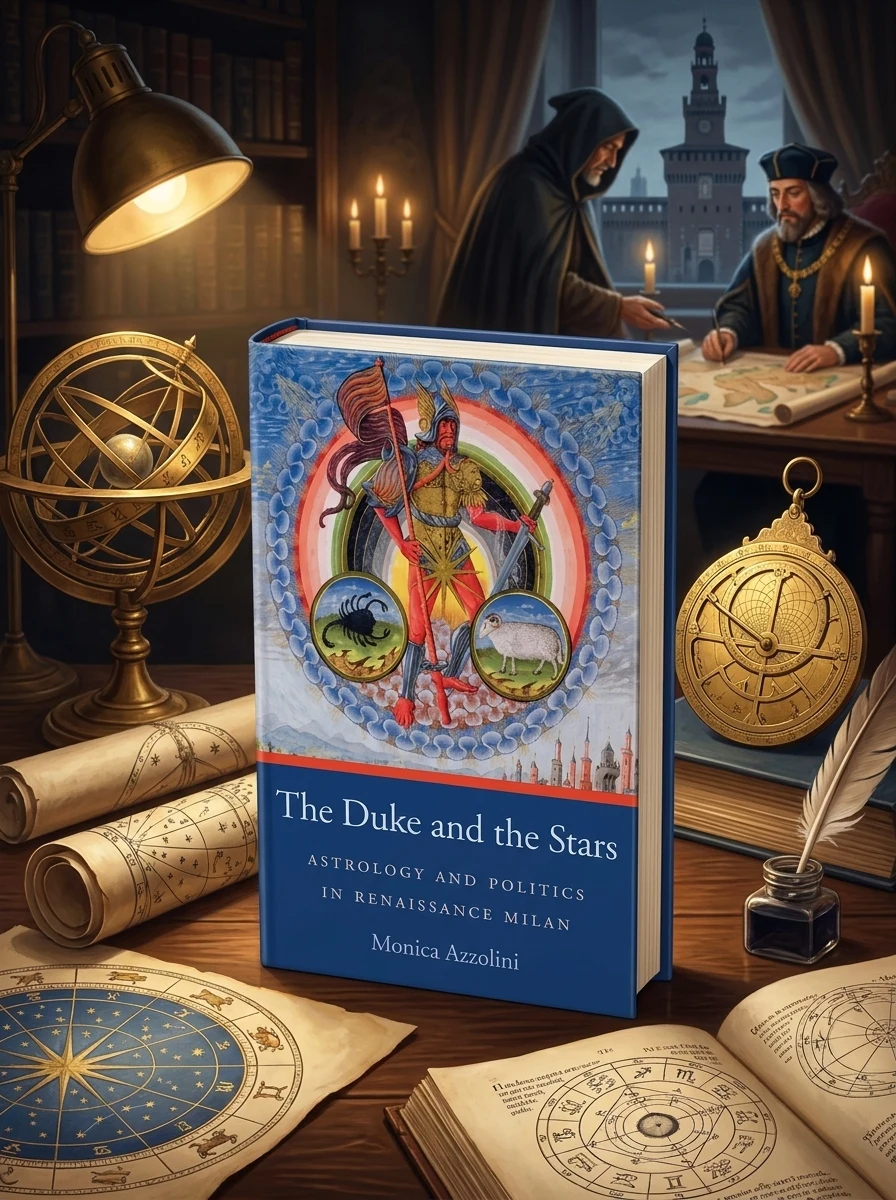
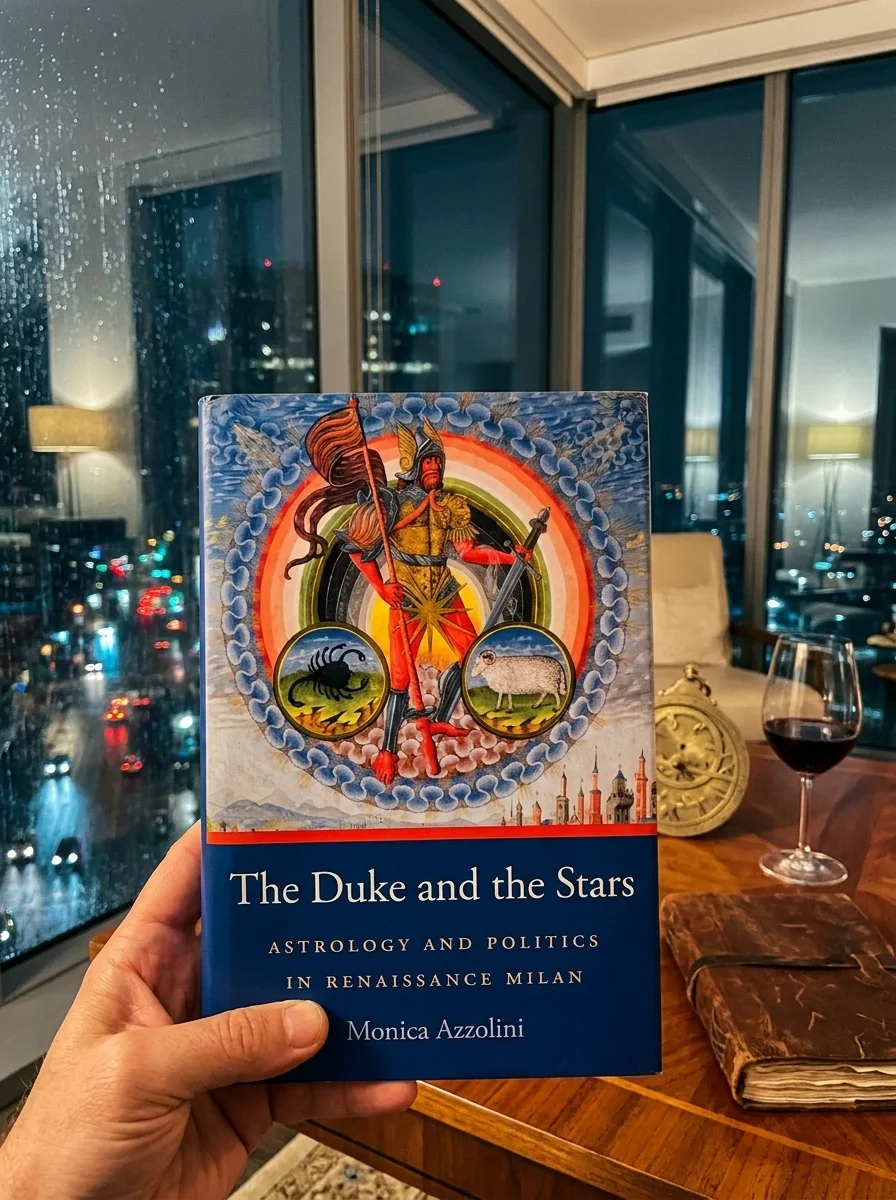
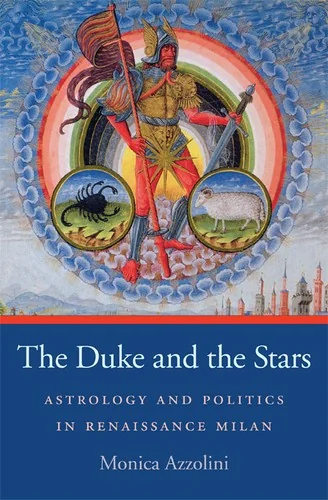
The Duke and the Stars: Astrology and Politics in Renaissance Milan Azzolini, Monica
Monica Azzolini's meticulous research unveils the fascinating interplay between celestial divination and statecraft in 15th-century Italy. This volume meticulously details how the predictive art of astrology, intertwined with astronomy and medical science, became an indispensable yet often clandestine resource for powerful rulers. Focusing on Milan, it illustrates how ducal courts relied on astrological counsel, particularly during periods of upheaval, to inform critical political decisions and navigate complex challenges. A compelling examination of knowledge, power, and the stars during a pivotal historical era.


Praise for this book
“Azzolini's research are exciting for how they sweep away cobwebs from episodes of Milanese history that have become dusty, either from lack of scholarly attention or from satisfied consensus...Azzolini's book...[is] part of a new wave of English-language historiography offering fresh visions of how the Sforza consolidated and exercised their power...Readers will find in this volume not just a compelling account of…”
“Azzolini ventures deep into the culture of the Renaissance court. Weaving together the methods and interests of the history of science and of Renaissance political and cultural history, Azzolini has produced a sophisticated, interdisciplinary analysis of a science and a profession that played a key role in the political life of the Renaissance, challenging current assumptions about Renaissance politics and making…”
“Azzolini's impressive study adds a startling new dimension to our picture of Renaissance Milan. Taking us behind the scenes at the Sforza court, her book introduces us to the actual workings of astrology as a determinant of daily behavior. Her central argument--that Renaissance rulers took astrological calculations into serious account when making key policy decisions--is sure to spark lively debate.”
📝 Description: The Duke and the Stars: Astrology and Politics in Renaissance Milan Azzolini, Monica
💎 Expert review
📖 Why choose it
Why this book is worth reading
Scholars of Renaissance history and enthusiasts of occult practices will find profound value in this meticulous examination of how cosmic forces influenced earthly power. Readers interested in the clandestine mechanisms of statecraft will appreciate the detailed look at how ducal courts utilized astrological counsel during times of crisis. This book is essential for those who wish to understand the tangible impact of celestial divination on political decision-making, offering a nuanced perspective on the blend of astronomy, medicine, and magic that defined elite intellectual life in Milan.
⭐ Reader reviews
Reader rating
Monica Azzolini offers a rigorous academic study that demands patience from casual readers seeking quick entertainment or simplified mysticism. The text is dense with historical detail, focusing heavily on the bureaucratic and political applications of astrology rather than its spiritual or mystical allure. It will likely disappoint those looking for practical horoscope advice or romanticized tales of court intrigue without scholarly grounding. However, for historians and researchers dedicated to the precise mechanics of how rulers navigated complex challenges through celestial divination, this volume stands as an indispensable and compelling resource.
❓ Frequently asked questions
📖 Who should read this
If you're captivated by the intersection of historical power, early modern science, and esoteric practices, this meticulous study will illuminate a fascinating chapter of Renaissance life. Ideal for those interested in the history of ideas, political history, or the evolution of celestial knowledge.
🎯 Key themes and symbolism
Integrated Cosmic Science
The book demonstrates that astrology in the Renaissance was not a fringe belief but an integral component of scientific and medical education. It was taught and practiced alongside astronomy, reflecting a worldview where celestial mechanics were directly linked to terrestrial phenomena and human health, rather than being a separate, superstitious endeavor.
Princely Political Divination
Azzolini reveals how Italian Renaissance rulers, especially during times of uncertainty, actively employed astrologers. These celestial advisors provided guidance on crucial political matters, from military campaigns to marriage alliances. Astrology offered a perceived strategic advantage, shaping decisions and providing a veneer of cosmic justification for princely actions.
Secrecy and Statecraft
The work highlights the often confidential nature of astrological consultations at court. It was a guarded source of information, providing insights that could be leveraged for political gain or to anticipate threats. This secretive dimension underscores the perceived power and strategic importance of astrological prognostication within the highest echelons of Renaissance governance.
📜 Historical context
📚 Glossary
- Astrology
- Renaissance
- Prognostication
📔 Questions to reflect on
- Reflect on how the perceived boundary between 'science' and 'esotericism' has shifted since the Renaissance, and what that tells us about our own intellectual frameworks.
- Consider the ethical implications of leaders basing crucial decisions on interpretations that might be considered subjective or supernatural today. How do modern leaders use 'predictive' data?
- Imagine yourself as a Renaissance duke or duchess. How might you balance your personal faith or skepticism with the political utility of astrological prognostication?



![The Instant Astrologer [With CD]](/img/the-instant-astrologer-with-cd-scene.webp)