US shipping Secure card payment Occult and esoteric books

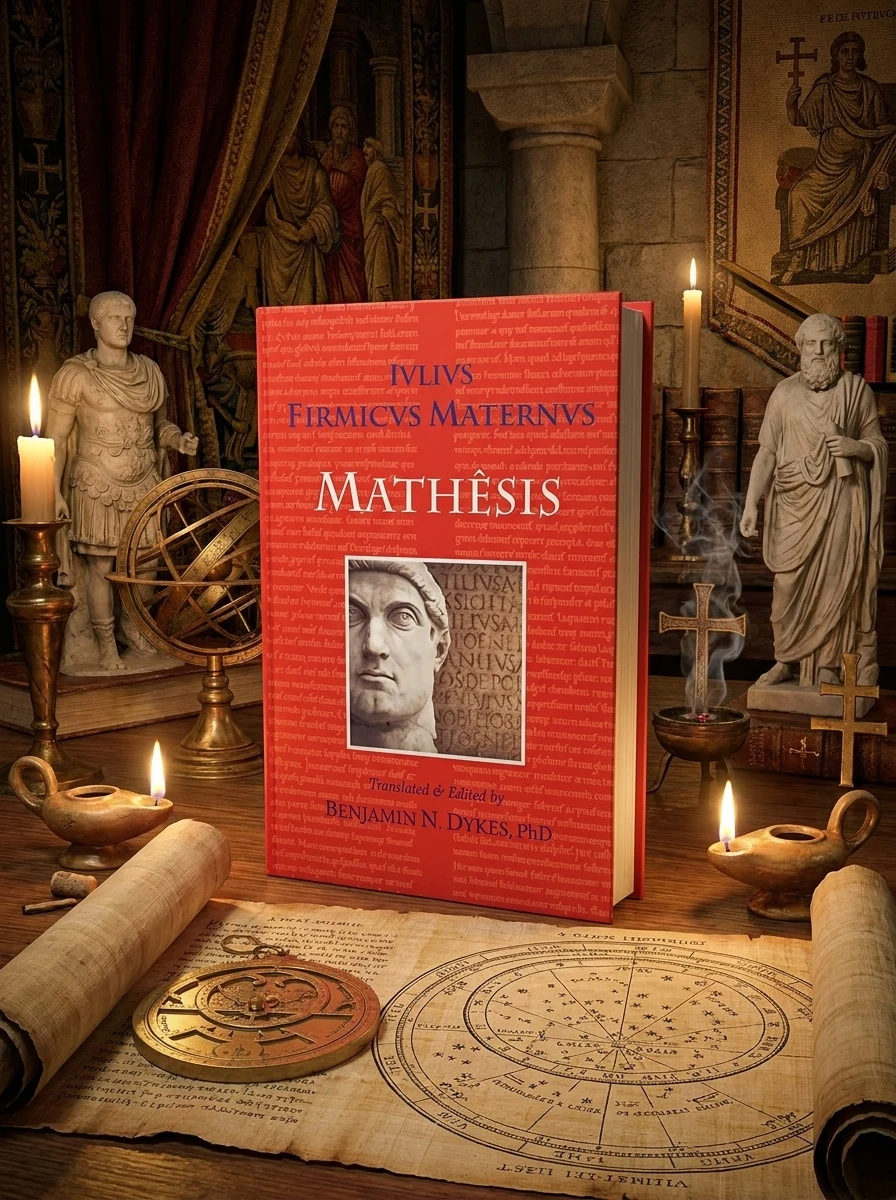
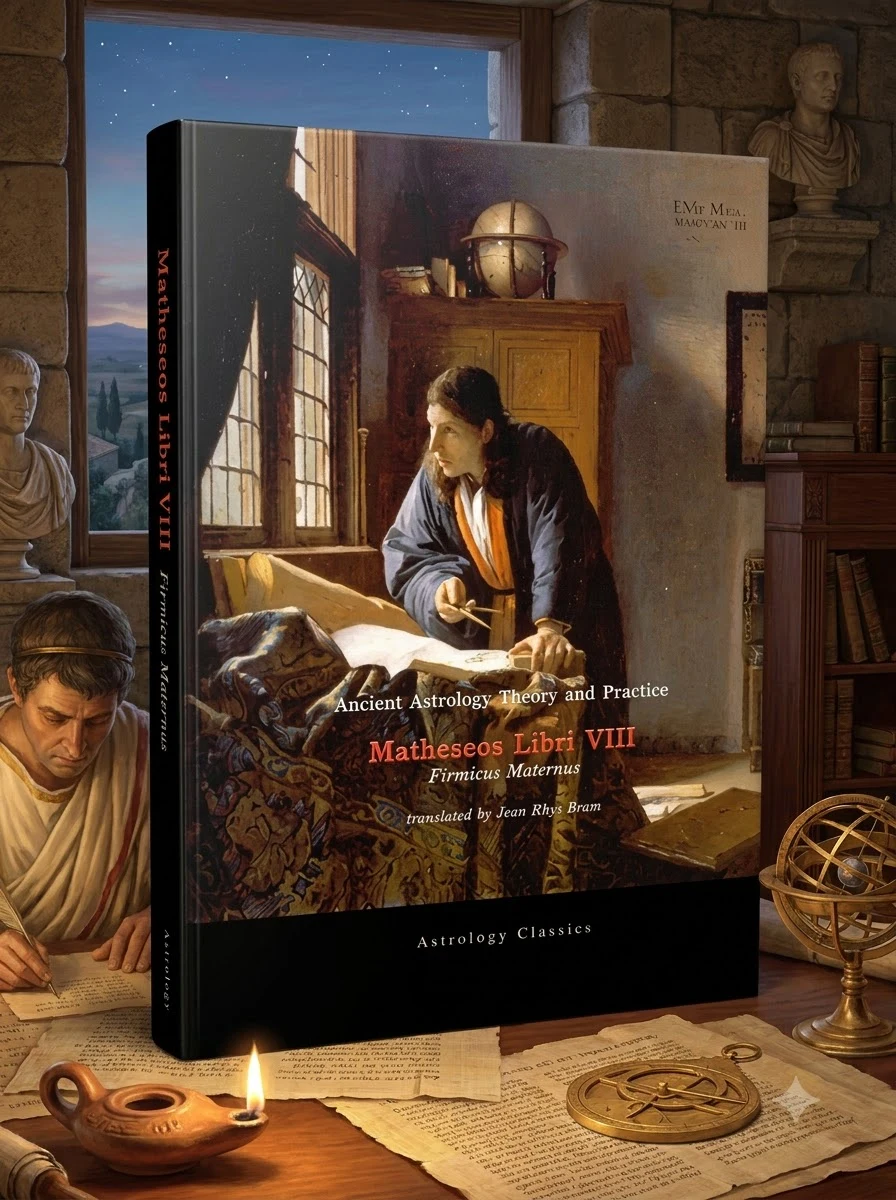
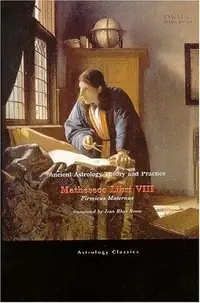
Ancient Astrology Theory and Practice: Matheseos Libri VIII

Firmicus Maternus, Julius
Reader rating
4.8
(2 reviews) 133 sold
In stock

Stock reported in the catalog; fulfillment is confirmed with your request.

📚 ABOUT THE BOOK

Discover the lost mechanics of celestial fate in this rare, complete Roman astrological manual.

Firmicus Maternus offers the sole surviving complete treatise on Hellenistic horoscopic astrology, blending rigorous calculation with esoteric philosophy. This eight-book work serves as both a technical manual and a philosophical defense of the stars' influence. It preserves unique Hellenistic data otherwise lost to time, detailing planetary rulerships, house systems, and the intricate web of cosmic destiny. For the serious student, it provides an unbroken window into how ancient minds interpreted the heavens, merging scientific observation with spiritual conviction in a way no other extant text from this era achieves.

Key themes
Hellenistic Astrology Celestial Determinism Planetary Rulerships
Historical context

This work stands as the sole surviving complete treatise on Hellenistic horoscopic astrology, preserving unique data from an era where scientific observation merged seamlessly with spiritual conviction regarding cosmic destiny.


Difficulty
●●● Demanding
Fans will love it
Hellenistic philosophical texts · Classical mathematical astronomy · Historical esoteric manuals · Ancient astrological theory
🪐 Astrology
🏛 Astrology Classics 📖 352 pages 📔 Paperback 📐 Paperback ISBN: 9781933303109
Fun fact
This volume is indispensable for its rarity and depth. Firmicus provides a technical precision rarely matched in modern summaries. It excels in preserving Hellenistic nuance, offering a raw, unfiltered look at classical practice. However, readers seeking psychological or New Age interpretations will find it dry and rigid. It sits firmly as the academic cornerstone of historical astrology, essential for those willing to study the roots of the craft rather than its modern branches.
📚 This book appears in Esoterica Books

📝 Description: Ancient Astrology Theory and Practice: Matheseos Libri VIII

Julius Firmicus Maternus, a native of Sicily, was a Roman lawyer of the senatorial class. He lived in the first half of the fourth century AD (c.280-c.360). He was also a student of Greek astrology, which forms the basis of this book. Of this book, James Herschel Holden writes, "The Mathesis is the lengthiest astrological treatise that has come down to us from the classical period. It consists of eight books, of which the first forms an introductory essay on astrology, and the rest set forth the fundamentals of Greek astrology. Several sections contain material that is found nowhere else...." (History of Horoscopic Astrology, pg. 66.) The translator writes, "Magic, philosophy, science and theology combine in strange ways in the thinking of the last centuries of the Roman empire..... Firmicus seemed worthy of note for many reasons. He is almost alone as author of works produced both before and after an apparent conversion to Christianity.... He left a lengthy handbook detailing the astrological practices of his day, the only work which has come down to us in its entirety [90% complete: Holden] out of numerous astrological treatises written in the Hellenistic and Roman periods..... This manual was important because it was the channel for astrological lore to the Middle Ages and Renaissance." (from the Preface) Jean Rhys Bram holds a degree in Latin from the University of Chicago, and a Ph. D. in Classics from New York University. She taught Latin, ancient Greek, and Mythology at Hunter College until her retirement. At 92, she continues to read widely and tutor students. She enjoys the company of twelve cats.

💎 Expert review

💎
Esoterica Books editorial team
Occult literature desk
This eight-book work serves as both a technical manual and a philosophical defense, preserving unique Hellenistic data otherwise lost. It details planetary rulerships and house systems with a rigor that appeals to the serious student of ancient esotericism. However, it does NOT suit casual readers seeking simple horoscopes or modern psychological astrology. Those expecting accessible, contemporary language may find the dense, technical nature of this Roman treatise daunting. It is a scholarly resource for understanding historical celestial fate mechanics rather than a practical guide for daily life, demanding patience and a background in classical studies to fully appreciate its structural and philosophical contributions to the field.
✓ EDITOR'S REVIEW

📖 Why choose it

📖

Why this book is worth reading

Serious students of the occult will find this text to be an unbroken window into how ancient minds interpreted the heavens. Firmicus Maternus provides a rare, complete Roman astrological manual that blends rigorous calculation with esoteric philosophy, offering insights lost to time. Readers seeking to understand the intricate web of cosmic destiny and planetary rulerships will gain from this technical yet philosophical defense of celestial influence. It is essential for those who wish to see how ancient scholars merged scientific observation with spiritual conviction, providing a depth of knowledge no other extant text from this era achieves for the dedicated practitioner or historian.

⭐ Reader reviews

The starting rating comes from the team Esoterica Books —
⭐ Esoterica editorial review Editorial rating 4.7/5
★★★★
Scholars of ancient history, professional astrologers seeking foundational techniques, and seekers interested in the intersection of Roman law, philosophy, and mystical practice.

Reader rating

4.8
Based on 2 reviews
5
1
4
1
3
0
2
0
1
0
S
Sofia L. ✓ Verified purchase
April 18, 2026
Essential reading

My book club chose this last month. It reads better in small doses — a chapter at a time with notes. It's become a regular reference in my practice.

E
Esoterica Books editorial team

This eight-book work serves as both a technical manual and a philosophical defense, preserving unique Hellenistic data otherwise lost. It details planetary rulerships and house systems with a rigor that appeals to the serious student of ancient esotericism. However, it does NOT suit casual readers seeking simple horoscopes or modern psychological astrology. Those expecting accessible, contemporary language may find the dense, technical nature of this Roman treatise daunting. It is a scholarly resource for understanding historical celestial fate mechanics rather than a practical guide for daily life, demanding patience and a background in classical studies to fully appreciate its structural and philosophical contributions to the field.

❓ Frequently asked questions

Yes, but it differs significantly. Firmicus uses the Hellenistic system, emphasizing planetary dignity, sect, and aspects rather than the psychological focus of modern pop astrology.
It is the only nearly complete work of its kind. Without it, our understanding of classical astrological practice would be fragmented and incomplete.

📖 Who should read this

Scholars of ancient history, professional astrologers seeking foundational techniques, and seekers interested in the intersection of Roman law, philosophy, and mystical practice.

🎯 Key themes and symbolism

Hellenistic Astrology

Celestial Determinism

Planetary Rulerships

💬 Quotes from the book

“The stars move in accordance with the laws of nature, yet their influence is woven into the fabric of the soul.”

“To understand the heavens is to understand the mirror of the self.”

📜 Historical context

Written in the fourth century AD, this text bridges the late classical world and early Christian era. Firmicus, a senator and lawyer, captures the zenith of Greek astrological theory before its fragmentation. It stands as the primary source for understanding pre-medieval horoscopic methods, preserving techniques from the Alexandrian school that would otherwise have vanished into the mists of antiquity.

📚 Glossary

Mathesis
Hellenistic
Sect

📔 Questions to reflect on

  1. How does viewing fate as a cosmic structure rather than a random chance alter your sense of agency?
  2. Which planetary influence feels most 'visible' in your current life circumstances?
  3. In what ways do the ancient Roman concepts of duty and celestial order resonate with your personal ethics?

✍️ More books by this author Firmicus Maternus, Julius

All books by this author →
You might also like

See more →
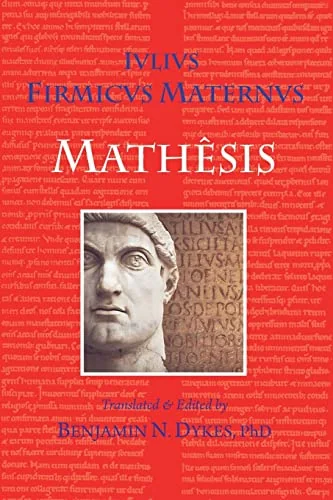
Cover unavailableMathesisFirmicus Maternus, Julius Mathesis
✨ New
Firmicus Maternus, Julius
Mathesis
$36.00
90