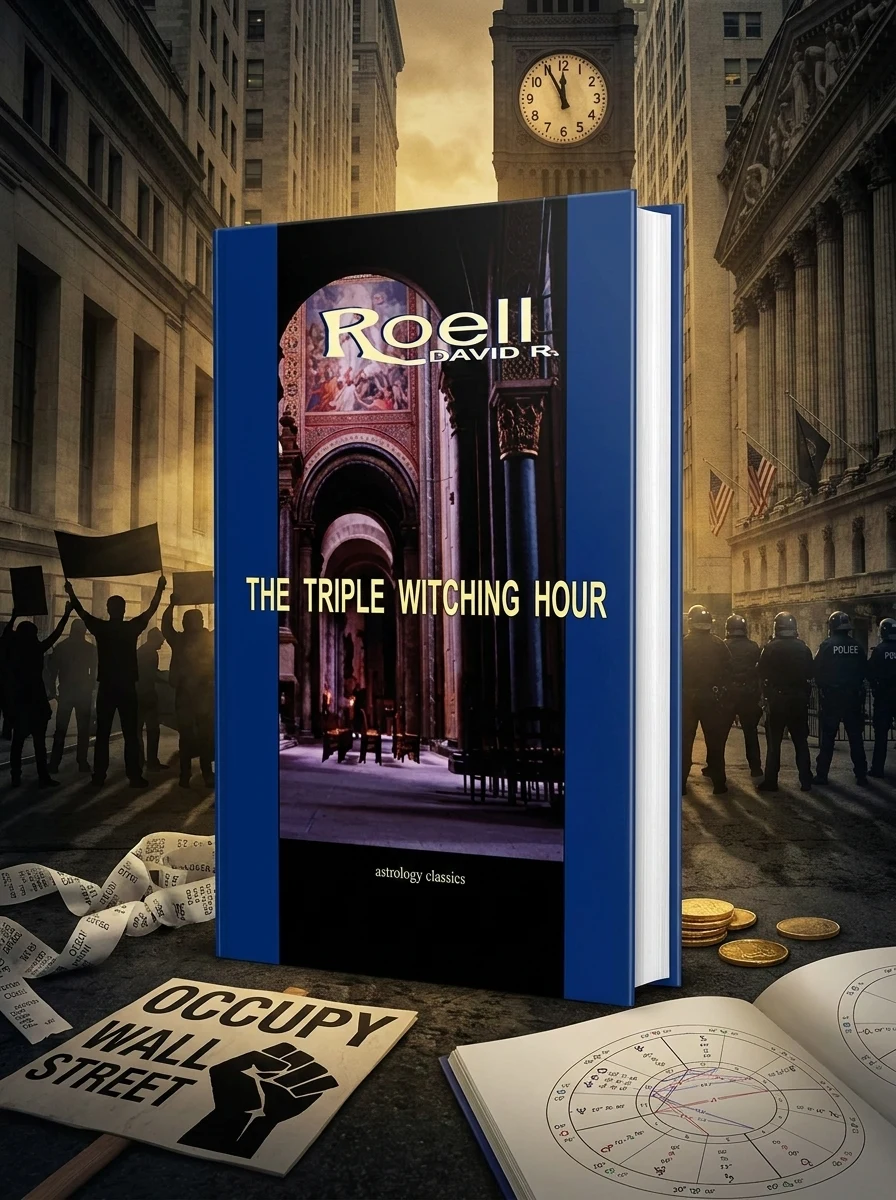
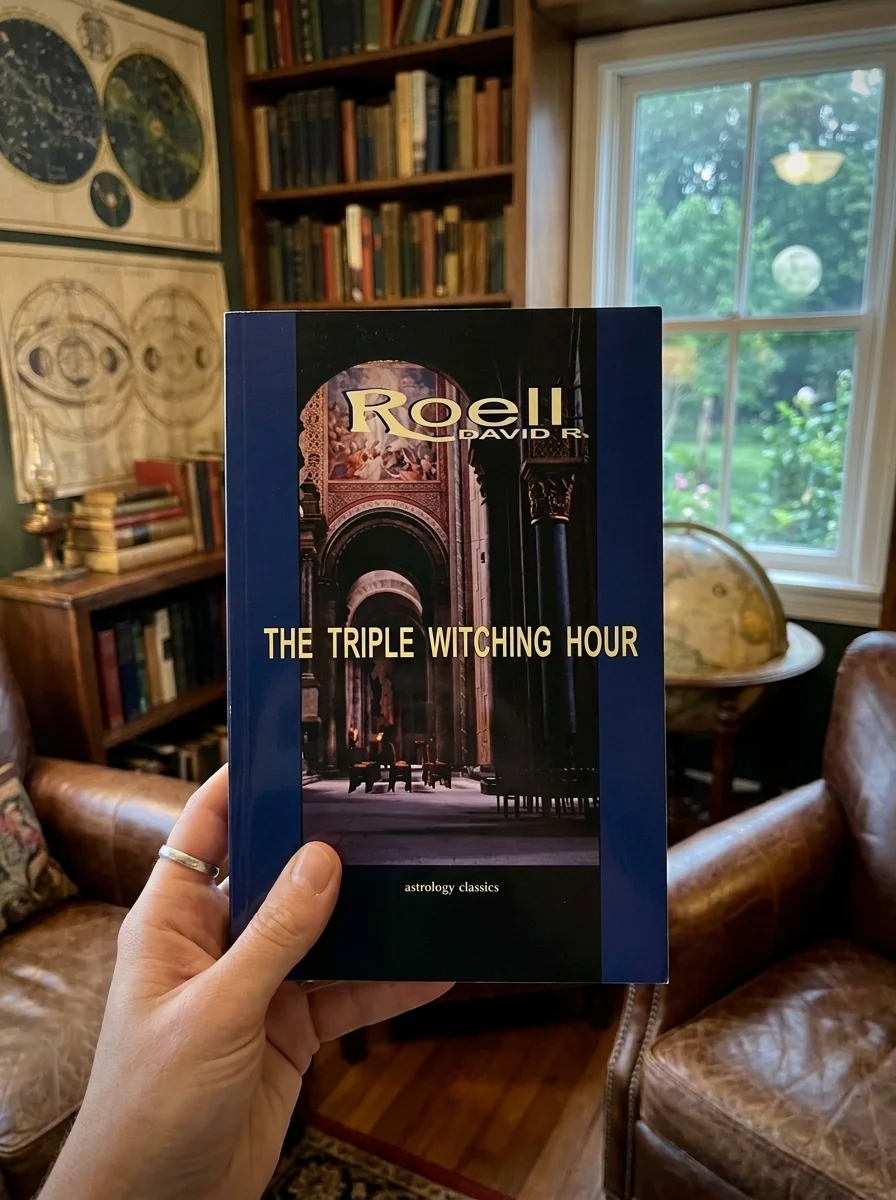
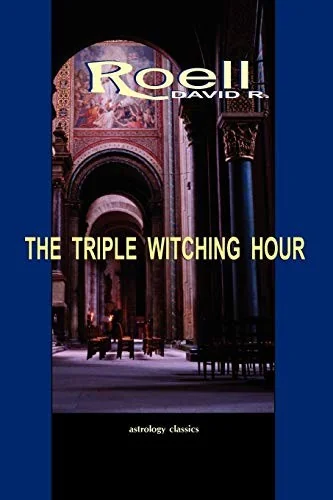
The Triple Witching Hour: The Third Book of Astrological Essays
✍️ Roell, David RDavid R. Roell's third astrological essay collection provocatively redefines cosmic influence. Beginning with an astrological post-mortem of Occupy Wall Street, Roell argues that successful collective action, like personal milestones, benefits from celestial timing. He then unveils his groundbreaking theory: astrology doesn't descend from an ethereal sky, but emanates directly from the Earth itself, a pervasive energy field. This radical perspective leads him to critically examine the historical animosity between science and astrology, tracing its roots to a biased Enlightenment narrative that unfairly cast ancient wisdom as mere superstition, a battle between urban intellectualism and rural tradition.


📝 Description: The Triple Witching Hour: The Third Book of Astrological Essays
💎 Expert review
📖 Why choose it
Why this book is worth reading
Readers deeply invested in the political dimensions of astrology will find this book essential. It offers a refreshing, earth-centered perspective that validates collective action through celestial timing, as seen in movements like Occupy Wall Street. Those tired of detached, horoscope-style readings will appreciate Roell’s rigorous argument that astrology is rooted in terrestrial energy fields. This text empowers practitioners to view their craft not just as personal guidance, but as a tool for historical analysis and social protest, bridging the gap between ancient rural wisdom and modern urban intellectualism.
⭐ Reader reviews
Reader rating
Roell presents a bold, revisionist history that may alienate traditionalists who prefer astrology’s celestial detachment. This book is not for those seeking simple personality profiles or detached cosmic fatalism; it demands engagement with complex socio-historical arguments. Readers uncomfortable with the critique of Enlightenment science or those who view astrology solely as a spiritual practice divorced from political activism will likely find its earth-bound, protest-oriented framework too abrasive. However, for those willing to accept its premise that cosmic influence emanates from the Earth, it offers a provocative, intellectually stimulating redefinition of the discipline’s power and purpose.
❓ Frequently asked questions
📖 Who should read this
For those who question established narratives, whether in science, history, or spirituality. If you seek a rigorous, no-holds-barred re-evaluation of astrology's origins and its profound, often overlooked, impact on human affairs and historical events, this book is an essential read.
🎯 Key themes and symbolism
Astrology as Strategic Tool
Roell demonstrates how astrological insights can illuminate the dynamics of social movements, using Occupy Wall Street's failure as a case study. He posits that understanding planetary cycles is crucial for orchestrating impactful collective action, hinting at a broader application for life's significant events.
Earth-Centered Astrology
Challenging conventional views, this book presents a bold hypothesis that astrological forces are not extraterrestrial but are generated by the Earth itself. Roell argues that we are fundamentally immersed in these terrestrial influences from birth, suggesting a deeply immanent and material basis for astrology.
Deconstructing Enlightenment Science
Roell offers a revisionist history of the Enlightenment, contending its "science versus superstition" dichotomy was a politically charged construct. He reveals this period as a power struggle where sophisticated urban thought dismissed rural, traditional knowledge, thereby establishing a prejudiced foundation for modern scientific hostility towards astrology.
📜 Historical context
📚 Glossary
- Triple Witching Hour
- Occupy Wall Street (OWS)
- Enlightenment
📔 Questions to reflect on
- How might an astrological understanding of timing have altered the trajectory or impact of a historical social movement you're familiar with?
- If astrology truly originates from Earth's own energies, what implications does this have for our relationship with the planet and our understanding of spiritual connection?
- Reflect on the historical narrative of "science vs. superstition." Can you identify other historical instances where knowledge systems were dismissed due to prevailing power dynamics rather than objective truth?