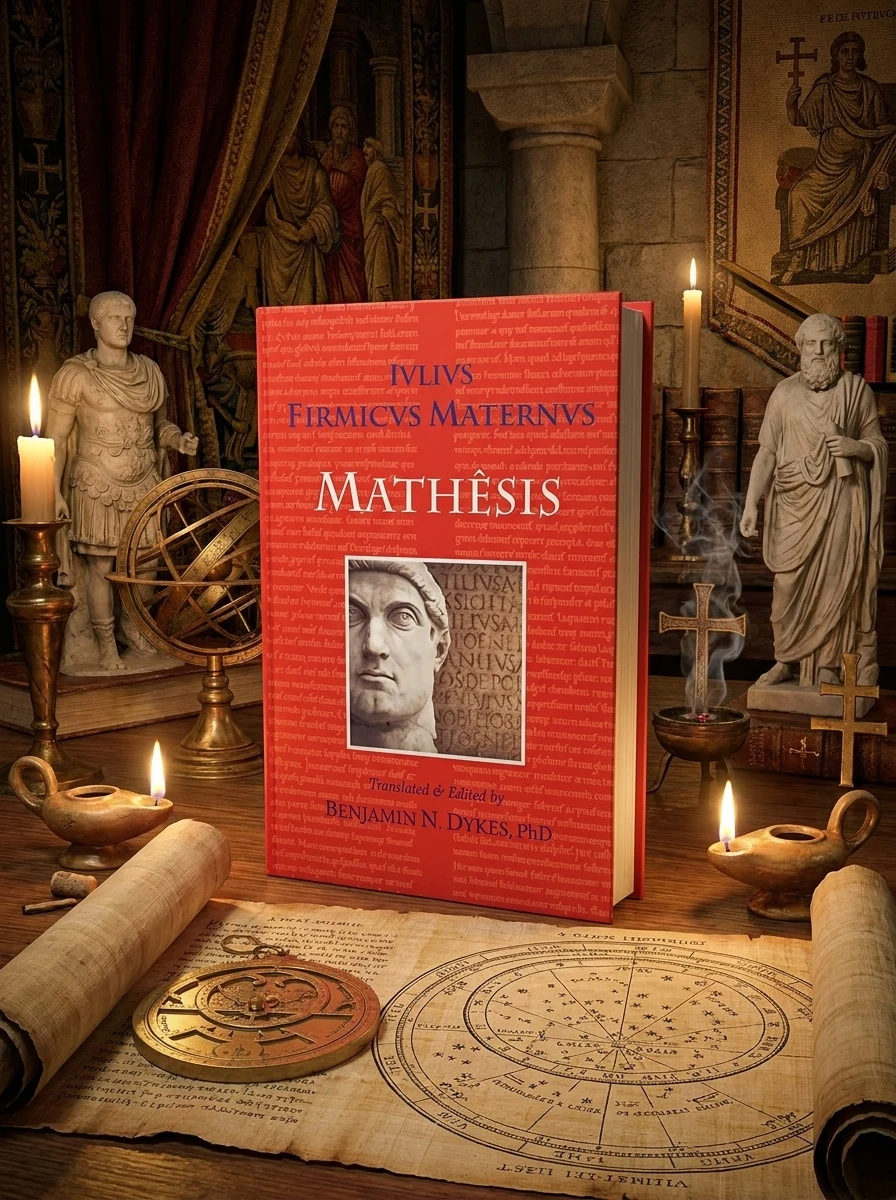
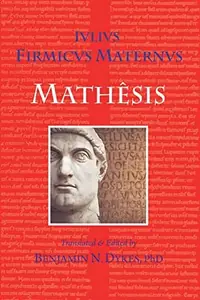
Mathesis
Firmicus Maternus, JuliusStock reported in the catalog; fulfillment is confirmed with your request.
Unearth the ancient cosmic wisdom of Rome's last great astrologer.
Firmicus Maternus's "Mathesis" is an essential astrological treatise from the 4th century AD, a pivotal era marked by early Neoplatonic thought and the rise of Christian emperors. This work stands as one of the most comprehensive surviving records of Hellenistic astrological doctrine, preserving insights from foundational figures like Nechepsō-Petosiris and Asclepius. Its unique content, much of which is found nowhere else, offers an unparalleled window into ancient cosmic understanding and divinatory practice, making it indispensable for serious students of historical astrology.
This work emerges from the pivotal 4th century AD era, characterized by early Neoplatonic thought and the rise of Christian emperors in Rome. It serves as a critical bridge preserving Hellenistic astrological doctrine during a time of significant religious and intellectual transition.


📝 Description: Mathesis
💎 Expert review
📖 Why choose it
Why this book is worth reading
Serious students of historical astrology will find this text indispensable for its unparalleled window into ancient cosmic understanding. As one of the most comprehensive surviving records of Hellenistic astrological doctrine, it preserves vital insights from foundational figures like Nechepsō-Petosiris and Asclepius that are found nowhere else. By unearthing the wisdom of Rome's last great astrologer, readers gain access to divinatory practices and theoretical frameworks that define the field’s roots. This treatise is essential for those seeking to understand the depth and complexity of early astrological systems, offering a rare continuity with classical traditions amidst the shifting tides of late antiquity.
⭐ Reader reviews
Reader rating
Firmicus Maternus's 'Mathesis' stands as an essential artifact for the serious scholar, providing a pivotal record of Hellenistic doctrine during a transformative historical period. However, it is not suitable for casual readers seeking accessible modern interpretations or simplified horoscope advice. The text’s academic density and reliance on foundational, archaic concepts may alienate those without a strong background in classical studies or esoteric history. While indispensable for its preservation of unique insights from figures like Asclepius, the work demands patience and scholarly rigor. It is best appreciated by historians and dedicated practitioners who value primary source continuity over readability, making it a specialized tool rather than a general interest guide.
❓ Frequently asked questions
📖 Who should read this
If you are a dedicated student of astrological history, a practitioner seeking deeper roots for your craft, or a scholar of Late Antiquity, this definitive edition of "Mathesis" offers unparalleled insights. Prepare to immerse yourself in the intricate celestial mechanics and philosophical worldview of an ancient master.
🎯 Key themes and symbolism
Hellenistic Astrological Roots
This volume meticulously compiles and interprets the foundational principles of Hellenistic astrology. Drawing from venerable figures such as Nechepsō-Petosiris, Firmicus Maternus synthesizes a body of knowledge that was once widely dispersed, offering a rare glimpse into the complex methodologies and philosophical underpinnings that shaped ancient celestial prognostication.
Late Antique Esotericism
Positioned at the twilight of classical antiquity, "Mathesis" reflects the spiritual and intellectual currents of its time, intertwining with nascent Neoplatonic ideas amidst the burgeoning influence of Christianity. It provides crucial insight into the evolving occult landscape of the 4th century AD, showcasing the enduring power of astrological inquiry during societal transformation.
Scholarly Rediscovery
This new translation addresses prior textual shortcomings, presenting a meticulously researched edition designed for clarity and depth. Enhanced with extensive commentary, a specialized glossary, and over one hundred illustrative tables and figures, it transforms a challenging ancient text into an accessible resource for contemporary academic and practical astrological study.
💬 Quotes from the book
“Observe the Ascendant's lord, its dignities and aspects, for therein lies the key to the native's fortune and the measure of their earthly span. The stars do not compel, yet they reveal the currents of fate.”
“The wisdom of the Egyptians, passed through the hands of Petosiris and Nechepsō, forms the bedrock upon which our celestial understanding is built. For without their ancient insights, the motions of the heavens remain but a mute spectacle.”
📜 Historical context
📚 Glossary
- Hellenistic Astrology
- Neoplatonism
- Late Antiquity
📔 Questions to reflect on
- How might the astrological doctrines presented by Firmicus Maternus offer a different perspective on fate and free will compared to modern astrological or philosophical views?
- Considering "Mathesis" was written during the rise of Christianity, what tensions or harmonies might have existed between astrological practice and emerging monotheistic beliefs at that time?
- If you were to apply a principle or technique from Firmicus Maternus's work to a contemporary chart, what unique insights do you imagine it might reveal, and how might it challenge current interpretations?
✍️ More books by this author Firmicus Maternus, Julius
All books by this author →
🏛 Books from this publisher Cazimi Press
All books from this publisher →
 91
91
 91
91

You might also like
See more →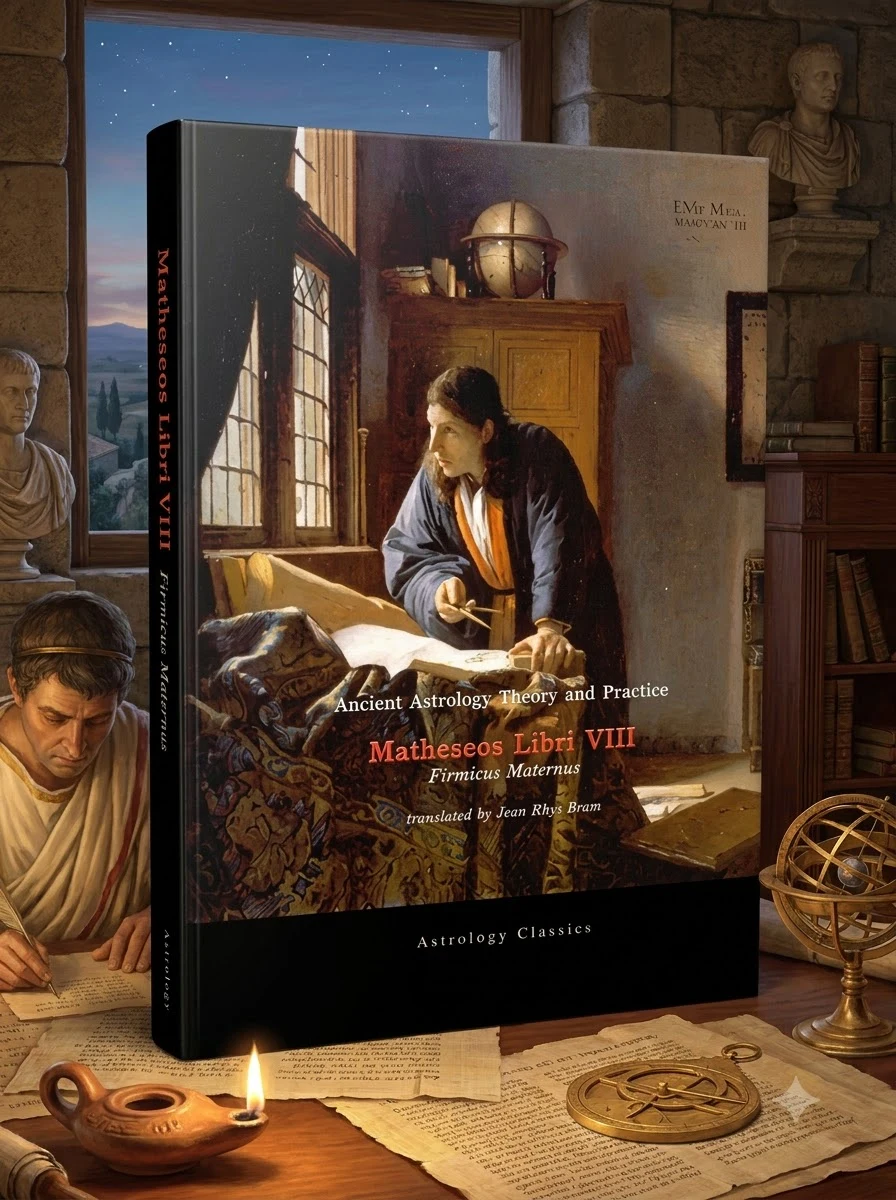
 91
91
 91
91