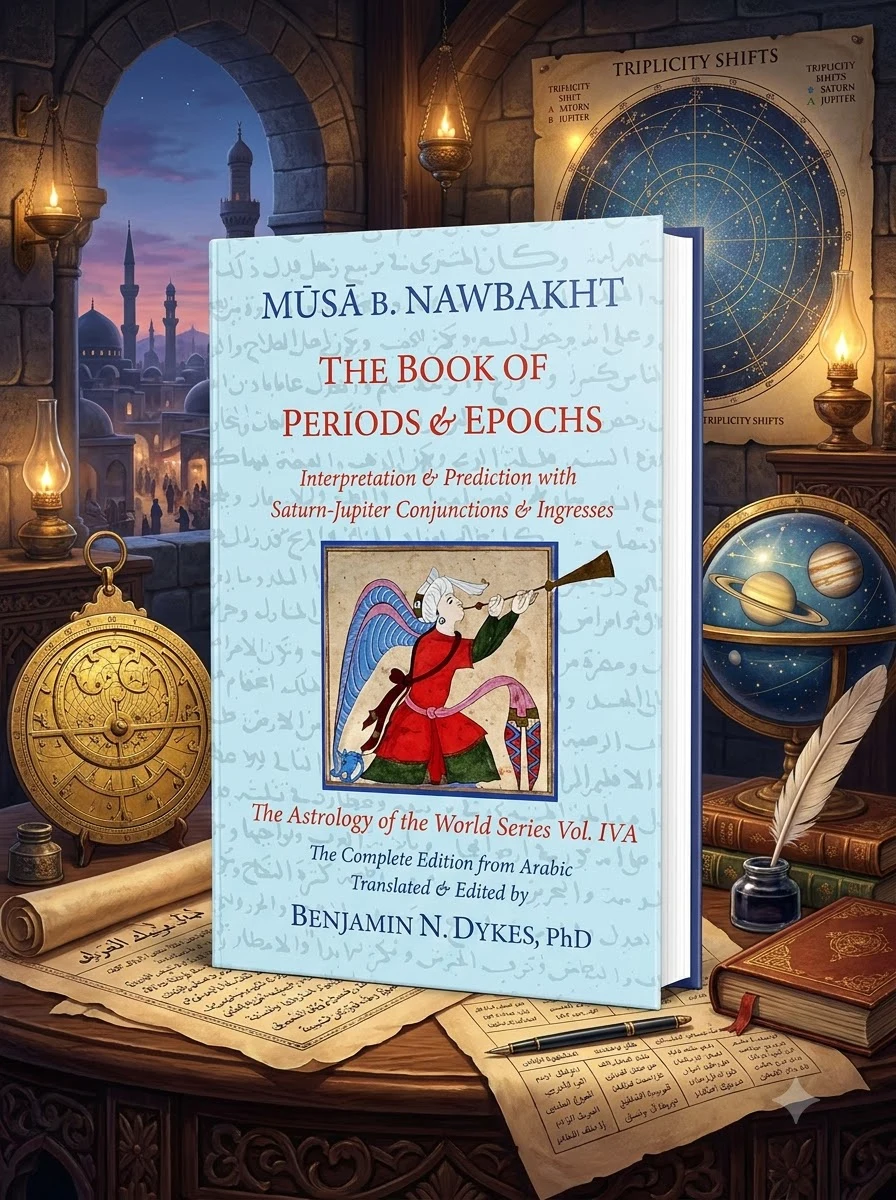
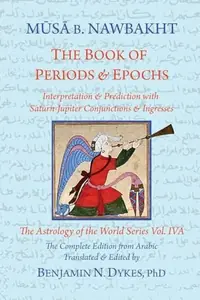
The Book of Periods & Epochs
B Nawbakht, MusaStock reported in the catalog; fulfillment is confirmed with your request.
Uncover the celestial mechanics governing the rise and fall of empires.
Step into the sophisticated world of medieval Islamic astrology with Mūsā b. Nawbakht's foundational work. This volume offers an unparalleled exploration into interpreting mundane charts, providing ancient methods for understanding political cycles, societal stability, and the fate of nations. Through detailed analysis of planetary movements, Mūsā deciphers the interplay between celestial events and earthly governance, offering insights into leadership, public sentiment, and the emergence of civil strife. Benjamin Dykes's extensive introduction critically contextualizes Mūsā's profound contributions, making this a vital resource for traditional astrologers.
This volume anchors itself in the sophisticated tradition of medieval Islamic astrology, exploring the intersection of celestial mechanics and political fate. It serves as a foundational text for understanding how ancient scholars interpreted mundane charts to discern societal stability and the rise or fall of empires.


📝 Description: The Book of Periods & Epochs
💎 Expert review
📖 Why choose it
Why this book is worth reading
This book is an essential resource for traditional astrologers seeking to deepen their understanding of mundane charts and the political cycles that govern nations. Readers who are fascinated by the interplay between celestial events and earthly governance will find immense value in Mūsā b. Nawbakht's detailed analysis of planetary movements. It offers unique insights into leadership, public sentiment, and civil strife through an ancient lens. Benjamin Dykes's critical introduction further contextualizes these profound contributions, making complex historical methods accessible to those dedicated to preserving classical astrological practices. If you wish to uncover the mechanics behind the fate of empires, this text provides the necessary scholarly depth.
⭐ Reader reviews
Reader rating
While Mūsā b. Nawbakht’s work offers unparalleled insight into medieval Islamic mundane astrology, it is not for the casual reader or those seeking quick horary tips. The dense theoretical framework and focus on political cycles may alienate modern astrologers who prefer psychological or predictive techniques over historical analysis of societal stability. It requires a willingness to engage with complex traditional methods rather than contemporary shortcuts. However, for serious students of the history of astrology, it is an invaluable primary source that illuminates how celestial events were once thought to dictate the rise and fall of civilizations and governance structures.
❓ Frequently asked questions
📖 Who should read this
If you are a dedicated student of traditional or Hellenistic astrology, particularly interested in mundane techniques and historical interpretation, this book is essential. It's for those who seek to understand the grand cycles of history and governance through a deep, ancient astrological framework.
🎯 Key themes and symbolism
Mundane Astrological Prediction
The book meticulously details how ancient astrologers prognosticated major world events. It focuses on interpreting charts to foresee shifts in power, periods of public discontent or support for rulers, and the potential for societal upheaval, providing a blueprint for understanding large-scale historical trends through a celestial lens.
Persian Astrological Tradition
Delve into the specific 'Persian' school of thought regarding planetary influence. Mūsā emphasizes the superior planets and the Sun as primary indicators of governmental efficacy, justice, and the well-being of the populace, offering a distinct theoretical framework for analyzing the conduct of affairs within a kingdom.
Advanced Chart Interpretation
This text provides thorough instructions for advanced astrological calculations crucial for mundane work. Readers will find detailed guidance on triplicity shifts, the significance of Saturn-Jupiter conjunctions (the 'Sixties' and 'Twenties'), and the interpretation of Aries and seasonal ingresses, equipping them with powerful predictive tools.
💬 Quotes from the book
“When the great conjunctions shift from one triplicity to another, know that the very fabric of governance shall be rewoven, and new patterns of power shall emerge from the old.”
“Observe the dance of Saturn and Jupiter, for in their union and separation is inscribed the trust of the people in their leaders, and the seed of rebellion or enduring peace.”
📜 Historical context
📚 Glossary
- Mundane Astrology
- Triplicity Shift
- Ingress
📔 Questions to reflect on
- How might Mūsā's 'Persian theory' of planetary influence offer a different perspective on current global events compared to contemporary astrological approaches?
- Consider a major political upheaval in history. How could the techniques of triplicity shifts or Saturn-Jupiter conjunctions, as described by Mūsā, be applied to interpret its astrological timing and significance?
- Reflect on the concept of 'continuity between regimes' as interpreted through celestial patterns. What does this suggest about the cyclical nature of power and human affairs?
✍️ More books by this author B Nawbakht, Musa
All books by this author →
🏛 Books from this publisher Cazimi Press
All books from this publisher →

 91
91

You might also like
See more →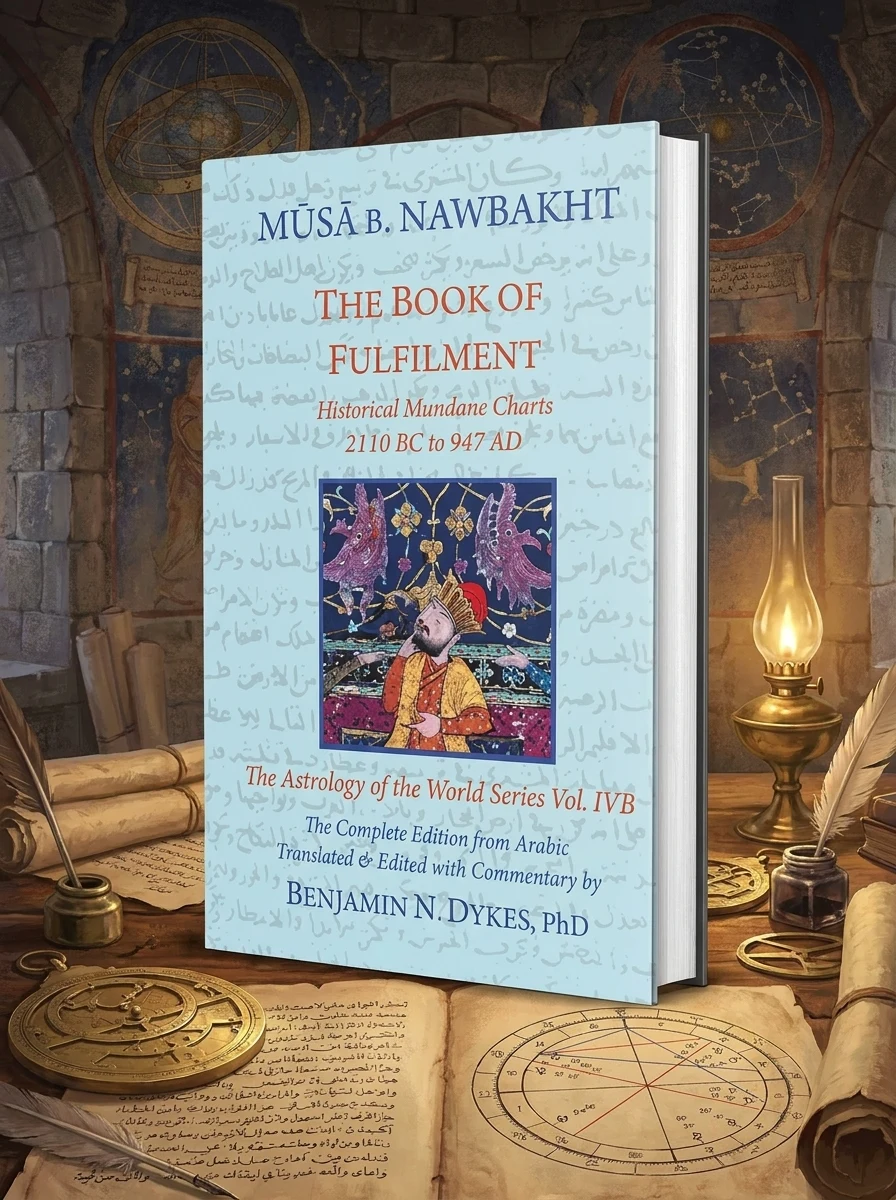
 91
91
 89
89