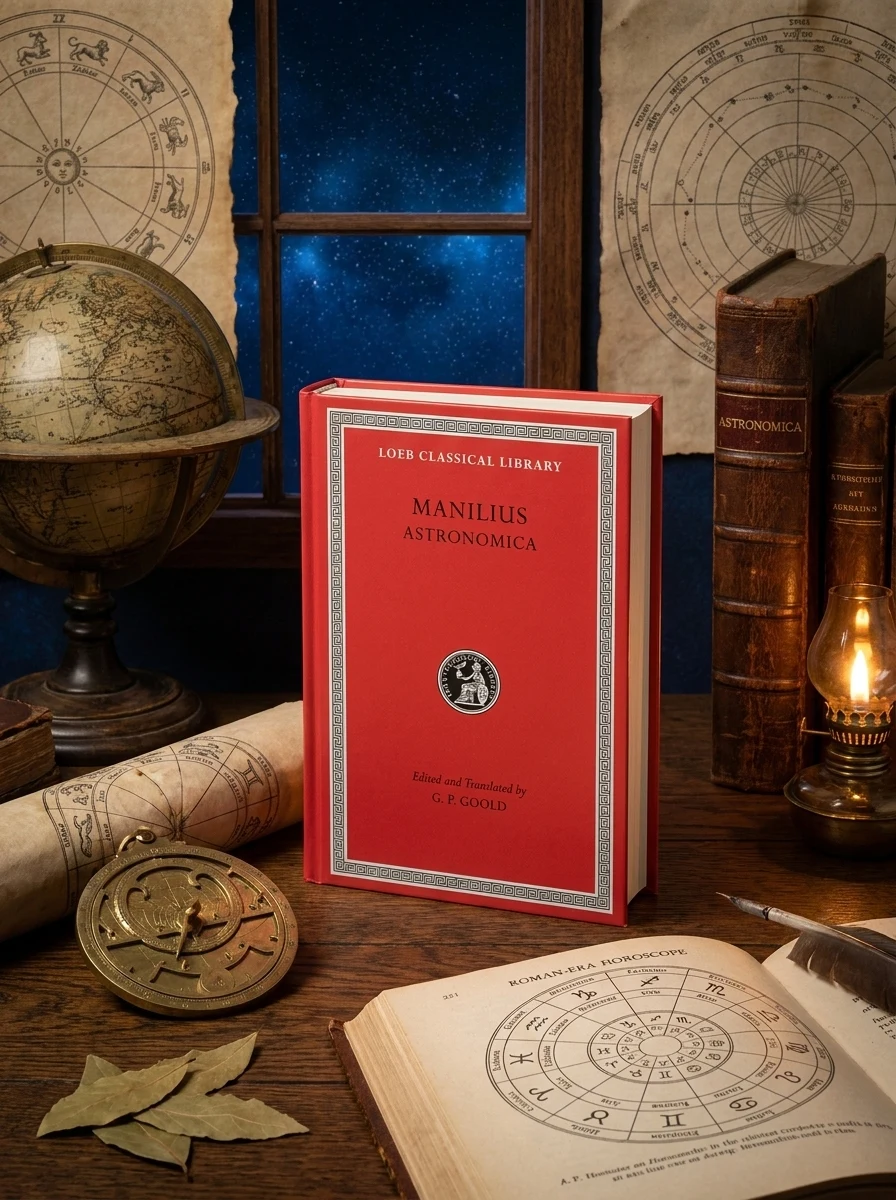
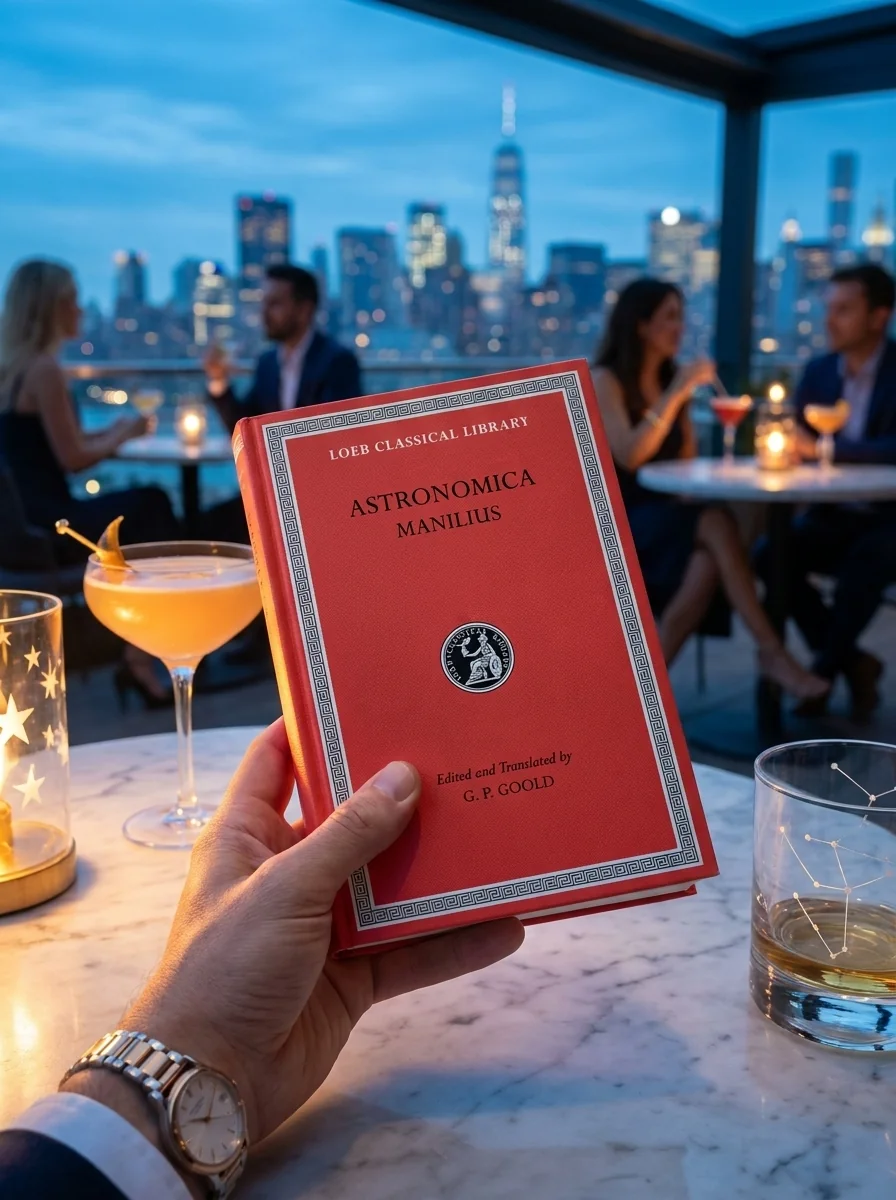
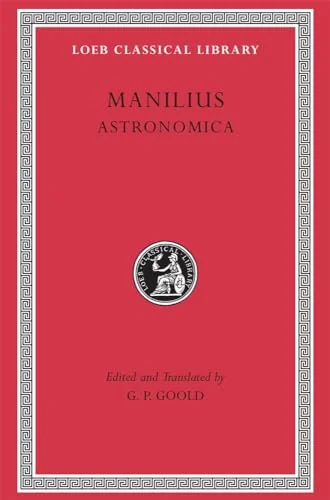
Astronomica Manilius
Marcus Manilius's *Astronomica* stands as the earliest comprehensive Latin treatise on astrology, a profound didactic poem from the Augustan and Tiberian eras. Across five books, it masterfully merges intricate celestial mechanics—like zodiacal signs, horoscoping degrees, and planetary chronocrators—with deep Stoic philosophy. Manilius showcases extraordinary poetic skill, translating complex mathematical tables into verse and offering vivid, often humorous, character sketches. This seminal work, now finally accessible in English prose, provides an invaluable window into ancient cosmological thought, blending scientific inquiry with spiritual insight and literary artistry.


📝 Description: Astronomica Manilius
📑 What's inside
- The World of Manilius (map) Preface Introduction "About the Poet" "A Guide to the Poem" "The Manuscripts" "Editorial Principles" "Bibliography (with Addendum)"
- The Astronomica of Marcus Manilius "Book One" "Book Two" "Book Three" "Book Four" "Book Five"
- Index The Skies of Manilius (star-charts)
💎 Expert review
📖 Why choose it
Why this book is worth reading
Readers fascinated by the intersection of ancient science and spiritual insight will find profound value in this text. It offers an invaluable window into how early civilizations viewed fate and the cosmos, translating complex mathematical tables into accessible English prose. Those who appreciate literary artistry combined with rigorous intellectual inquiry will enjoy Manilius's vivid character sketches and poetic skill. It is essential for anyone seeking to understand the historical roots of astrological thought within a philosophical framework.
⭐ Reader reviews
Reader rating
This translation makes a seminal but obscure work accessible, yet it remains a dense academic exercise rather than light entertainment. Readers seeking practical modern horoscopes or casual mythological retellings will likely find it dry and overly technical. The text demands patience for its intricate celestial mechanics and Stoic digressions. It is not suited for those who prefer narrative-driven plots over didactic instruction. However, for scholars of classical literature and history of science, it is a necessary, albeit demanding, resource that bridges the gap between ancient poetry and scientific inquiry.
❓ Frequently asked questions
📖 Who should read this
If you're a scholar of classical literature, a dedicated student of astrological history, or simply fascinated by ancient cosmological thought, this profound work offers unparalleled insight. Discover the poetic mind that first codified the stars' influence, and ponder the cosmos through the eyes of antiquity.
🎯 Key themes and symbolism
Astrological Craft Defined
This seminal work meticulously details the mechanics of ancient astrology, from the twelve houses and zodiacal signs to the precise calculation of horoscoping degrees. Manilius illuminates forgotten technical concepts like chronocrators and paranatellonta, providing a foundational understanding of how celestial movements were interpreted to predict earthly fates and human dispositions, often with surprising specificity.
Stoic Cosmic Vision
Beyond mere technical instruction, Manilius imbues his astronomical treatise with profound Stoic conviction. He explores the interconnectedness of humanity and the cosmos, suggesting an ordered universe governed by divine reason. This philosophical undercurrent lends a spiritual depth to the celestial mechanics, positioning astrology not just as prediction, but as a pathway to understanding universal harmony and our place within it.
Poetic Ingenuity
Remarkably, Manilius translates complex mathematical and astrological concepts into compelling Latin verse. His didactic poem showcases extraordinary literary skill, not only in rendering abstract diagrams poetically but also in crafting vivid, often humorous, character portraits shaped by stellar influences. The narrative flourish, including an extended myth, further highlights his artistic flair in making the abstruse accessible.
📜 Historical context
📚 Glossary
- Horoscoping Degree
- Chronocrators
- Paranatellonta
📔 Questions to reflect on
- How might understanding the ancient perspective of cosmic influence, as presented by Manilius, change your view of personal destiny or free will?
- Consider how Manilius's blend of poetry and technical instruction differs from modern scientific communication. What are the strengths and weaknesses of each approach for conveying complex ideas?
- Reflect on the Stoic notion of an ordered, divinely governed universe as depicted in *Astronomica*. Does this resonate with your own spiritual or philosophical outlook today?