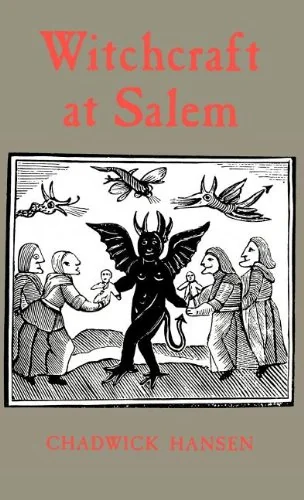
Witchcraft at Salem
Chadwick Hansen re-examines Salem trial documents to challenge traditional narratives of the 1692 events.
Hansen’s study offers a revisionist look at the 1692 Salem witchcraft trials by prioritizing primary source documents over established lore. He argues that the community’s actions and the legal proceedings were misunderstood in later retellings. The book dissects the actual events through the lens of colonial New England history. It avoids supernatural speculation to focus on the human and societal factors at play. This approach clarifies the distinction between historical fact and popular myth regarding the occultism of the period.
This volume addresses the United States during the Colonial Period (1600-1775). It focuses on the state and local history of New England, including Connecticut, Massachusetts, Maine, New Hampshire, Rhode Island, and Vermont. The text bridges historical record with mind, body, spirit occultism studies.


📝 Description: Witchcraft at Salem
💎 Expert review
📖 Why choose it
Why this book is worth reading
This book is essential for readers who crave a grounded, fact-based understanding of the Salem episode, moving far beyond popular myth to reveal the complex interplay of community anxieties and genuine belief in malefic magic. It appeals to those interested in the deeply human elements at the core of this perplexing historical event, offering a scholarly yet accessible dissection of primary documents. By presenting a compelling revisionist perspective, it challenges sensationalized narratives, providing clarity on the legal procedures and societal fears that drove the hysteria. Readers seeking truth over theater will find immense value in Hansen's meticulous analysis, which illuminates the chilling realities behind the accusations without resorting to dramatic exaggeration.
⭐ Reader reviews
Reader rating
Hansen delivers a rigorous academic examination that may feel dry to those expecting atmospheric horror or supernatural thrills. This is not a ghost story; it is a dissection of legal procedures and community anxieties supported by primary documents. Readers seeking sensationalized narratives or easy entertainment will likely find the scholarly tone tedious and the lack of dramatic flair disappointing. However, for those willing to engage with the complex reality of genuine belief in malefic magic and historical context, this text offers unparalleled depth. It is a vital corrective to myth, but only for readers prepared to prioritize historical accuracy over narrative excitement.
❓ Frequently asked questions
📖 Who should read this
If you seek a rigorous, document-based exploration of the Salem Witch Trials that dares to challenge prevailing myths, this book is essential. It's for the intellectually curious who value historical accuracy over dramatic retellings and wish to understand the true complexities of 17th-century colonial life and belief.
🎯 Key themes and symbolism
The Reality of Maleficium
Hansen explores the pervasive belief in witchcraft during the colonial period, not as mere superstition but as a deeply embedded aspect of the contemporary worldview. He examines how fears of harmful magic, or 'maleficium,' influenced accusations and community reactions, providing insight into the period's cultural psychology.
Salem's Social Fabric
The book delves into the specific local circumstances and interpersonal tensions that contributed to the outbreak of accusations. It illustrates how pre-existing rivalries, economic pressures, and religious zeal within the small Puritan community of Salem village fueled the tragic events, demonstrating the human element in the crisis.
📜 Historical context
📚 Glossary
- Salem Witch Trials
- Colonial Period
- Occultism
📔 Questions to reflect on
- Considering Hansen's revisionist approach, how might our modern understanding of historical events be skewed by popular culture or prior narratives?
- Reflect on how deeply held communal beliefs, even those we now consider irrational, can influence societal actions and outcomes during times of crisis.
- If you were a resident of Salem in 1692, how might your personal experiences and religious convictions have shaped your perspective on the unfolding accusations?
You might also like
See more →


Have a question about this item?
Ask about the edition, condition, delivery or anything else — we reply by email or phone, usually within a day.
