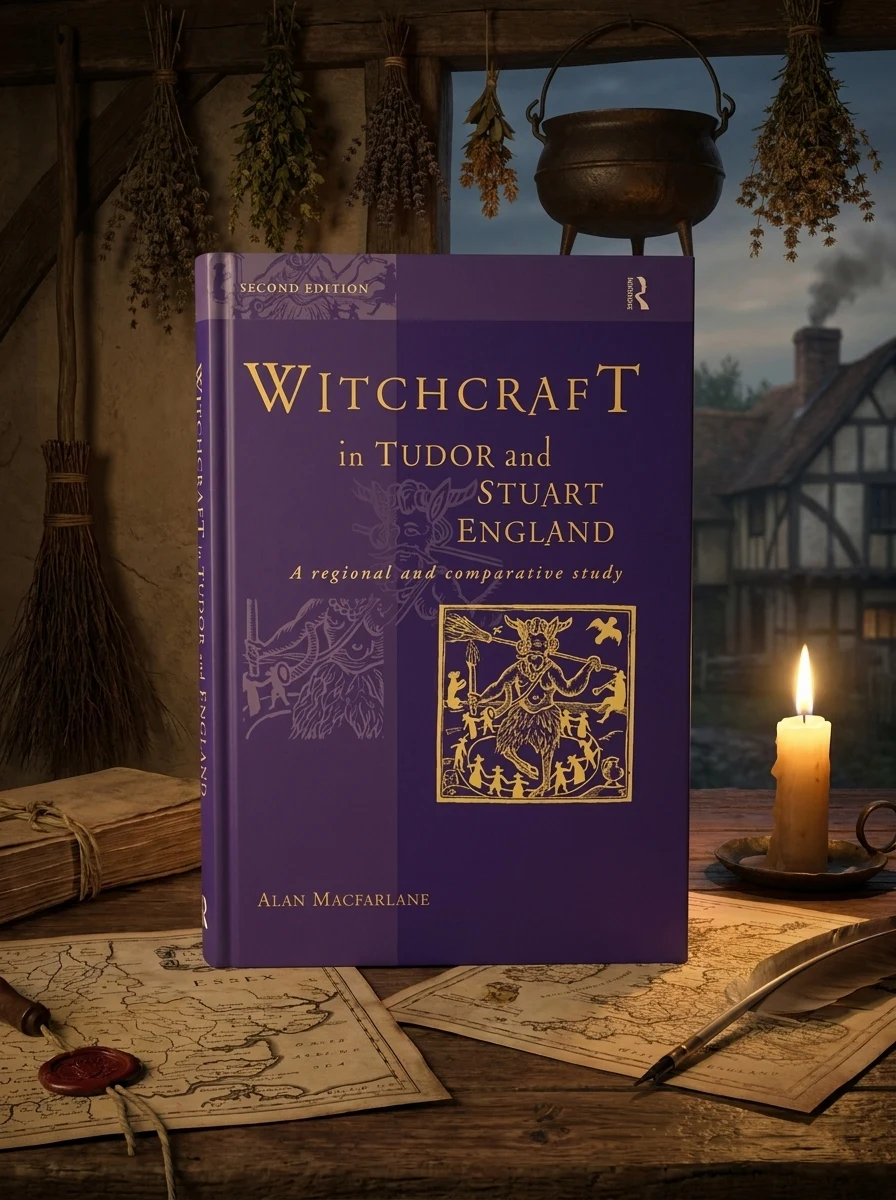
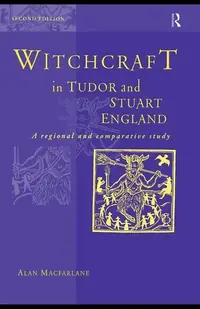
Witchcraft in Tudor and Stuart England
MacFarlane, AlanStock reported in the catalog; fulfillment is confirmed with your request.
Uncover the chilling social dynamics behind early modern witchcraft accusations in England.
Alan MacFarlane's seminal work meticulously investigates the intricate web of witchcraft beliefs and persecutions that gripped Tudor and Stuart England. Through an innovative blend of quantitative and anthropological approaches, this study transcends mere historical narrative, offering profound insights into the social and cultural underpinnings of these emotive events. Focusing particularly on the detailed case study of Essex while drawing comparative threads across other English regions, MacFarlane's methodology has not only reshaped witchcraft studies but also significantly influenced the broader field of social history, providing a foundational text for understanding early modern societal anxieties.
This seminal work sits firmly within the tradition of social history and anthropological studies of early modern Europe, specifically examining the cultural underpinnings of witchcraft accusations in Tudor and Stuart England.


📝 Description: Witchcraft in Tudor and Stuart England
💎 Expert review
📖 Why choose it
Why this book is worth reading
This book is essential for historians, sociologists, and anyone fascinated by the complex social mechanics of early modern England. MacFarlane offers a profound, data-driven look at how community dynamics fueled witchcraft accusations, moving beyond simple narrative to reveal deep structural anxieties. Readers who appreciate rigorous academic inquiry blended with anthropological insight will find this study invaluable. It provides a foundational understanding of how fear and belief intersected in Tudor and Stuart society, making it a crucial resource for those seeking to comprehend the emotional and cultural forces that shaped these historical events.
⭐ Reader reviews
Reader rating
MacFarlane’s methodology is undeniably innovative, reshaping witchcraft studies through quantitative analysis. However, this rigorous academic approach may alienate casual readers seeking a straightforward narrative or sensationalist accounts of persecution. It is not for those preferring light reading or purely anecdotal history. The text demands patience and an appreciation for dense social theory. While it offers profound insights into Essex and beyond, its scholarly tone and structural focus make it less suitable for general audiences looking for accessible storytelling rather than foundational historical analysis.
❓ Frequently asked questions
📖 Who should read this
If you're fascinated by the social history of belief, the evolution of academic methodologies, or the chilling realities of early modern England, this book offers unparalleled depth. It's essential for anyone seeking to move beyond sensationalism and understand the profound human and societal dimensions of historical witchcraft.
🎯 Key themes and symbolism
Regional Case Study
This book provides an in-depth examination of witchcraft in the county of Essex, revealing the specific local conditions, social tensions, and community dynamics that fueled accusations and trials. By focusing on a particular area, MacFarlane unveils the granular details often missed in broader historical surveys, illustrating how local contexts shaped the manifestation of magical beliefs and fears.
Innovative Methodology
MacFarlane pioneered a groundbreaking interdisciplinary approach, integrating rigorous quantitative analysis with anthropological insights to decode the complex patterns of witchcraft accusations. This fusion allowed for a more nuanced understanding of underlying social structures and human behavior, fundamentally altering how historians and scholars approach the study of past cultural phenomena.
Social History's Evolution
Beyond its focus on witchcraft, this volume stands as a landmark in the development of social and cultural history. Its meticulous attention to everyday life, community relationships, and popular beliefs—viewed through an analytical lens—demonstrated new avenues for historical inquiry, proving that seemingly niche topics could illuminate vast aspects of societal change and continuity.
💬 Quotes from the book
“The local mechanisms of accusation reveal a societal anxiety rooted deeply in communal strife and economic shifts.”
“Through meticulous quantitative analysis of Essex court records, a distinct pattern of magical recourse and judicial response emerges, differentiating it from adjacent regions.”
📜 Historical context
📚 Glossary
- Tudor England
- Stuart England
- Historiography
📔 Questions to reflect on
- How might a modern understanding of social psychology shed light on the historical phenomenon of witchcraft accusations described in this book?
- Consider how the interplay between local community dynamics and broader political or religious shifts influenced the prosecution of witchcraft in early modern England.
- Reflect on how MacFarlane's methodological innovations in studying witchcraft could be applied to understanding other marginalized or misunderstood historical phenomena.
✍️ More books by this author MacFarlane, Alan
All books by this author →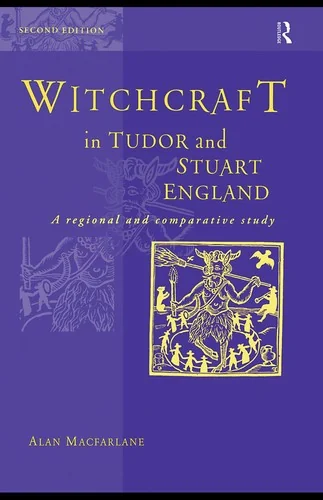
🏛 Books from this publisher Routledge
All books from this publisher →

 89
89

You might also like
See more →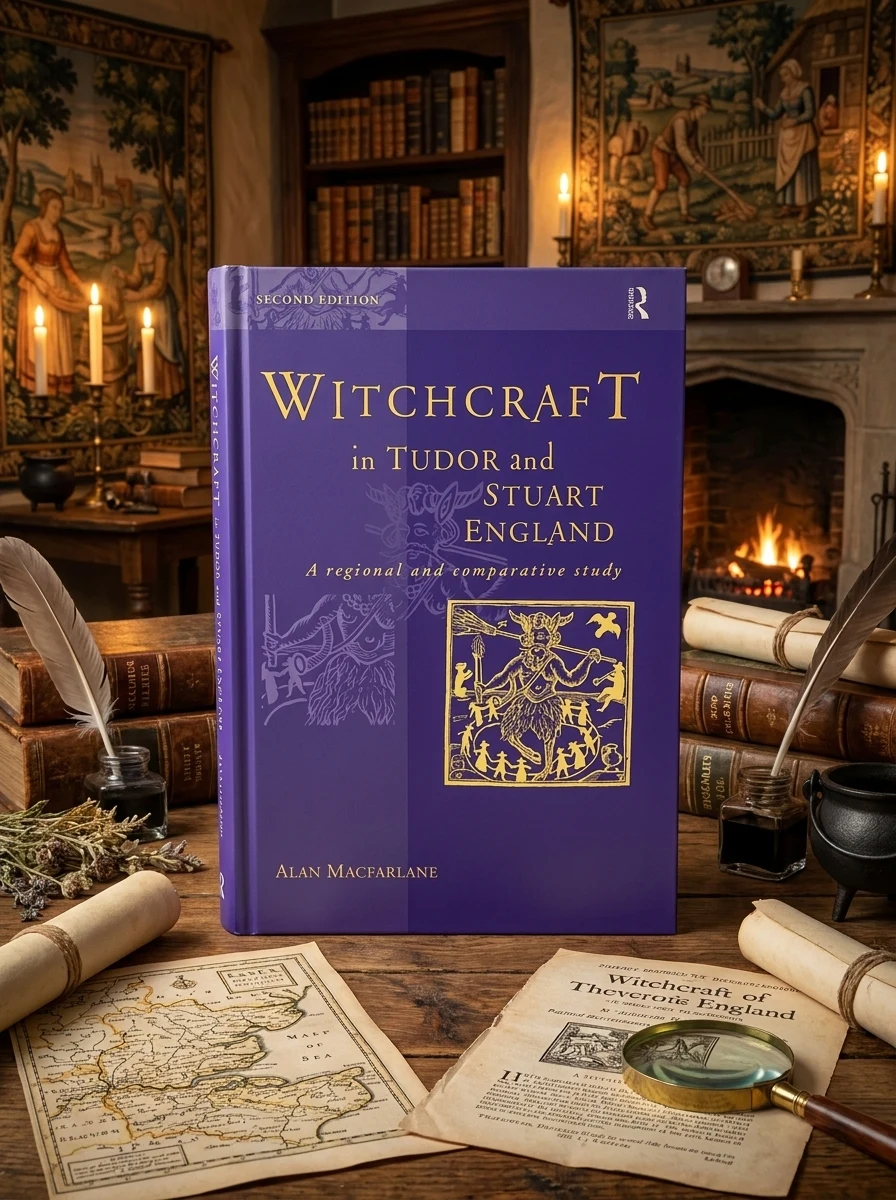 89
89

 91
91
 90
90

 90
90