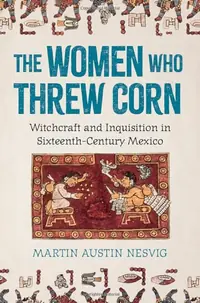
The Women Who Threw Corn: Witchcraft and Inquisition in Sixteenth-Century Mexico
Stock reported in the catalog; fulfillment is confirmed with your request.
Unearthing the vibrant, dangerous magic of women in colonial Mexico.
Martin Austin Nesvig's compelling study illuminates the hidden world of women accused of sorcery in sixteenth-century Mexico. Drawing from diverse origins—Spain, North Africa, Senegambia, and the Canary Islands—these women ingeniously adapted indigenous magical and healing practices, forging powerful, hybrid cosmologies. Nesvig radically reinterprets colonial records, revealing a rich tapestry of midwives, healers, and practitioners whose stories were previously relegated to history's shadows. This work offers a crucial look at cultural synthesis and spiritual resistance under the gaze of the Inquisition.
This scholarly work situates itself within the study of colonial Latin American history and the sociology of religion, specifically examining the intersection of indigenous practices and European inquisitorial power in sixteenth-century Mexico.


📝 Description: The Women Who Threw Corn: Witchcraft and Inquisition in Sixteenth-Century Mexico
💎 Expert review
📖 Why choose it
Why this book is worth reading
Readers deeply interested in the nuances of cultural synthesis and spiritual resistance will find this book indispensable. It offers a vital correction to historical narratives by centering the voices of women from diverse origins who adapted indigenous magical practices under the pressure of colonial rule. Those fascinated by the complex interplay between healing, sorcery, and survival in oppressive systems will appreciate Nesvig’s rigorous reinterpretation of colonial records. This text is essential for scholars and enthusiasts seeking to understand how hybrid cosmologies emerged as acts of defiance and adaptation, providing a profound look at the hidden worlds that shaped early modern Mexican society.
⭐ Reader reviews
Reader rating
Nesvig provides a meticulously researched account of women accused of witchcraft in sixteenth-century Mexico, highlighting their diverse origins and innovative spiritual practices. While the study is valuable for its focus on cultural synthesis and the agency of marginalized healers, it may not suit readers seeking accessible, narrative-driven history or those uninterested in academic analysis of Inquisition records. The dense scholarly approach might alienate casual readers looking for straightforward biographical tales. However, for those willing to engage with complex historical arguments, it offers a compelling glimpse into the vibrant, dangerous magic that persisted despite colonial suppression, making it a significant contribution to esoteric history.
❓ Frequently asked questions
📖 Who should read this
If you're fascinated by the untold stories of women's power, cultural resistance, and the complex spiritual landscape of colonial Latin America, this book is essential. It offers a fresh perspective on witchcraft history, challenging conventional narratives and revealing a vibrant, multi-ethnic past.
🎯 Key themes and symbolism
Syncretic Magical Practices
Discover how women from various cultures, transplanted to colonial Mexico, skillfully blended their European and African folk magic with Mesoamerican healing and divination. This fusion created potent new spiritual practices, from curing the evil eye to utilizing peyote, demonstrating remarkable adaptability and spiritual innovation.
Colonial Power & Inquisition
Explore the oppressive backdrop of the Spanish Inquisition, which aggressively targeted and labeled these adaptive spiritual expressions as 'witchcraft.' The book delves into how colonial authorities sought to control and define acceptable belief, often through the persecution of women who dared to practice their unique forms of magic.
Reclaiming Subaltern Voices
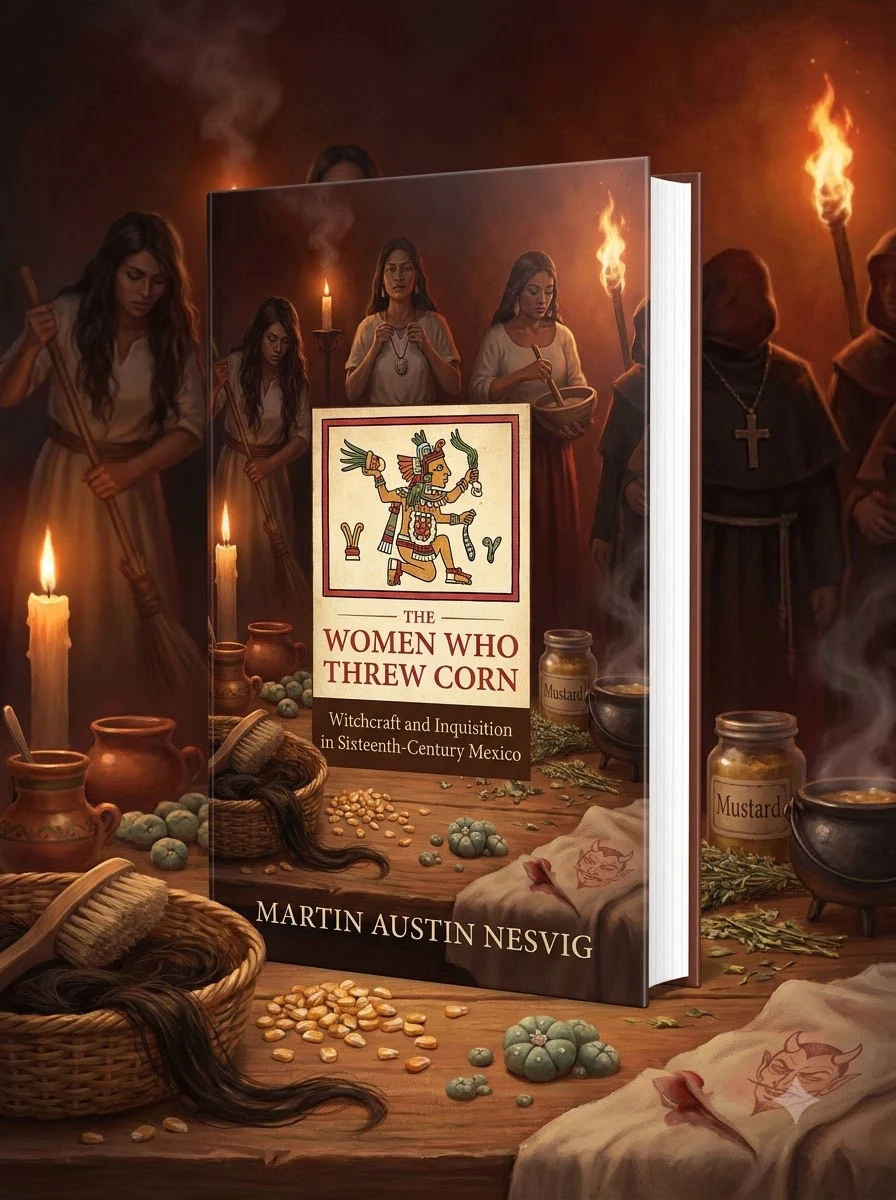
Nesvig's work masterfully resurrects the lives and traditions of marginalized women—the mulata healer, the Canarian adept, the Basque woman with a devil tattoo—whose contributions to the spiritual landscape of early colonial Mexico have been largely ignored. It's a testament to their resilience and ingenuity.
💬 Quotes from the book
“Beneath the rigid gaze of the Inquisition, women from disparate lands wove threads of ancient wisdom into a new tapestry of defiant magic.”
“The whispers of a mulata's cure for the evil eye, or a conquistador's wife chanting to a Mesoamerican god, reveal a hidden spiritual landscape.”
📜 Historical context
📚 Glossary
- Inquisition
- Syncretism
- Mulata
📔 Questions to reflect on
- Consider how cultural exchange, even under duress, can lead to the creation of new, powerful spiritual traditions. What are modern examples of this phenomenon?
- Reflect on the power dynamics inherent in historical accusations of witchcraft. How do those in authority define and control spiritual beliefs, particularly those of marginalized groups?
- How might the 'hidden histories' of your own cultural background, particularly those involving folk magic or alternative healing, challenge dominant historical narratives?
🏛 Books from this publisher Cambridge University Press
All books from this publisher →

 75
75

You might also like
See more →
 90
90

 89
89