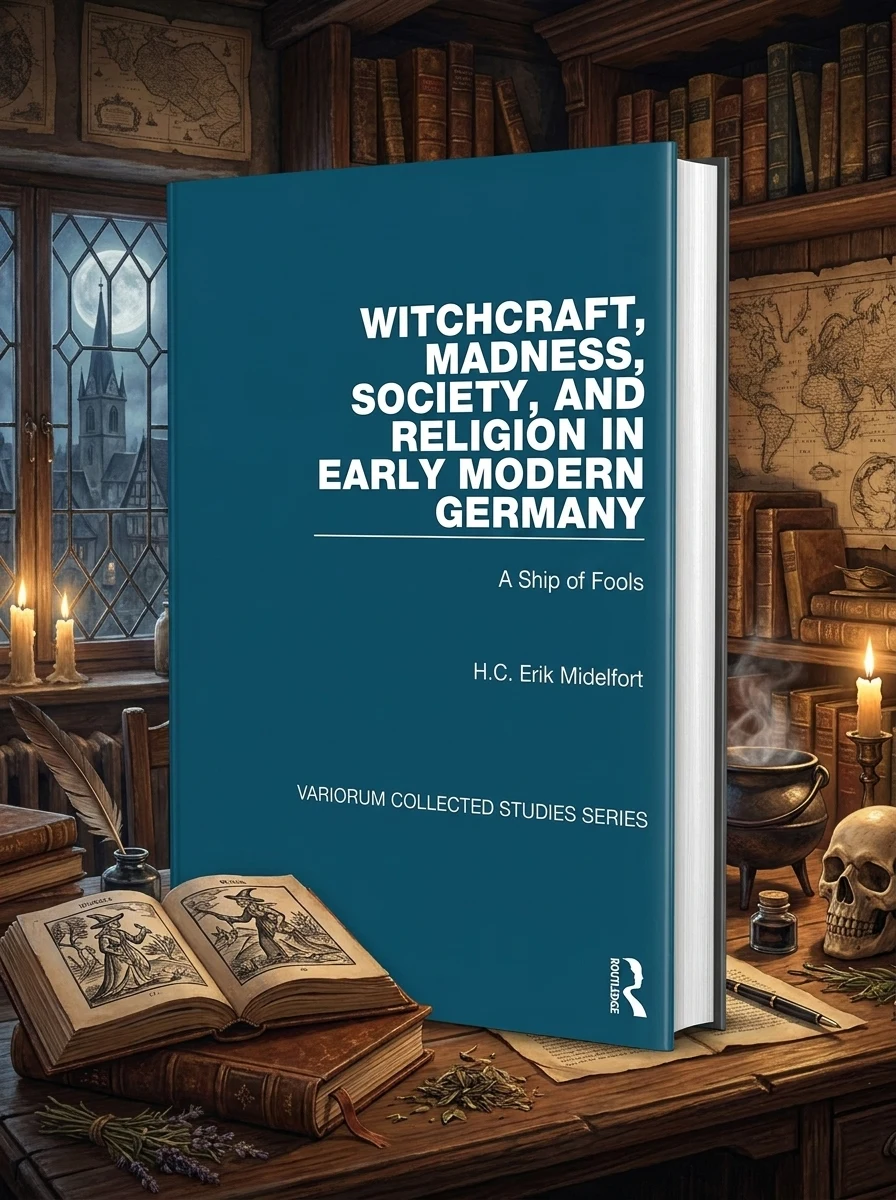

Witchcraft, Madness, Society, and Religion in Early Modern Germany: A Ship of Fools Midelfort, H C Erik
 83
83
 Editorial score
How we rate
Editorial score
How we rate
This edition can be ordered. No arrival date is confirmed.
Uncover the dark interplay of magic, madness, and society in early modern Germany.
H.C. Erik Midelfort's esteemed collection delves into the complex tapestry of early modern Germany, exploring the intertwined histories of witchcraft accusations, the evolving understanding of madness, and the practice of demonology and exorcism. This volume showcases his pioneering research into the social and religious transformations of the era, offering fresh perspectives that often challenge established academic views. From scrutinizing Michel Foucault's historical interpretations to dissecting the diverse impacts of the Protestant and Catholic Reformations across the Holy Roman Empire, Midelfort illuminates how these profound societal shifts were perceived and shaped, incorporating insights from psychoanalysis and sociology to enrich his analysis.
This work sits at the intersection of early modern German history and the social history of religion, examining the period's complex dynamics through the lens of witchcraft accusations and the evolving conceptualization of madness.


📝 Description: Witchcraft, Madness, Society, and Religion in Early Modern Germany: A Ship of Fools Midelfort, H C Erik
💎 Expert review
📖 Why choose it
Why this book is worth reading
Scholars and enthusiasts of early modern European history will find profound value in this collection, which offers fresh perspectives on the social and religious transformations of the Holy Roman Empire. Midelfort challenges established academic views by integrating insights from psychoanalysis and sociology to dissect the diverse impacts of the Protestant and Catholic Reformations. Readers interested in the intricate relationship between demonology, exorcism, and societal shifts will appreciate how the author scrutinizes historical interpretations, providing a nuanced understanding of how madness and magic were perceived during this turbulent era.
⭐ Reader reviews
Reader rating
This volume is a rigorous academic contribution that demands patience and prior knowledge of historiography. It is not suitable for casual readers seeking narrative drama or straightforward accounts of witch hunts without theoretical context. The text requires engagement with complex arguments regarding Foucault’s interpretations and the specific socio-religious nuances of the Reformation era. While intellectually stimulating for specialists, those looking for accessible storytelling or practical guides to historical witchcraft may find the dense analytical approach dry and overly abstract, limiting its appeal beyond specialized circles.
❓ Frequently asked questions
📖 Who should read this
If you're drawn to the historical intersections of magic, mental health, and societal change, or seek a deeper understanding of early modern German culture and its religious upheavals, this book is essential. It offers rigorous scholarship and provocative insights for both seasoned academics and curious readers.
🎯 Key themes and symbolism
Witchcraft and Demonic Encounters
Explore the prevalent beliefs and practices surrounding witchcraft and demonology in early modern Germany. Midelfort dissects the social anxieties and religious doctrines that fueled accusations and shaped the understanding of malevolent supernatural forces, examining the role of exorcism in this volatile spiritual landscape.
Evolving Concepts of Madness
This collection traces the historical understanding of mental illness, moving beyond simplistic interpretations. Midelfort scrutinizes how "madness" was defined, treated, and integrated into societal structures, even engaging critically with influential thinkers like Foucault to offer nuanced insights into psychological history.
Reformation's Social Fabric
Delve into the profound impact of the Protestant and Catholic Reformations on German society. Midelfort reveals how diverse communities—from urban centers to rural villages—interpreted and reacted to these religious upheavals, highlighting the varying perceptions and opportunities presented by this transformative period.
💬 Quotes from the book
“The supposed 'madness' of the accused often reveals more about societal anxieties and judicial frameworks than it does about genuine psychological states.”
“Understanding the varied responses to the Reformation across the Holy Roman Empire is key to grasping its true, multifaceted impact on daily life and spiritual belief.”
📜 Historical context
📚 Glossary
- Early Modern Germany
- Demonology
- Protestant Reformation
📔 Questions to reflect on
- How did the prevailing definitions of 'madness' in early modern Germany both intersect with and diverge from accusations of witchcraft, and what does this reveal about societal control?
- Midelfort touches upon Freudian psychoanalysis. How might modern psychological or sociological frameworks offer new lenses through which to interpret historical spiritual or demonic phenomena?
- Reflect on how differing perceptions of major religious shifts, like the Reformation, shaped the social landscape of the Holy Roman Empire. What parallels, if any, can you draw to contemporary societal divisions?
📖 From the series “Variorum Collected Studies”
All books in the series →

🏛 Books from this publisher Routledge
All books from this publisher →


 89
89

You might also like
See more → 91
91
 90
90
 90
90

 90
90