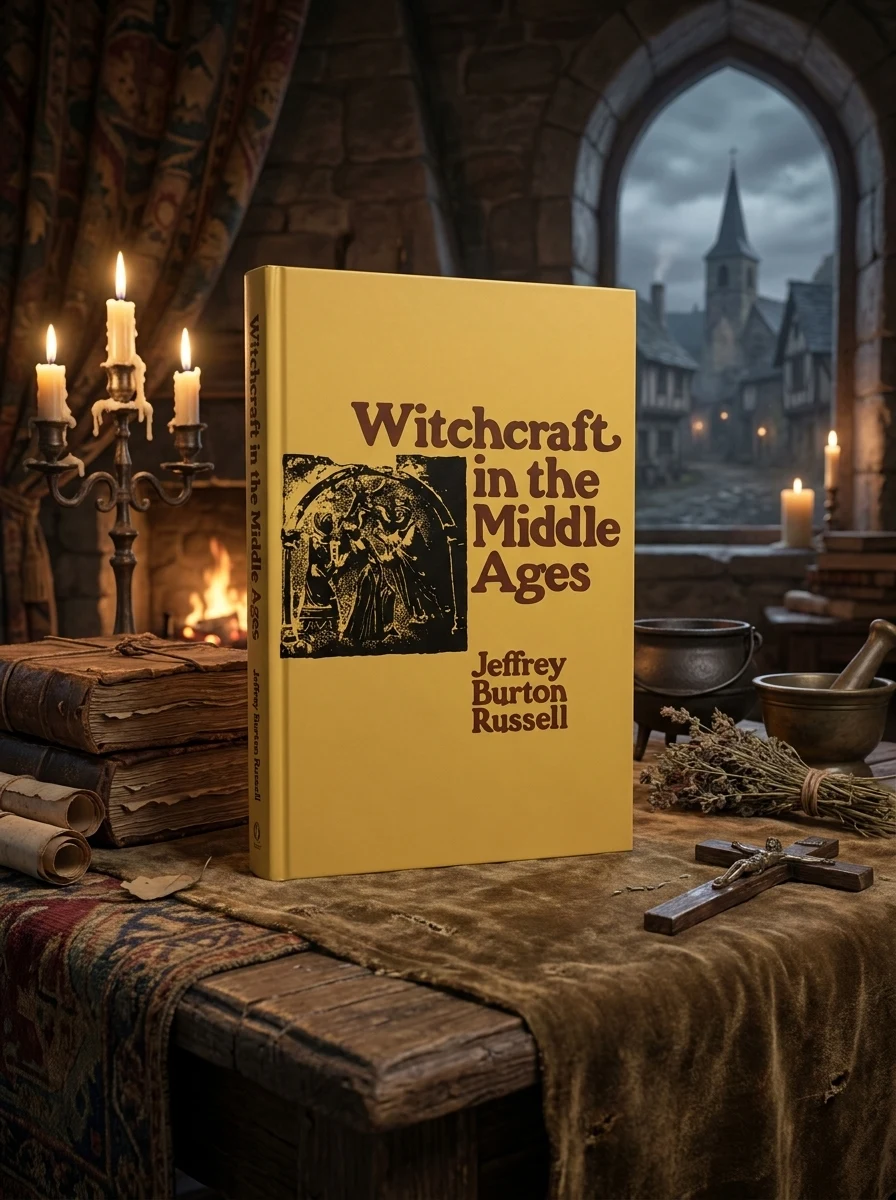
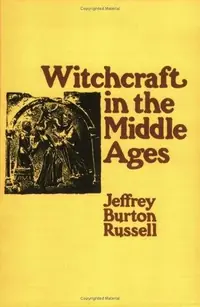
Witchcraft in the Middle Ages: Narrative as a Socially Symbolic ACT (Revised)
Stock reported in the catalog; fulfillment is confirmed with your request.
Russell illuminates how medieval witchcraft emerged from Christian heresy and social tension.
Jeffrey Burton Russell meticulously reconstructs the evolution of witchcraft across five centuries of Western Europe, drawing upon recently unearthed primary documents and contemporary scholarship. He argues that medieval witchcraft was not merely residual pagan magic but a distinct phenomenon born from Christian heresy and social instability. The narrative traces how these forces infected every class, from illiterate peasants to learned scholars, creating a pervasive cultural grip. By analyzing the interplay between religious doctrine and societal anxiety, Russell reveals witchcraft as a symptom of deep-seated ideological repression and communal fear.
This work sits firmly within the historiography of medieval European religion and social history, challenging traditional narratives by framing witchcraft as a product of Christian heresy rather than pagan survival. It bridges theological studies with sociological analysis to explain the cultural grip of magical beliefs across five centuries.


📝 Description: Witchcraft in the Middle Ages: Narrative as a Socially Symbolic ACT (Revised)
💎 Expert review
📖 Why choose it
Why this book is worth reading
This book is essential for readers fascinated by the intersection of theology, sociology, and cultural history who seek to understand how ideological repression manifests in societal fear. Russell’s meticulous reconstruction offers a profound insight into how social instability infected every class, from peasants to scholars, creating a pervasive narrative of witchcraft. If you are interested in how religious doctrine shapes communal anxiety and identity formation during the Middle Ages, this text provides the necessary depth. It rewards those willing to engage with complex primary documents and scholarly argumentation, revealing witchcraft not as mere superstition but as a critical symptom of deep-seated cultural tensions.
⭐ Reader reviews
Reader rating
Russell’s revisionist approach is intellectually rigorous, successfully arguing that medieval witchcraft emerged from Christian heresy and social tension rather than residual pagan magic. The analysis of how these forces permeated all social strata is compelling and well-supported by recent scholarship. However, this volume is not suited for casual readers seeking a narrative history or those expecting a focus on folkloric practices. It is dense with academic argumentation regarding religious doctrine and societal anxiety, making it less accessible to those uninterested in the intricacies of medieval ideological repression. Only those prepared for a scholarly dissection of cultural symptoms will find this rewarding.
❓ Frequently asked questions
📖 Who should read this
Readers interested in the sociological roots of persecution, historians of medieval religion, and those seeking to understand how collective anxiety shapes occult narratives throughout history.
🎯 Key themes and symbolism
Christian Heresy
Social Tension
Medieval Ideology
💬 Quotes from the book
“Witchcraft was a product of Christianity, grounded in heresy more than in the magic and sorcery that have existed in other societies.”
“The phenomenon gripped large portions of medieval Europe, from the most illiterate peasant to the most skilled philosopher or scientist.”
📜 Historical context
📚 Glossary
- Heresy
- Primary Sources
- Demonological Conspiracy
📔 Questions to reflect on
- How does current social anxiety shape our modern understanding of the occult and the 'other'?
- In what ways does religious orthodoxy contribute to the creation of scapegoats in society?
- Reflect on the difference between magic as a personal practice and witchcraft as a social accusation.
🏛 Books from this publisher Cornell University Press
All books from this publisher →
 90
90
 84
84
 75
75
You might also like
See more →