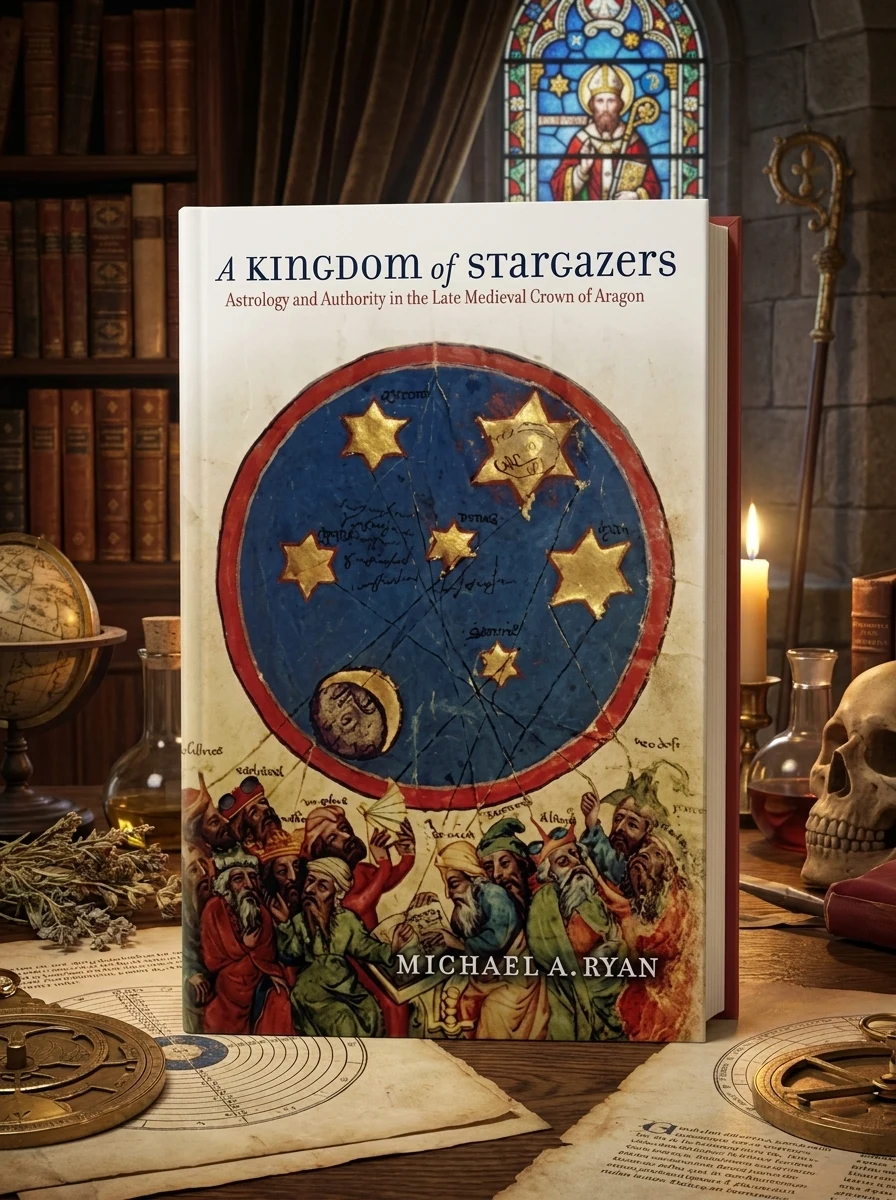
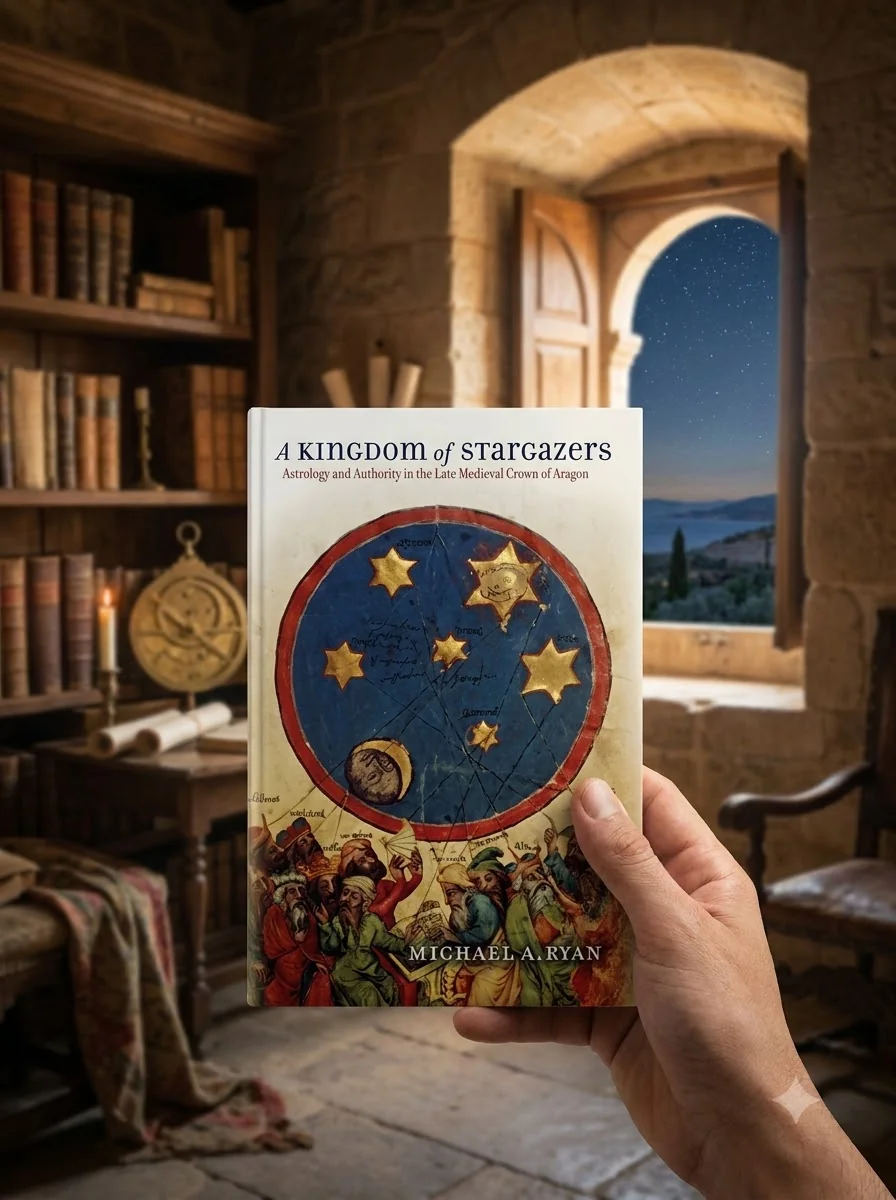
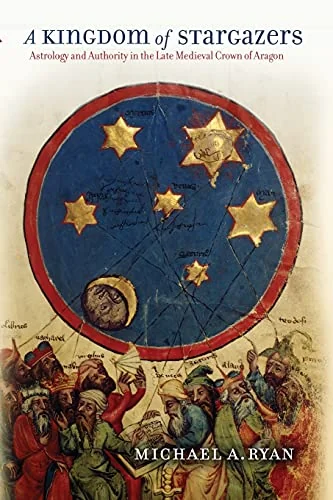
A Kingdom of Stargazers: Astrology and Authority in the Late Medieval Crown of Aragon
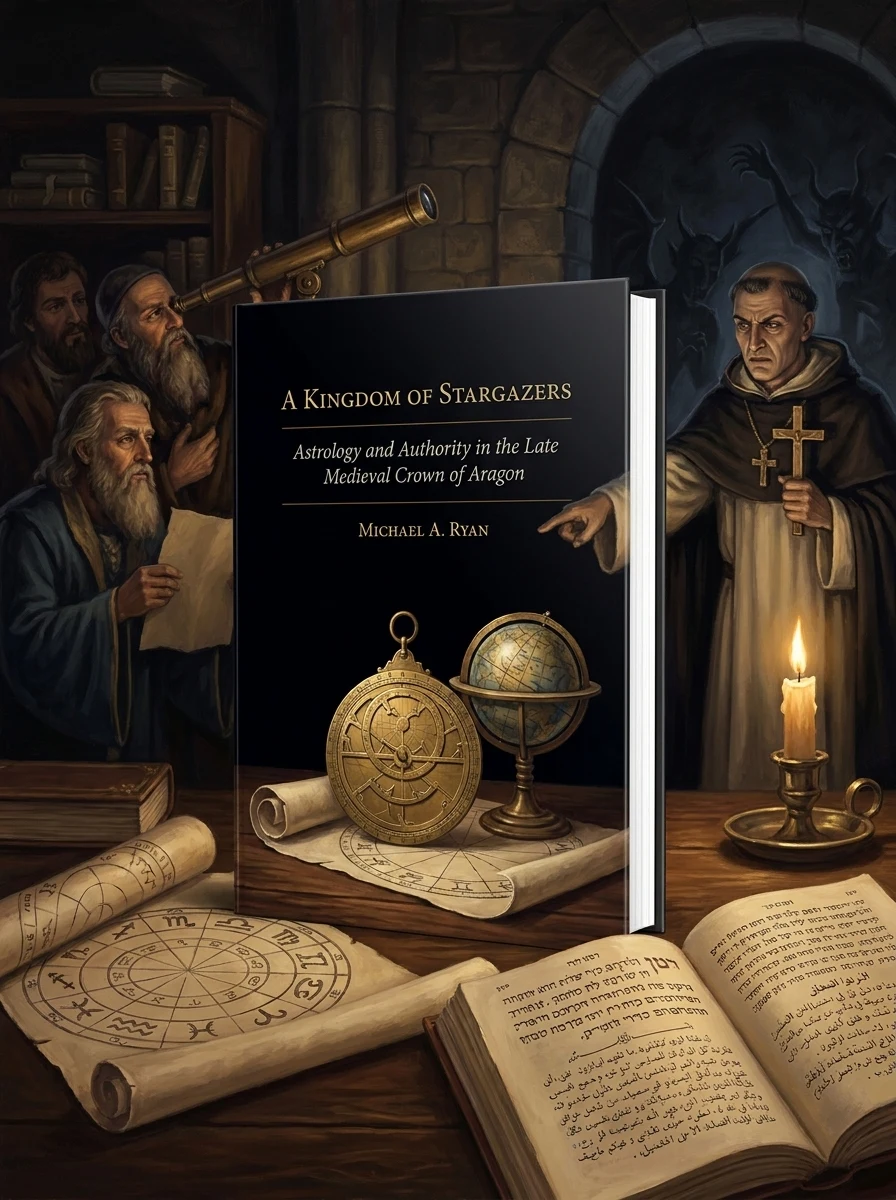
✍️ Ryan, Michael AThis compelling historical account delves into the fascinating role of astrology within the late medieval Crown of Aragon. It explores how celestial prognostication, influenced by sophisticated Islamic and Jewish scientific traditions, became a potent tool for royal authority, despite the anxieties of the Church regarding free will and diabolical connections. Michael A. Ryan uncovers the extensive investment by monarchs like Pere III and his sons, Joan I and Martí I, revealing how deep occult beliefs permeated courtly life and shaped the very fabric of power and providence in the Iberian peninsula during a pivotal era.


📝 Description: A Kingdom of Stargazers: Astrology and Authority in the Late Medieval Crown of Aragon
💎 Expert review
📖 Why choose it
Why this book is worth reading
Scholars of medieval history and enthusiasts of esoteric traditions will find this volume indispensable for understanding how celestial mechanics were weaponized for political legitimacy. Ryan demonstrates that astrology was not merely superstition but a sophisticated instrument of statecraft, deeply intertwined with Islamic and Jewish scientific heritage. Readers interested in the psychological underpinnings of royal power or the tension between divine providence and human agency will appreciate the nuanced analysis of monarchs like Pere III. It offers a rare glimpse into the courtly life where occult beliefs actively shaped policy, making it essential for those studying the intellectual history of the Iberian peninsula.
⭐ Reader reviews
Reader rating
Ryan provides a dense, scholarly examination of how the Crown of Aragon utilized astrological prognostication to reinforce royal authority amidst ecclesiastical anxiety. While meticulously researched, this text is strictly academic and may not suit casual readers seeking accessible narratives or practical astrological advice. It demands patience from those uninterested in the minutiae of medieval court politics or the theological debates surrounding free will. The focus on specific monarchs like Joan I and Martí I limits its appeal to specialists rather than general history buffs. However, for experts in late medieval European history or the sociology of occult knowledge, it offers a compelling, if demanding, perspective on the fusion of cosmos and crown.
❓ Frequently asked questions
📖 Who should read this
If you're fascinated by the intricate dance between medieval power, esoteric knowledge, and religious doctrine, this book offers an unparalleled look into the royal courts of Aragon. Discover how kings sought cosmic guidance and the profound impact of divination on statecraft.
🎯 Key themes and symbolism
Astrology & Royal Power
Explores how Aragonese monarchs, notably Pere III and his successors, integrated astrological consultation and texts into their governance. This wasn't merely superstition, but a strategic effort to legitimize their rule, predict future events, and project an aura of divine favor, deeply embedding celestial wisdom into courtly politics.
Occult & Church Conflict
Examines the tension between widespread astrological practices and orthodox Christian doctrine. The Church grappled with the implications of foretelling the future, fearing it undermined free will and risked summoning malevolent spiritual forces, creating a complex interplay between belief, power, and religious authority in the medieval landscape.
Iberian Cross-Cultural Exchange
Highlights the profound influence of Jewish and Muslim scientific and magical traditions on medieval European astrology, particularly in Iberia. The book showcases how these rich intellectual currents from Islamic Spain informed and sophisticated the astrological knowledge embraced by the Aragonese court, illustrating a vibrant, if sometimes contested, cultural synthesis.
📜 Historical context
📚 Glossary
- Crown of Aragon
- Judicial Astrology
- Pere III (the Ceremonious)
📔 Questions to reflect on
- How might our modern understanding of power and authority shift if political leaders still consulted astrologers with the same seriousness as medieval monarchs?
- Reflect on the tension between 'free will' and 'predestination' as seen through the medieval debate on astrology. How do similar tensions manifest in contemporary thought?
- Consider the impact of cross-cultural intellectual exchange on the development of knowledge. How did the synthesis of Jewish, Muslim, and Christian ideas shape the medieval world, and what parallels can we draw today?