A Kingdom of Stargazers
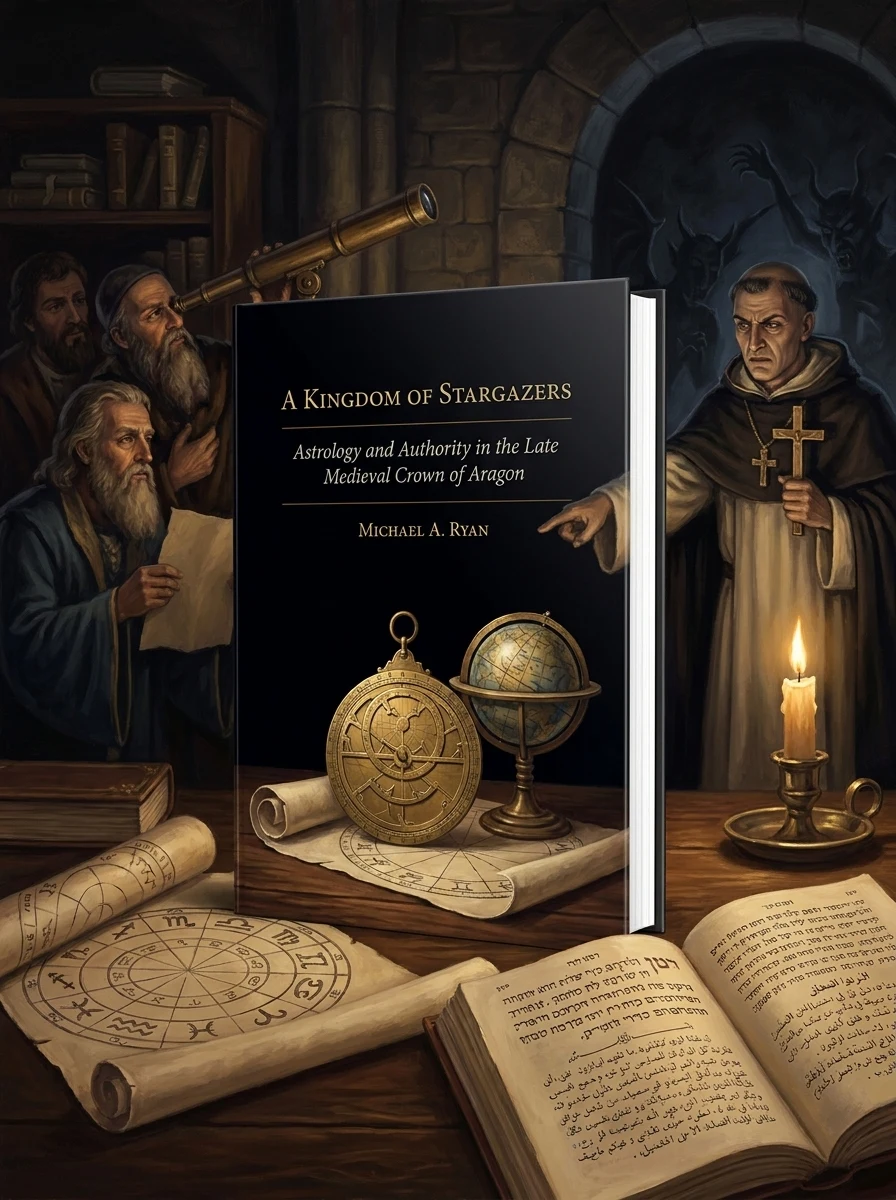
✍️ Ryan, Michael AMichael A. Ryan's compelling work explores the intricate world of medieval astrology within the Kingdom of Aragon. He reveals how this 'magical art,' enriched by Jewish and Muslim scientific traditions, presented a profound challenge to Christian orthodoxy. Ryan meticulously details its widespread adoption within courtly circles, focusing on the reigns of Pere III, Joan I, and Martí I. These rulers, despite ecclesiastical warnings against practices linked to diabolical forces, heavily invested in celestial divination. The book demonstrates how they viewed astrology as a vital tool for understanding providence, guiding decisions, and asserting royal authority in a complex era.


📝 Description: A Kingdom of Stargazers
💎 Expert review
📖 Why choose it
Why this book is worth reading
Academic historians and enthusiasts of medieval court politics will find this book invaluable for understanding how royal authority was negotiated through celestial means. Ryan’s meticulous detailing offers a rare glimpse into the intellectual lives of Pere III, Joan I, and Martí I, showing their reliance on astrology as a vital tool for interpreting providence. Readers fascinated by the intersection of Jewish and Muslim scientific traditions with Christian orthodoxy will appreciate the nuanced exploration of how these rulers defied ecclesiastical warnings to assert their power through the stars.
⭐ Reader reviews
Reader rating
Michael A. Ryan delivers a rigorous, scholarly examination of medieval Aragonese astrology, making it essential for specialists in religious history or royal studies. However, casual readers seeking accessible narratives or popular horoscopes will likely find this text dense and overly academic. The focus on specific monarchs and theological conflicts may feel dry to those uninterested in ecclesiastical politics. It is a serious contribution to the field but demands patience from non-specialists who might prefer broader overviews of medieval occult practices rather than such focused, institutional analysis.
❓ Frequently asked questions
📖 Who should read this
If you are fascinated by the intersection of medieval history, magic, and political power, or curious about the Church's struggles with 'forbidden' knowledge, this book offers a meticulously researched and engaging deep dive into a unique aspect of European courtly life.
🎯 Key themes and symbolism
Astrology's Sacred Conflict
Delves into the theological tension between medieval astrology and Christian doctrine. It highlights how the Church grappled with the concept of stellar influence, especially regarding human free will, often associating celestial prognostication with forbidden magical practices and even demonic intervention, creating a significant ideological struggle for believers and rulers alike.
Occult & Royal Power
Explores how the powerful rulers of Aragon, despite Church opposition, integrated astrological consultations into their governance. The book reveals their significant financial investment in celestial arts, demonstrating how kings used these practices to gain insights into providence, guide crucial decisions, and enhance their perceived authority, intertwining magic with statecraft.
Iberian Esoteric Exchange
Examines the profound impact of Jewish and Muslim scientific and esoteric knowledge on the development of astrology in medieval Iberia. It showcases how this vibrant cross-cultural intellectual exchange enriched astrological traditions, making them a sophisticated and compelling field of study that deeply influenced Christian practitioners and royal courts in the region.
📜 Historical context
📚 Glossary
- Astrology
- Occult
- Iberian Peninsula
📔 Questions to reflect on
- How might the pursuit of 'forbidden' knowledge by those in power reflect a deeper insecurity or a desire for control in uncertain times?
- Consider modern parallels to medieval debates about free will versus cosmic or environmental determinism. Where do we see similar tensions today?
- How do cultural and religious exchanges, like those in medieval Iberia, shape the evolution and acceptance of esoteric traditions in different societies?


![The Instant Astrologer [With CD]](/img/the-instant-astrologer-with-cd-scene.webp)