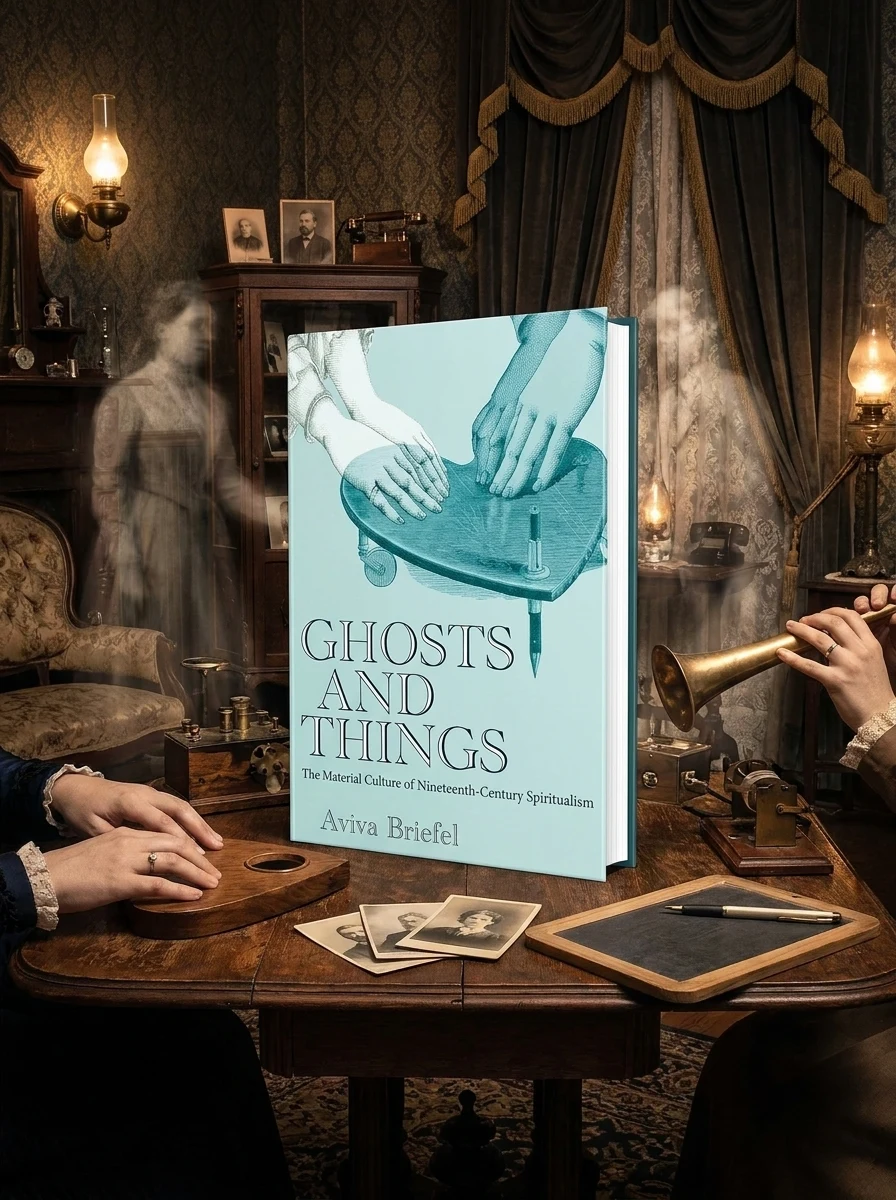
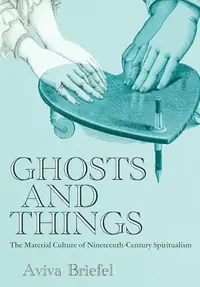
Ghosts and Things: The Material Culture of Nineteenth-Century Spiritualism
Stock reported in the catalog; fulfillment is confirmed with your request.
Victorian ghosts weren't just spirits; they were material critics of a changing world.
Aviva Briefel's compelling study reveals how 19th-century British spiritualism offered a unique lens through which Victorians grappled with their rapidly modernizing world. Far from mere mystical pursuits, séances became object lessons, where material items—from domestic furniture to specialized spirit-detecting devices—served as conduits for understanding the unsettling realities of industrial capitalism. Briefel shows how interactions with spectral clothing, consumer goods, and emerging technologies like photography provided an unexpected framework for deciphering the invisible forces of labor, consumption, and exchange that defined their era.
This work situates nineteenth-century British spiritualism within the broader material culture of the Victorian era, examining how occult practices intersected with industrial capitalism and modernity. It explores the period's fascination with the unseen forces shaping daily life through tangible objects and technological advancements.


📝 Description: Ghosts and Things: The Material Culture of Nineteenth-Century Spiritualism
💎 Expert review
📖 Why choose it
Why this book is worth reading
Readers interested in the intersection of history, sociology, and the occult will find this book profoundly illuminating. It offers a fresh perspective on nineteenth-century spiritualism not as mere superstition, but as a sophisticated cultural critique. By analyzing how Victorians used spirits to understand labor and consumption, the author reveals the era's deep anxieties about industrialization. This is essential for those who want to understand how material objects mediated our relationship with the unknown. It bridges the gap between academic theory and accessible historical narrative, making complex ideas about capitalism and spirituality tangible and relevant to contemporary discussions on technology and consumerism.
⭐ Reader reviews
Reader rating
Aviva Briefel provides a rigorous analysis of spiritualism as a lens for examining Victorian modernity. However, readers seeking entertaining ghost stories or practical occult instructions will be disappointed. The text is dense with theoretical frameworks regarding industrial capitalism and material culture, which may alienate those preferring lighter historical narratives. It is best suited for academics and serious historians who appreciate nuanced arguments about how spiritual practices reflected societal shifts. Casual readers might find the focus on consumer goods and labor relations dry, as it prioritizes intellectual critique over mystical wonder or narrative flair.
❓ Frequently asked questions
📖 Who should read this
If you're fascinated by Victorian culture, spiritualism, and social critique, this book is essential. Readers interested in how historical movements reflect broader societal anxieties, or those exploring the philosophy of material culture, will find its insights profoundly illuminating.
🎯 Key themes and symbolism
Capitalism's Ghostly Critique
Briefel illuminates how spiritualist practices provided a peculiar avenue for Victorians to confront the bewildering aspects of burgeoning capitalism. Through spectral manifestations involving consumer goods and the dynamics of production, believers and skeptics alike found themselves pondering the hidden costs of labor, the allure of consumption, and the complexities of economic exchange, often through uncanny, material encounters.
Technological Spirit Manifestations
The study explores the fascinating intersection of spiritualism and 19th-century technological advancements. It highlights how new inventions like photography and electrotyping, capable of mechanical reproduction and identity shaping, were simultaneously embraced and challenged within the séance room. Spirits, through these material means, offered Victorians a way to process the novel and often disorienting impact of new technologies on their understanding of reality.
💬 Quotes from the book
“The apparition's gossamer veil, though seemingly ethereal, paradoxically anchored the séance participant to the stark realities of textile production and global trade.”
“Séances, in their very staging, offered Victorians a theatrical arena to interrogate the disquieting newness of photography and the spectral nature of reproduction.”
📜 Historical context
📚 Glossary
- Spiritualism
- Séance
- Material Culture
📔 Questions to reflect on
- How might contemporary spiritual or esoteric practices reflect anxieties about our own technological or economic landscapes?
- Consider an everyday object you own. What 'hidden histories' or invisible forces of labor and consumption might it embody?
- If spirits could manifest today, what material objects do you think they would use to communicate, and what societal critiques might they offer?
🏛 Books from this publisher Cornell University Press
All books from this publisher →
 90
90
 84
84
 75
75
You might also like
See more → 90
90

 91
91