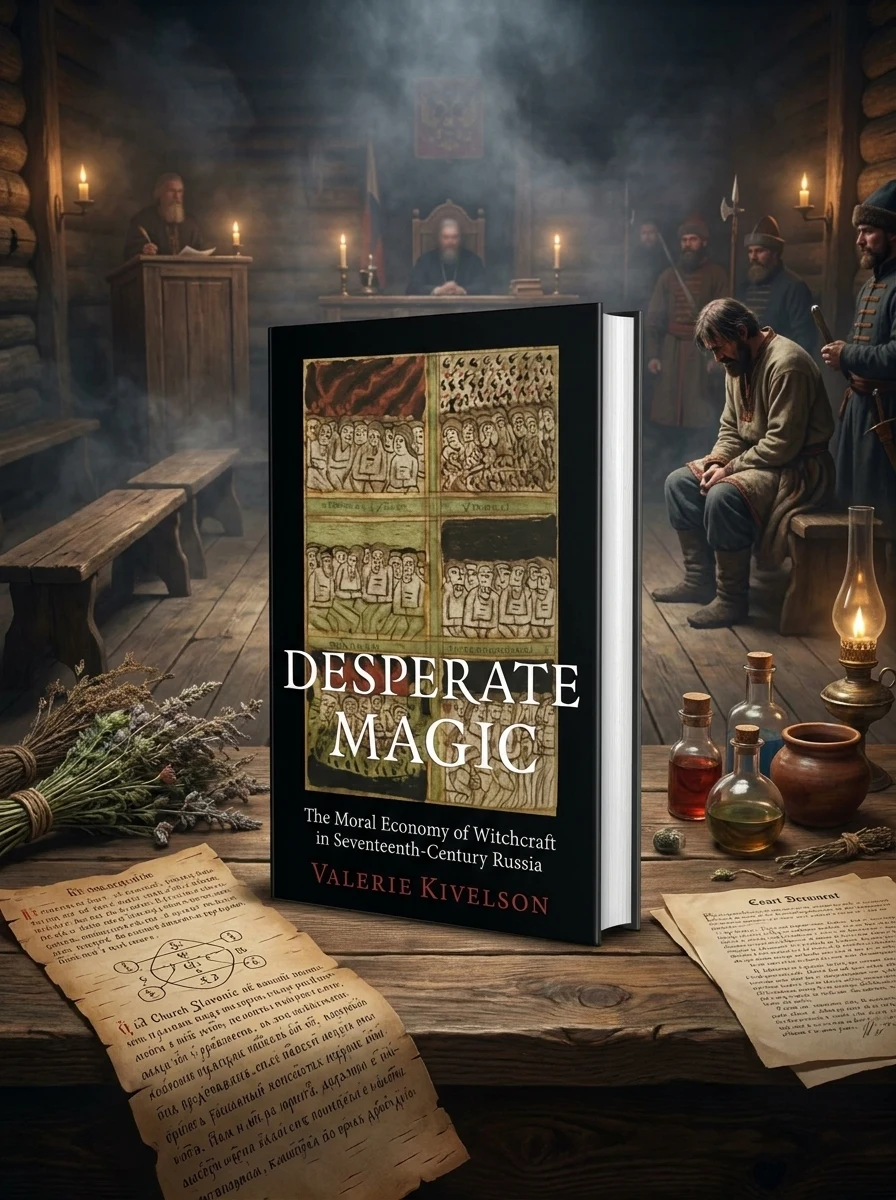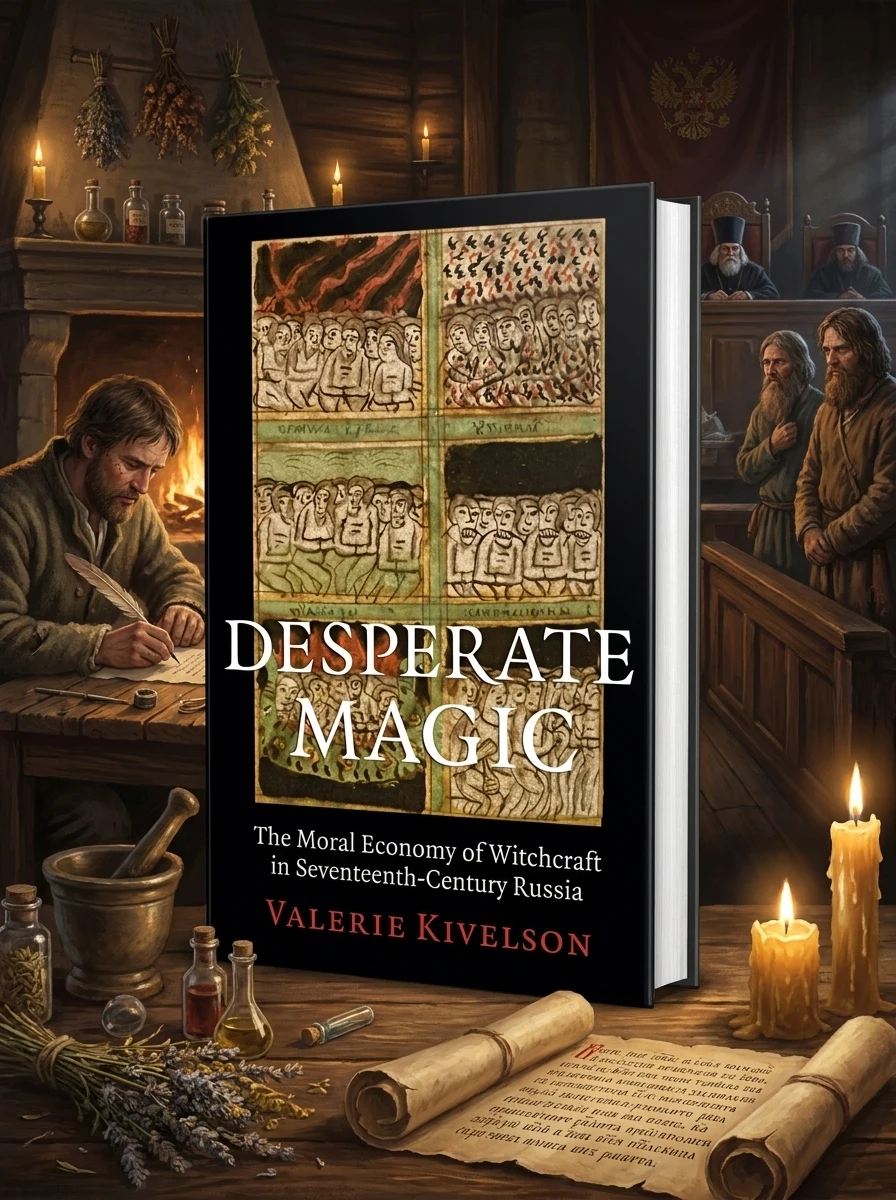
Desperate Magic: The Moral Economy of Witchcraft in Seventeenth-Century Russia
✍️ Kivelson, Valerie AValerie Kivelson's groundbreaking work redefines our understanding of early modern witchcraft, focusing on the unique landscape of 17th-century Muscovy. Contrary to popular Western European narratives, Russian courts predominantly targeted men for magical practices. This richly researched study delves into trial records, revealing that accusations stemmed less from fears of Satanism and more from the desperate use of down-to-earth spells and potions to navigate or subvert the harsh realities of patriarchy, serfdom, and social stratification. It illuminates a distinct "moral economy" where magic offered an avenue for redress.


Praise for this book
“much to ponder.”
📝 Description: Desperate Magic: The Moral Economy of Witchcraft in Seventeenth-Century Russia
💎 Expert review
📖 Why choose it
Why this book is worth reading
Readers fascinated by the intersection of social history and supernatural belief will find immense value in this text. It offers a refreshing perspective on witchcraft not as Satanic conspiracy, but as a pragmatic tool for navigating rigid social hierarchies. Those interested in gender dynamics, serfdom, or Russian history will appreciate how Kivelson illuminates the desperate, everyday magic used by ordinary people to survive and subvert patriarchal structures. It is essential for scholars seeking to understand the 'moral economy' of power in early modern societies.
⭐ Reader reviews
Reader rating
Kivelson’s rigorous archival work provides a compelling counter-narrative to Western European witchcraft trials, highlighting the unique targeting of men in Muscovy. However, this academic depth may alienate casual readers seeking supernatural thrills or simple folklore. It is not suitable for those expecting sensationalist tales of Satanism; rather, it demands patience with dense sociological analysis. While intellectually stimulating and crucial for specialists, general audiences might find the focus on legal records and social stratification dry and overly technical compared to more narrative-driven historical fiction.
❓ Frequently asked questions
📖 Who should read this
If you're fascinated by the hidden histories of magic, early modern Russia, or the intersection of gender, power, and belief, this book is essential. Scholars of witchcraft, historians of Eastern Europe, and anyone interested in the social functions of magic will find it profoundly insightful.
🎯 Key themes and symbolism
Gendered Accusations
This book dramatically challenges the common perception of witches as overwhelmingly female. Kivelson meticulously demonstrates how Muscovite trials predominantly accused men, contrasting sharply with Catholic and Protestant Europe. This shift in focus invites a deeper examination of gender roles within historical magical practices and societal anxieties of the period.
Magic as Social Resistance
Beyond supernatural pacts, Russian witchcraft often served as a tool for social commentary or resistance. The accused, both male and female, frequently employed magic to mitigate severe patriarchal conditions, challenge the confines of serfdom, or exact vengeance against social injustices. This reveals magic not merely as superstition, but as a practical, albeit desperate, response to societal pressures.
Muscovite Legal Context
Kivelson masterfully reconstructs the judicial process within early modern Russia. By analyzing trial testimonies, she uncovers the complex interplay between accusers' claims, interrogators' leading questions, and the confessions extracted from the accused. This provides crucial insight into the legal and religious frameworks that shaped perceptions and prosecutions of witchcraft in the tsar's courts.
📜 Historical context
📚 Glossary
- Moral Economy
- Muscovy
- Serfdom
📔 Questions to reflect on
- How might the gender of those accused of witchcraft fundamentally alter our understanding of power dynamics and social anxieties in a historical period?
- Consider a time when you felt powerless against a social or personal injustice. How might the idea of 'desperate magic' as a form of redress resonate with that experience?
- The book explores how interrogators' questions shaped confessions. How does the framing of questions in any context—legal, journalistic, or personal—influence the 'truth' that emerges?