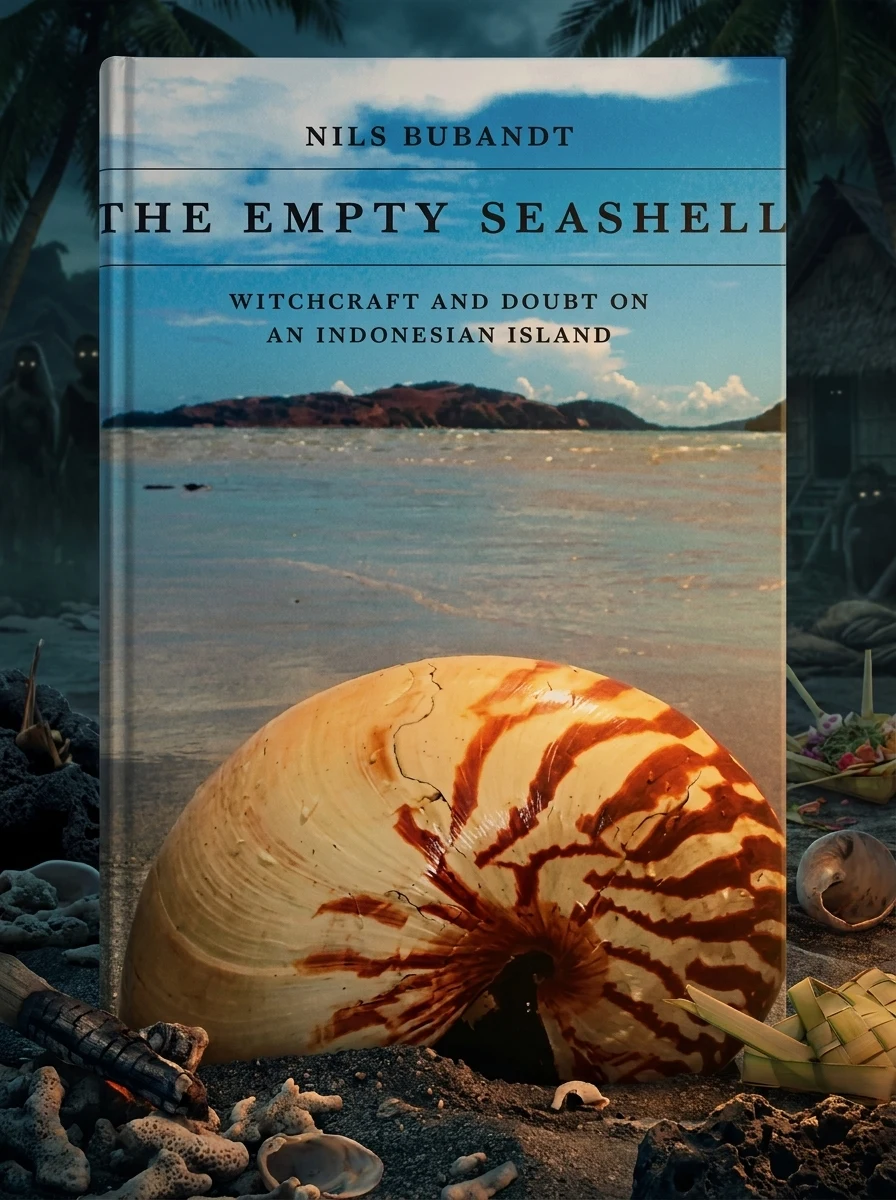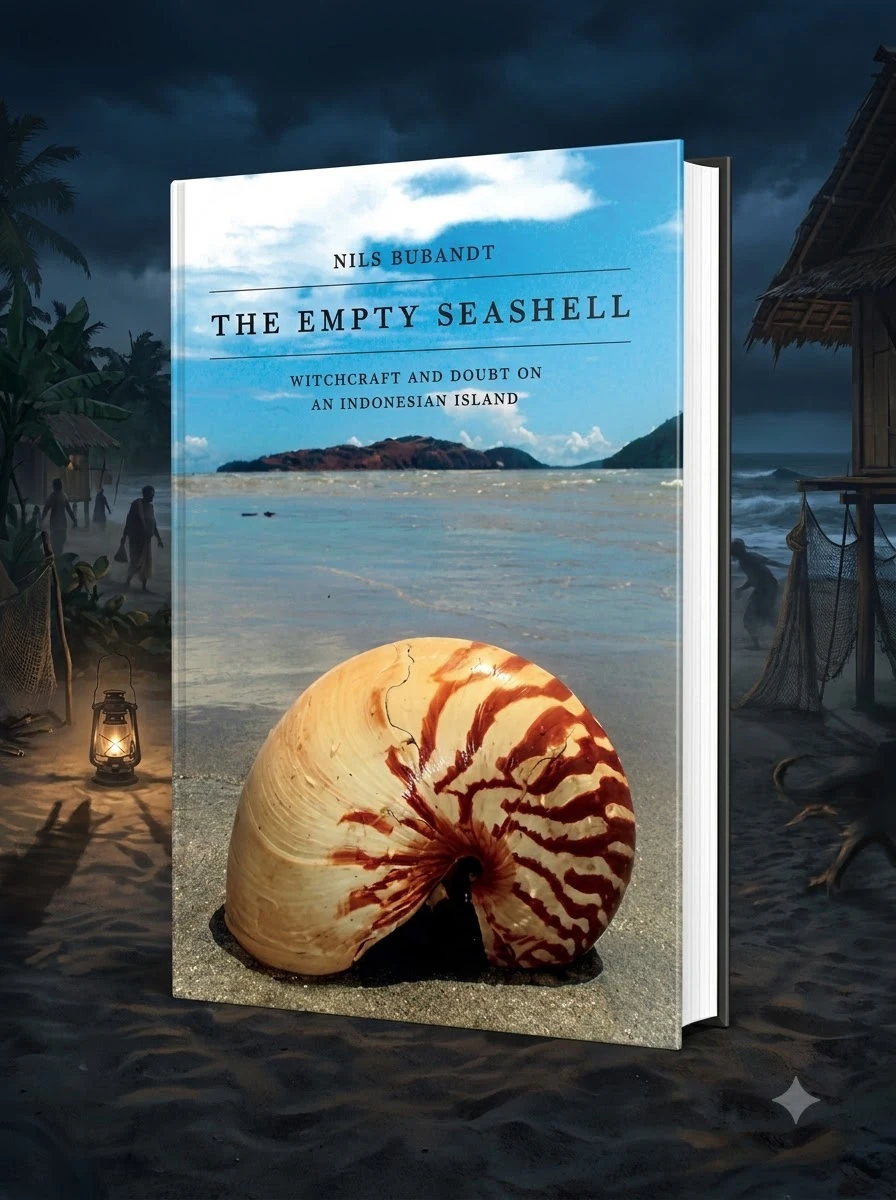
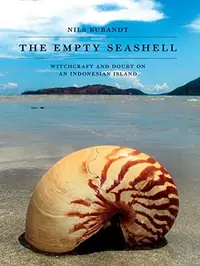
The Empty Seashell: Witchcraft and Doubt on an Indonesian Island
Bubandt, Nils 90
90
 Editorial score
How we rate
Editorial score
How we rate
Stock reported in the catalog; fulfillment is confirmed with your request.
Venture into a world where reality itself shimmers with the phantom presence of cannibal witches.
Nils Bubandt's profound ethnographic study, "The Empty Seashell," plunges into the complex belief systems of the Buli people in Indonesia's North Maluku. For them, "gua" (witches) are a tangible, horrifying reality, yet simultaneously defy definition and empirical proof. Drawing on two decades of fieldwork, Bubandt expertly navigates this profound paradox, exploring how a community grapples with the undeniable existence of something fundamentally unknowable. It's a compelling examination of how doubt and belief coexist, shaping daily life and cultural understanding in extraordinary ways.
This work sits firmly within the genre of anthropological ethnography, specifically examining the intersection of indigenous belief systems and modern epistemology in Southeast Asian studies.


📝 Description: The Empty Seashell: Witchcraft and Doubt on an Indonesian Island
💎 Expert review
📖 Why choose it
Why this book is worth reading
Readers fascinated by the intricate dance between faith and skepticism will find this book deeply rewarding. It offers a rare, immersive look into how the Buli people of Indonesia navigate a reality where cannibal witches are both undeniable and utterly unknowable. If you enjoy ethnographies that challenge Western notions of empirical proof, this text provides a profound meditation on how doubt shapes cultural understanding. It is essential for those interested in the psychology of belief systems and the way communities construct meaning around the inexplicable.
⭐ Reader reviews
Reader rating
Nils Bubandt delivers a rigorous academic exploration of Buli witchcraft beliefs, focusing on the paradox of tangible yet undefined 'gua'. While intellectually stimulating for anthropologists and scholars of religion, this book is not suited for casual readers seeking narrative adventure or practical magical instruction. The dense theoretical framework may alienate those preferring accessible storytelling over ethnographic analysis. It demands patience and a willingness to engage with complex philosophical questions about the nature of reality and proof.
❓ Frequently asked questions
📖 Who should read this
Are you fascinated by the complex interplay of belief, fear, and cultural truth? This book is for those who seek to understand how societies construct reality, especially when confronted with the profoundly inexplicable. It’s a vital read for anyone interested in anthropology, folklore, or the human experience of the unknown.
🎯 Key themes and symbolism
The Elusive Witch
This book meticulously dissects the contradictory nature of witchcraft in Buli culture. Witches are perceived as corporeal beings who consume human livers, yet they remain perpetually out of grasp, never fully confirmable. Bubandt explores how this fundamental elusiveness shapes belief, allowing for both profound fear and persistent doubt among the community members.
Doubt as Reality
Moving beyond simple belief or disbelief, the author investigates how doubt itself becomes an integral part of the Buli people's reality concerning witches. He shows that the inability to definitively "pin down" these figures doesn't negate their impact but rather reinforces their omnipresent, yet ephemeral, power within the community's worldview and daily life.
Ethnographic Immersion
Based on extensive fieldwork spanning two decades, Bubandt offers a deeply empathetic and nuanced portrayal of Buli life. The narrative details the anthropologist's own struggle to comprehend a reality where the tangible and the unprovable intertwine, providing a unique insight into the challenges and revelations of cross-cultural understanding and research.
💬 Quotes from the book
“The Buli witches were not merely a concept, but a presence—a visceral terror that was simultaneously everywhere and nowhere, a truth that defied all logic yet demanded belief.”
“To live among the Buli meant accepting that certainty was a luxury, and that the most profound truths often resided in the unsettling space between what could be seen and what could only be felt.”
📜 Historical context
📚 Glossary
- Gua
- Suanggi
- Empty Seashell
📔 Questions to reflect on
- How do societies reconcile belief in phenomena that are simultaneously considered real and fundamentally unknowable?
- Reflect on a personal experience where something felt undeniably real to you, yet lacked empirical proof. How did you navigate that contradiction?
- Consider the role of "doubt" not as an absence of belief, but as an active component of a cultural worldview. What might this imply for other belief systems?
✍️ More books by this author Bubandt, Nils
All books by this author →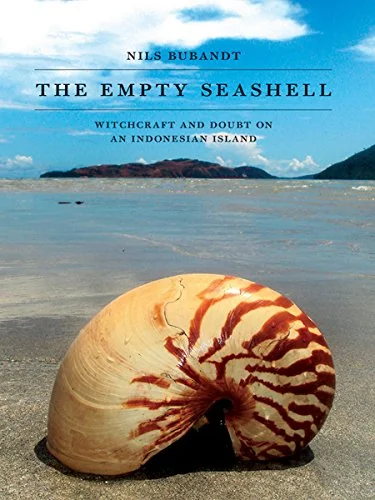
🏛 Books from this publisher Cornell University Press
All books from this publisher → 90
90
 84
84
 75
75
You might also like
See more →