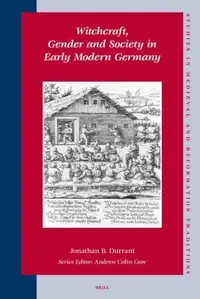
Witchcraft, Gender and Society in Early Modern Germany - Ingram Academic Durrant, Jonathan B
 79
79
 Editorial score
How we rate
Editorial score
How we rate
Stock reported in the catalog; fulfillment is confirmed with your request.
Uncover how state-driven Catholic reform, not popular panic, fueled devastating witch hunts in early modern Germany.
This compelling study challenges common assumptions about early modern witch trials, particularly their origins and the role of gender. Focusing on the Eichstätt persecutions (1590-1631), it reveals how these events were often orchestrated by authorities pursuing Catholic reform, rather than emerging from grassroots social conflict. The disproportionate targeting of women, the author argues, stemmed directly from the inquisitors' demonological beliefs and coercive interrogation tactics. Far from depicting fractured communities, the forced confessions illuminate a surprisingly cohesive society, underscoring the diverse and complex motivations behind these historical tragedies.
This scholarly work situates itself within the historiography of early modern European witch trials, specifically examining the intersection of religious reform and legal persecution in Germany. It contributes to the broader academic discourse on gender studies and state power during the era of Catholic Counter-Reformation.


📝 Description: Witchcraft, Gender and Society in Early Modern Germany - Ingram Academic Durrant, Jonathan B
💎 Expert review
📖 Why choose it
Why this book is worth reading
This book is essential for historians, sociologists, and readers interested in the nuanced mechanics of power and gender during the early modern period. It offers a vital corrective to popular narratives by demonstrating how top-down political agendas, rather than grassroots panic, drove witch hunts in Germany. Readers will gain a deeper understanding of how coercive interrogation techniques shaped legal outcomes and how societal cohesion persisted despite state-sponsored violence. It is particularly valuable for those seeking to move beyond simplistic explanations of hysteria toward a more complex analysis of institutional motivation and demonological belief systems as tools of social control.
⭐ Reader reviews
Reader rating
Durrant provides a rigorous, evidence-based argument that reorients our understanding of the Eichstätt persecutions, attributing them to state-driven Catholic reform rather than popular fear. The text is dense with academic analysis, making it less suitable for casual readers seeking narrative thrill or accessible general history. Those preferring broad overviews or literary accounts of witchcraft may find the focus on legal and theological mechanisms tedious. However, for scholars and dedicated enthusiasts of early modern European history, this work is an indispensable resource that clarifies the complex interplay between gender, authority, and religious ideology in one of history’s most tragic periods.
❓ Frequently asked questions
📖 Who should read this
For serious students of early modern European history, especially witchcraft and the Reformation, this book offers vital new perspectives. If you're fascinated by the intricate interplay of power, gender, and belief, its rigorous analysis will challenge your understanding of these historical tragedies.
🎯 Key themes and symbolism
Top-Down Persecution
The book shifts focus from popular social unrest to institutional initiatives, particularly Catholic reform programs, as primary drivers of witch hunts in Eichstätt. It argues that judicial and ecclesiastical authorities, rather than local communities, often instigated and maintained these severe trials, imposing them 'from above'.
Gendered Accusations Explored
This work analyzes the high number of female suspects, not as a reflection of societal breakdown, but as a direct consequence of the persecutors' specific demonological theories and their brutal interrogation methods. It highlights how these deeply held, often misogynistic beliefs shaped who was targeted for accusation and torture.
Community Cohesion Reexamined
A surprising finding is that despite the brutal interrogations and forced confessions, the narratives reveal a community that was largely integrated, not fractured by internal disputes. This challenges the prevailing idea that severe social strife was always a prerequisite for large-scale witch trials, offering a fresh perspective on communal resilience.
💬 Quotes from the book
“The traditional view often oversimplifies the motivations behind these tragedies, assuming popular unrest where institutional directives were the true catalyst.”
“Confession narratives, while coerced, surprisingly often reveal not a fractured society, but rather the internal logic of the persecutors' fearful worldview.”
📜 Historical context
📚 Glossary
- Historiography
- Demonology
- Catholic Reform
📔 Questions to reflect on
- How does understanding the 'top-down' nature of some witch hunts change your perception of historical power structures and social agency?
- Consider the role of demonology in shaping gendered accusations. What parallels, if any, can you draw to contemporary societal biases?
- If coerced confessions can still reveal a 'socially integrated community,' what does this suggest about the resilience of human bonds amidst persecution?
🏛 Books from this publisher Brill
All books from this publisher →


You might also like
See more →
 91
91