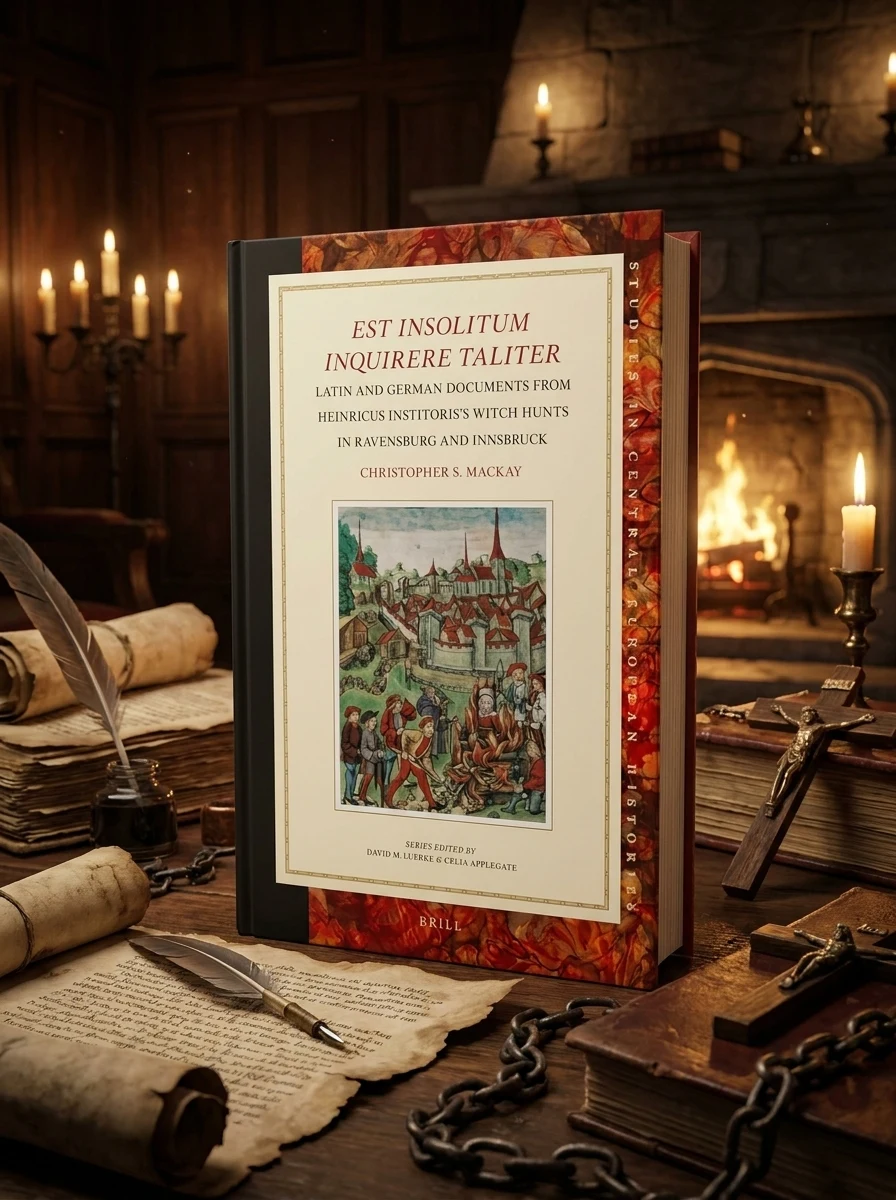
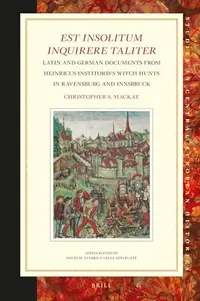
Est Insolitum Inquirere Taliter: Latin and German Documents from Heinricus Institoris's Witch Hunts in Ravensburg and Innsbruck - Ingram Academic S MacKay, Christopher
S MacKay, Christopher 83
83
 Editorial score
How we rate
Editorial score
How we rate
This edition can be ordered. No arrival date is confirmed.
Uncover the chilling origins of Europe's most infamous witch-hunting manual.
Delve into the raw, unedited historical records that laid the groundwork for the Malleus Maleficarum. This essential volume presents the original Latin and German documents detailing Heinricus Institoris’s foundational witch trials in 1484 Ravensburg and 1485 Innsbruck. As the sole complete collection of these pivotal texts, many previously unreleased in their entirety, it offers an unparalleled window into the immediate experiences that fueled the composition of history's most notorious treatise on witchcraft, providing crucial context often lost in secondary accounts.
This volume sits at the critical intersection of late medieval legal history and early modern religious fervor, serving as the primary source material for the development of inquisitorial witchcraft legislation in Europe. It provides a scholarly examination of the textual foundations that influenced the notorious Malleus Maleficarum during the height of European witch hunts.


📝 Description: Est Insolitum Inquirere Taliter: Latin and German Documents from Heinricus Institoris's Witch Hunts in Ravensburg and Innsbruck - Ingram Academic S MacKay, Christopher
💎 Expert review
📖 Why choose it
Why this book is worth reading
Scholars of early modern history and theology will find this volume indispensable for understanding the genesis of anti-witchcraft sentiment. By presenting the raw, unedited Latin and German documents from Heinrich Institoris’s trials, it offers an unparalleled window into the immediate experiences that fueled the Malleus Maleficarum. Researchers seeking to move beyond secondary accounts gain crucial context often lost in general histories. This is essential for anyone wishing to trace the precise legal and theological arguments used during the Ravensburg and Innsbruck proceedings. It appeals to those dedicated to uncovering the chilling origins of Europe’s most infamous manual, providing a rigorous, primary-source perspective on the institutional machinery of the witch hunts.
⭐ Reader reviews
Reader rating
This academic text is a dense, specialized resource intended for historians and theologians rather than casual readers of occultism. It rigorously examines the foundational documents of Heinrich Institoris without embellishment or narrative flair. Consequently, it does not suit readers seeking accessible narratives, spiritual guidance, or the atmospheric storytelling found in popular witchcraft history. Those looking for a quick overview or entertainment will find this work dry and inaccessible. However, for those committed to primary source analysis, it is a vital contribution to understanding the legal frameworks of the period.
❓ Frequently asked questions
📖 Who should read this
If you are a serious student of early modern European history, legal scholarship, or the dark currents of occult persecution, this book is an indispensable resource. It offers direct engagement with the foundational documents that shaped one of history's most terrifying phenomena.
🎯 Key themes and symbolism
Early Witchcraft Trials
This collection illuminates the initial stages of organized witch hunts, detailing the specific accusations, interrogations, and judicial processes employed by Institoris before he codified them. Readers gain insight into the practical implementation of nascent inquisitorial methods and the direct experiences that shaped future persecutions.
Legal Precedent & Persecution
Explore how these early legal proceedings in Ravensburg and Innsbruck established precedents for the systemic persecution of alleged witches. The documents reveal the evolving legal framework that justified and formalized the intense scrutiny and punishment of individuals, offering a crucial look at law's role in this dark historical period.
Foundations of Malleus
Understand the direct experiential basis for the Malleus Maleficarum. By examining the actual case files Institoris personally handled, scholars can trace the genesis of his arguments and methodologies, connecting theory directly to the grim realities of these pivotal early investigations and the people involved.
💬 Quotes from the book
“Item, that the accused, being questioned under oath regarding the pact with the infernal spirit, did confess to having invoked said spirit for illicit gain.”
“It is decreed by the ecclesiastical court that the aforementioned transgressions against divine law, as confessed, shall be met with due spiritual and temporal punishment.”
📜 Historical context
📚 Glossary
- Institoris, Heinricus
- Malleus Maleficarum
- Ravensburg & Innsbruck
📔 Questions to reflect on
- Reflect on how the meticulous documentation of these early trials might have inadvertently legitimized and perpetuated witch-hunting practices.
- Consider the psychological impact of such legalistic procedures on both the accused and the accusers in the late 15th century.
- How do primary sources like these challenge or confirm your existing understanding of the historical motivations behind the Malleus Maleficarum?
🏛 Books from this publisher Brill
All books from this publisher →

You might also like
See more →