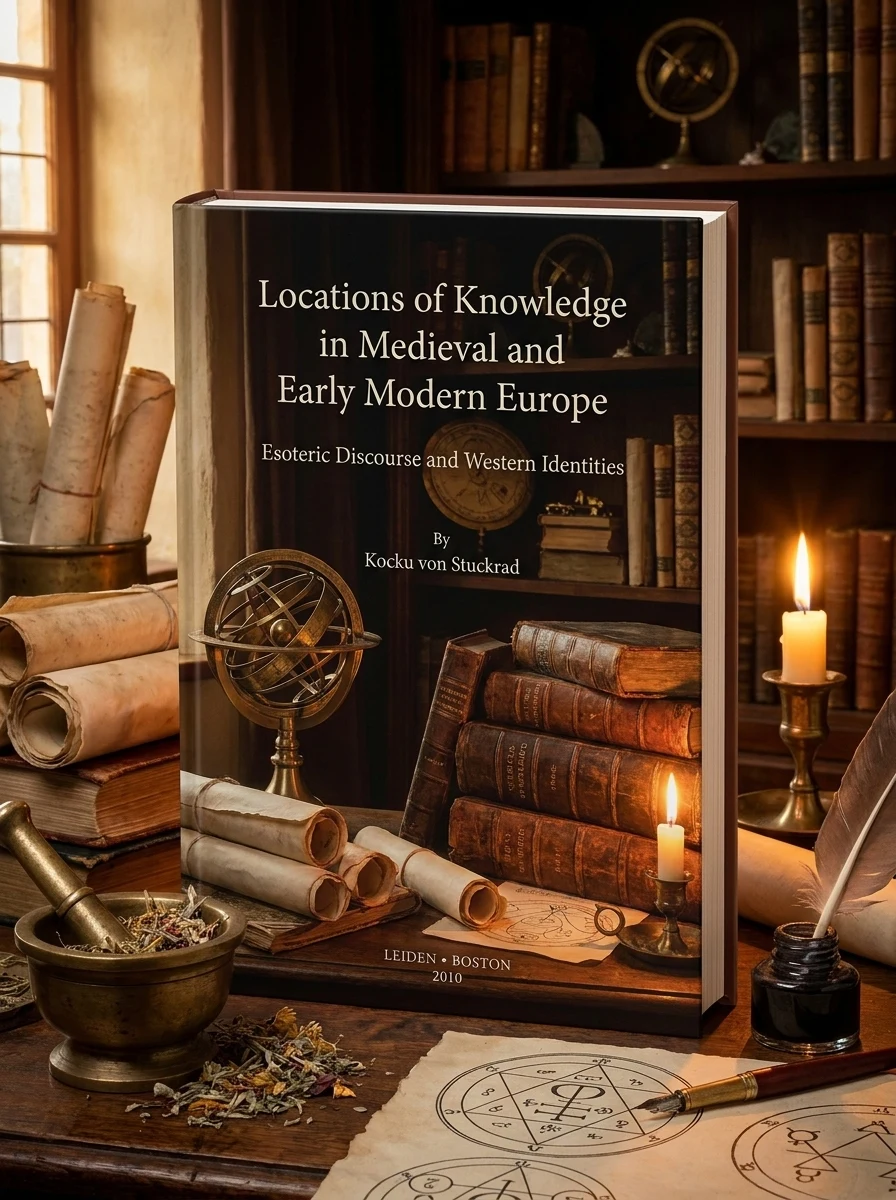
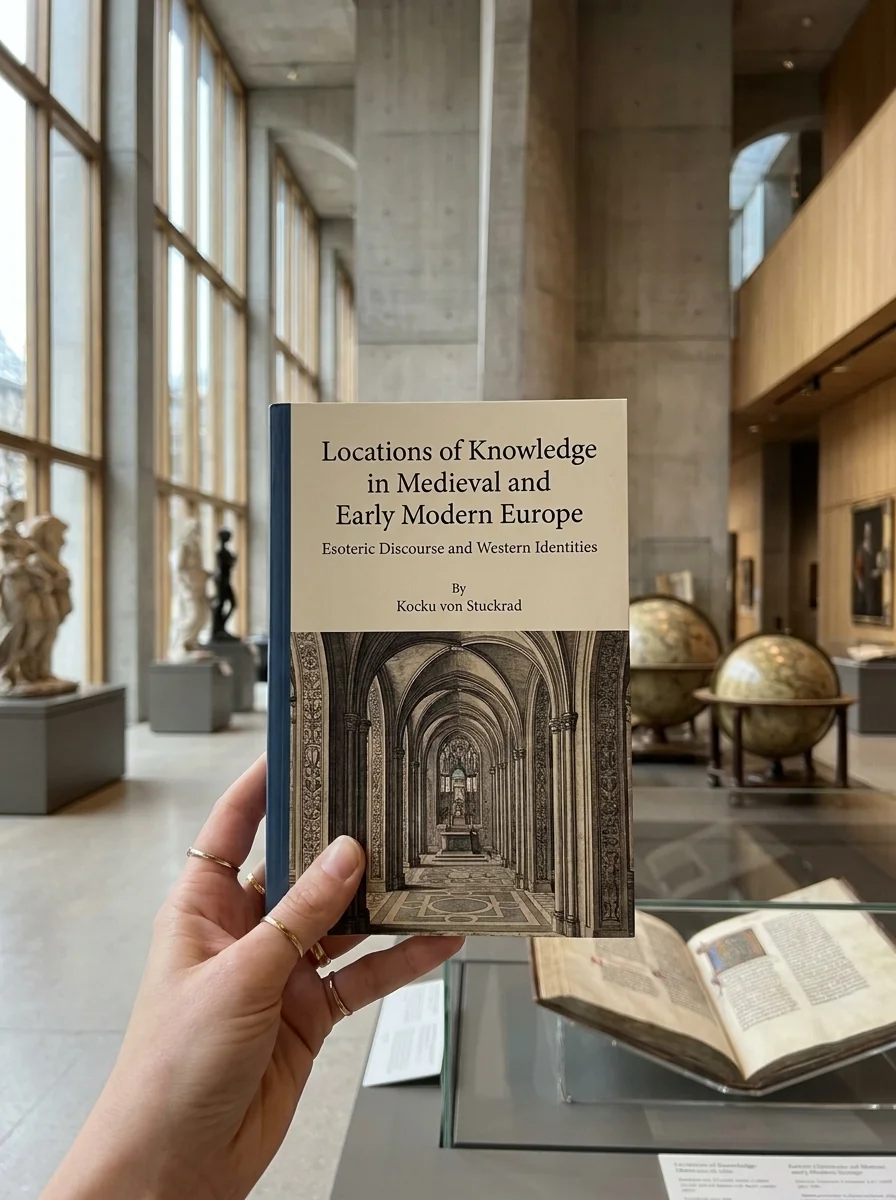
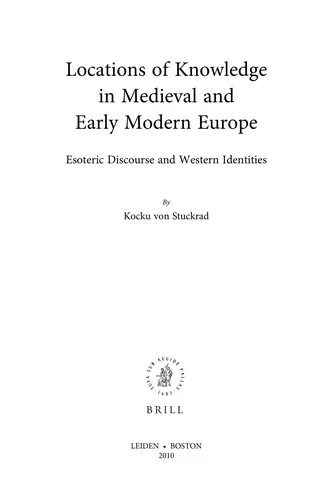
Locations of Knowledge in Medieval and Early Modern Europe: Esoteric Discourse and Western Identities - Ingram Academic Von Stuckrad, Kocku
✍️ Von Stuckrad, KockuKocku von Stuckrad’s insightful work meticulously explores the profound impact of esoteric thought on European identity between the 13th and 18th centuries. Moving beyond a mere chronicle of beliefs, this study frames "esoteric discourse" as a powerful analytical tool, revealing how diverse knowledge systems—from Kabbalah to early modern science—competed and converged to define what it meant to be European. It posits a continuous, dynamic interplay between varied societal and religious frameworks, advocating for a structuralist perspective on the history of knowledge and its profound societal implications.


Praise for this book
“that Jews helped create through their direct and indirect engagement with the Christian majority. Stuckrad's work demonstrates that Jewish texts and ideas are essential components of the discursive matrix of the West, and thus assume a central rather than marginal role in the study of European intellectual history. The comprehensive bibliography and index, as well as the rich footnotes, further enhance the value of Stuckrad's contribution.”
“Von Stuckrad's sophisticated and stimulating reevaluation of the place of esotericism in Western culture should be of great interest to anyone concerned with the complex religious, social, political, and intellectual developments that mark the transition from the medieval to the modern world...., this is an exceptionally interesting book eminently worthy of critical attention.”
📝 Description: Locations of Knowledge in Medieval and Early Modern Europe: Esoteric Discourse and Western Identities - Ingram Academic Von Stuckrad, Kocku
📑 What's inside
- Preface
- PART ONE: ESOTERIC DISCOURSE AND THE EUROPEAN HISTORY OF RELIGION
- Introduction
- 1. Europe and the Christendom Narrative: From Singularization to Pluralism
- The Secularization Theory Revisited
- Christian Occident?
- The Two-Fold Pluralism
- 2. The Polemical Construction of Tradition
- The Construction of Prisca Theologia
- Genealogies of Wisdom
- Jewish Perspectives
- Beyond Tradition
- 3. Conceptualizing the Study of Esoteric Discourse
- Approaches to Esotericism
- Secrecy as Social Capital
- Discourses of Perfect Knowledge
- PART TWO: SHARED PASSIONS
- Introduction
- 4. The Secrets of Experience: Wisdom beyond Demonstration
- Neoplatonism and Theurgy in Late Antiquity
- Experiential Knowledge in Suhrawardī's Illuminationist Philosophy
- 5. The Secrets of Texts: Esoteric Hermeneutics
- The Readability of the Cosmos: Europe's Obsession with Words
- The Textile of the Divine in Early Kabbalah
- Linguistic Ontologies in Christian Kabbalah
- Humanistic Philology: Universal Languages and the Quest for the Ursprache
- 6. The Secrets of Time: Astrology and Sacred History
- Critical Response to Ancient Traditions: Medieval Arabic Astrology
- Sharing Muslim Knowledge: Christian Astrology
- PART THREE: INTERFERENCES
- Introduction
- 7. Scientific Encounters
- "Occult Sciences" The Science-Religion Divide Revisited
- John Dee: A Scholar Gone Mad?
- Natural Philosophy in an Apocalyptic Age
- 8. Visual Seductions
- The Problem of 'Renaissance Paganism'
- Image Acts and Visual Culture
- The Presence of Images as Visual Practice
- 9. Political Consideration
- Johann Heinrich Alsted: Hermeticism and Universal Reform
- Perfect Knowledge in the "Circle of Learning" Alsted's Encyclopaedia
- 10. Conclusion: Locations of Knowledge
- Writing Histories, Narrating Pasts
- Esoteric Discourse and Western Identities
- Bibliography
- Index
💎 Expert review
📖 Why choose it
Why this book is worth reading
This book is essential for scholars and serious enthusiasts seeking to understand the structural foundations of Western identity through the lens of esotericism. Readers interested in the complex interplay between diverse knowledge systems, such as Kabbalah and early modern science, will find profound value in von Stuckrad’s analytical framework. It offers a unique perspective on how competing ideas defined societal and religious frameworks during a pivotal historical era. By moving beyond simple chronicles of belief, it provides a dynamic view of knowledge production that is crucial for anyone studying the evolution of European thought and the enduring impact of hidden wisdom on cultural formation.
⭐ Reader reviews
Reader rating
Von Stuckrad presents a rigorous, structuralist analysis of esoteric discourse, making this a dense academic text rather than an accessible guide. It suits researchers and historians focused on the intellectual architecture of Western identity between the thirteenth and eighteenth centuries. However, it does not suit readers seeking narrative-driven histories or those looking for practical occult instruction. The book’s abstract approach to knowledge systems may alienate casual readers preferring straightforward biographical accounts of famous mystics. It is a specialized tool for understanding how esoteric thought converged with science and religion, requiring patience and a background in historical theory to fully appreciate its nuanced arguments about societal implications.
❓ Frequently asked questions
📖 Who should read this
If you’re fascinated by the hidden intellectual currents of European history, curious about how diverse knowledge systems shaped our modern world, or seek a deeper academic understanding of esotericism's role beyond its popular image, this book offers profound insights into the evolution of Western thought.
🎯 Key themes and symbolism
Esotericism as Framework
This book redefines esotericism not just as beliefs, but as a critical analytical lens. It shows how "esoteric discourse" offers a structured method to understand the historical evolution of knowledge claims, revealing underlying patterns and competitions that shaped Western thought, moving beyond surface distinctions.
Pluralism of Knowledge
This work highlights the inherent diversity within European intellectual history, emphasizing a constant "pluralism" of religious and societal systems. It illustrates how different knowledge forms—mystical traditions, philosophical schools, or nascent scientific inquiry—coexisted, interacted, and often vied for dominance in shaping cultural identities.
Shaping Western Identity
Von Stuckrad argues that the contest and integration of various knowledge claims, including those often deemed "esoteric," were fundamental to Western identity. From Hermeticism to philology, these diverse intellectual currents provided conceptual tools through which European culture continuously re-evaluated and defined itself over centuries.
📜 Historical context
📚 Glossary
- Esoteric Discourse
- Experiential Philosophy
- Hermeticism
📔 Questions to reflect on
- Consider a contemporary societal debate about "truth" or "knowledge." How might Von Stuckrad's concept of competing "esoteric discourses" help analyze its underlying dynamics?
- Reflect on a historical period or culture you know well. How might seemingly marginal or "hidden" knowledge traditions have subtly influenced its mainstream identity or societal structures?
- In what ways do you believe our modern understanding of "science" and "spirituality" still carry echoes of the historical "pluralism of knowledge" that Von Stuckrad describes?