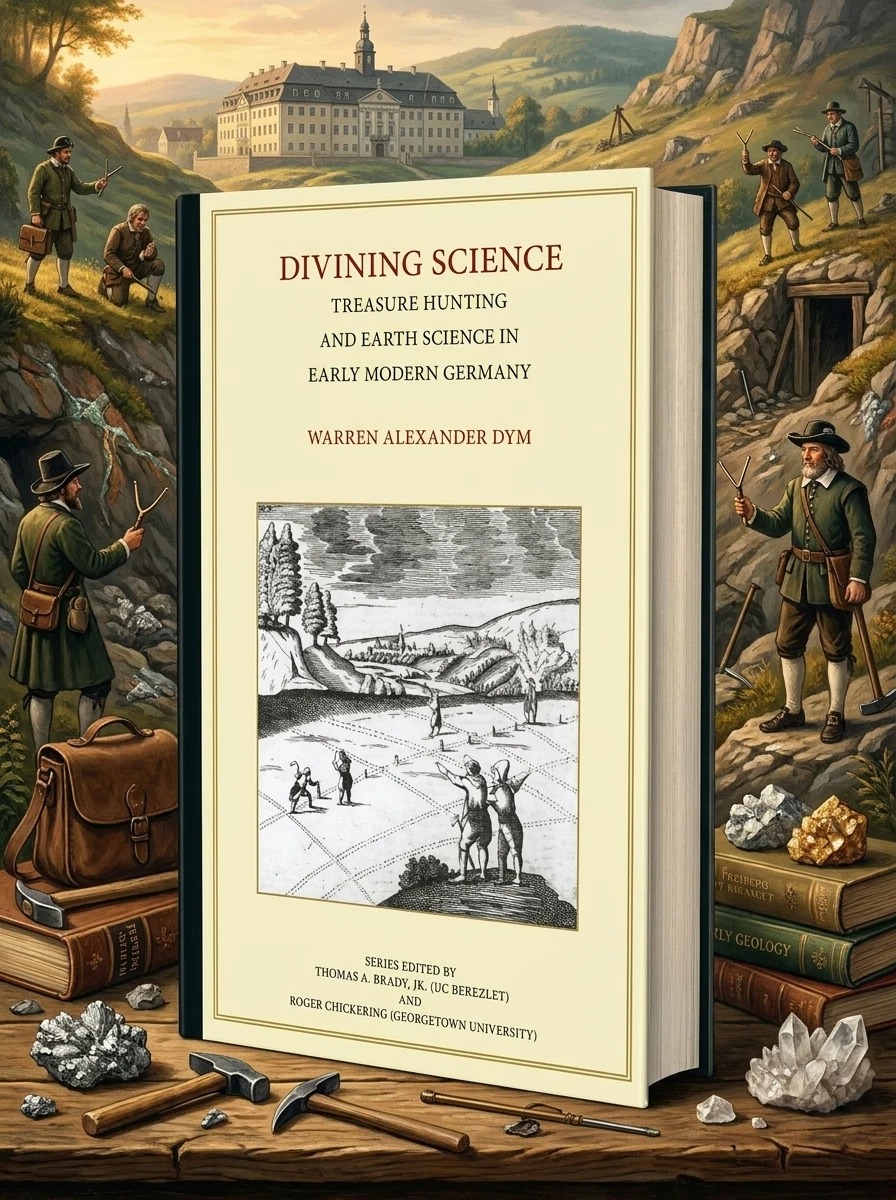
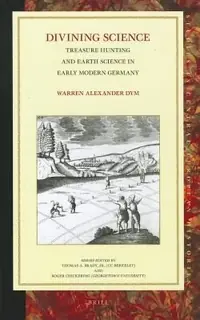
Divining Science: Treasure Hunting and Earth Science in Early Modern Germany - Ingram Academic Dym, Warren
 79
79
 Editorial score
How we rate
Editorial score
How we rate
Stock reported in the catalog; fulfillment is confirmed with your request.
Unearth the forgotten scientific spirit where dowsing rods guided early modern German geology.
This groundbreaking study delves into the often-overlooked practical side of early modern German earth science, moving beyond typical analyses of labor and engineering. Warren Dym meticulously unpacks the rich mining culture and prospecting methods, particularly the use of the divining rod. He reveals how this seemingly esoteric tool was central to a robust, pre-institutionalized vernacular science in Saxony. The book traces the fascinating evolution of dowsing from a practical skill among experienced prospectors to an experimental branch of geophysics, culminating in its synthesis with emerging scientific thought at the Freiberg Mining Academy.
This work situates itself within the intersection of early modern German mining culture and the pre-institutionalized vernacular science that preceded formal academic structures. It bridges the gap between historical geology and esoteric practices by examining how divining rods functioned as scientific instruments in Saxony.


📝 Description: Divining Science: Treasure Hunting and Earth Science in Early Modern Germany - Ingram Academic Dym, Warren
💎 Expert review
📖 Why choose it
Why this book is worth reading
Readers fascinated by the hidden histories of scientific practice will find this book incredibly rewarding. It offers a unique perspective for historians of science who wish to understand how esoteric tools like dowsing rods were integrated into serious geological inquiry in early modern Germany. If you are interested in the tangible, practical side of earth science beyond mere theory, or if you want to see how mining culture influenced experimental geophysics, this text provides essential context. It is particularly valuable for those who appreciate the nuanced relationship between labor, engineering, and the development of scientific knowledge in pre-institutionalized settings.
⭐ Reader reviews
Reader rating
Dym’s study is a meticulous unpacking of early modern German prospecting methods, revealing the robust scientific spirit behind dowsing rods at the Freiberg Mining Academy. While it successfully challenges traditional analyses by focusing on practical mining culture, its dense academic tone may alienate casual readers or those seeking straightforward historical narratives. It does not suit individuals looking for quick summaries or those uninterested in the specific socio-scientific dynamics of Saxony’s geology department. This is a specialized contribution to the history of science, best appreciated by scholars who value deep dives into the material conditions of early modern experimentation.
❓ Frequently asked questions
📖 Who should read this
If you're fascinated by the hidden histories of science, the interplay of folk knowledge and formal inquiry, or the cultural nuances of early modern Europe, this book offers a truly original perspective. It’s perfect for those seeking to challenge conventional narratives of scientific progress.
🎯 Key themes and symbolism
The Divining Rod's Evolution
Dym reframes the dowsing rod not as mere superstition, but as a crucial instrument in early modern prospecting. He shows how its application transformed from an intuitive skill into an object of empirical study, eventually influencing the development of geophysics by exploring mineral vapors and earth energies, defying its expected decline during the Enlightenment.
Vernacular Science Precedes Institutions
This work highlights the profound impact of local, practical knowledge developed by miners long before formal geological academies emerged. Dym argues that a sophisticated, 'vernacular' understanding of earth processes, rooted in direct observation and traditional methods like dowsing, formed the bedrock upon which later institutionalized geology was built in regions like Saxony.
Tradition Meets New Science
The book explores how established mining traditions and emerging scientific methodologies converged, particularly at the Freiberg Mining Academy. It demonstrates that rather than outright rejecting older practices, early scientific institutions often integrated and reinterpreted them, creating a unique synthesis where the 'tacit knowledge' of prospectors informed nascent scientific inquiry.
💬 Quotes from the book
“The prospector's rod, far from being a mere superstition, was perceived as a sophisticated instrument, an extension of the body's sensitivity to telluric forces, guiding the very genesis of geological understanding.”
“The Enlightenment did not always banish the esoteric; rather, it often sought to rationalize and incorporate it, forging a new experimental language from the crucible of ancient practices and burgeoning empiricism.”
📜 Historical context
📚 Glossary
- Dowsing Rod
- Vernacular Science
- Freiberg Mining Academy
📔 Questions to reflect on
- How does Dym's exploration of dowsing challenge your preconceived notions about the nature of 'science' and 'superstition' in historical contexts?
- Consider other historical practices often dismissed as 'unscientific.' How might a re-examination through the lens of vernacular science reshape our understanding of them?
- What lessons can contemporary science learn from the historical integration of traditional knowledge, as seen in the Freiberg Mining Academy's approach?
🏛 Books from this publisher Brill
All books from this publisher →
You might also like
See more →