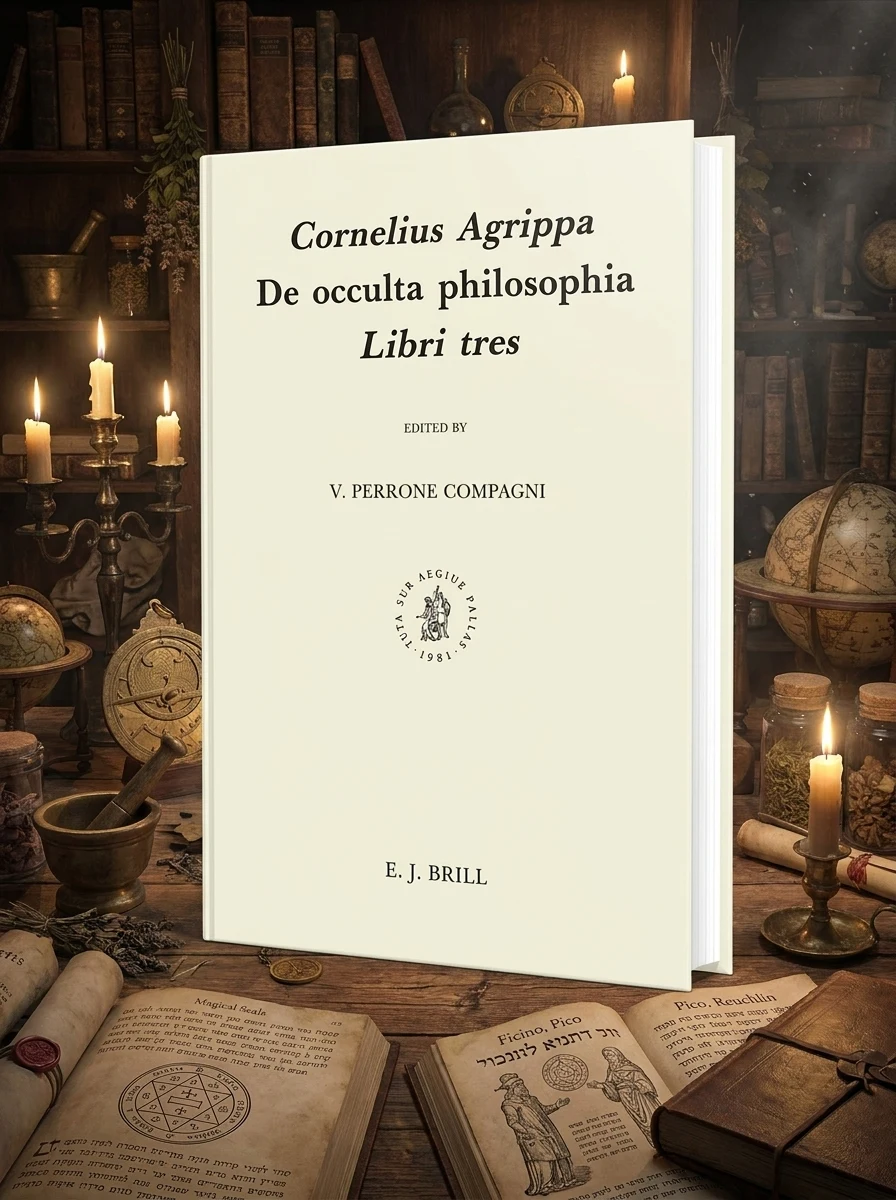

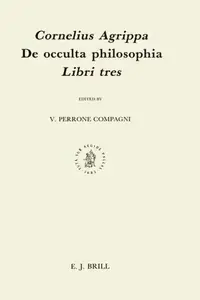
de Occulta Philosophia, Libri Tres - Ingram Academic Perrone Compagni
Agrippa, Cornelius 75
75
 Editorial score
How we rate
Editorial score
How we rate
Stock reported in the catalog; fulfillment is confirmed with your request.
Agrippa’s magnum opus remains the definitive Renaissance compass for navigating the hidden architecture of cosmic forces.
Cornelius Agrippa’s masterpiece synthesizes the Hermetic traditions of Ficino and Pico with the Kabbalistic insights of Reuchlin, creating a unified system of natural magic. This critical edition cuts through historical controversy to reveal the author’s profound scholarly intent. Rather than mere sorcery, Agrippa explores the intricate web connecting the material world to the divine. It is a rigorous intellectual pursuit that seeks to reconcile the spiritual and physical realms, offering a comprehensive map of occult philosophy that remains unparalleled in its depth and scope.
This work stands as the definitive Renaissance compass for navigating the hidden architecture of cosmic forces within the Western esoteric tradition.


📝 Description: de Occulta Philosophia, Libri Tres - Ingram Academic Perrone Compagni
💎 Expert review
📖 Why choose it
Why this book is worth reading
Readers seeking a rigorous intellectual pursuit will find profound value in this critical edition, which cuts through historical controversy to reveal Agrippa’s scholarly intent. It is not for those expecting mere sorcery, but for scholars and practitioners who wish to explore the intricate web connecting the material world to the divine. By synthesizing Hermetic traditions with Kabbalistic insights, the text offers a comprehensive map of occult philosophy that reconciles spiritual and physical realms. Those interested in the hidden architecture of cosmic forces will appreciate this unparalleled depth and scope, gaining a unified system of natural magic that remains essential for understanding the profound scholarly ambitions of the Renaissance period.
⭐ Reader reviews
Reader rating
Ordered this after seeing it referenced in another book I was studying. Every rereading turns up something I missed.
Took a chance on this and glad I did. The text itself is dense but rewarding — you get out what you put in. Shipping was quick too.
As someone who reads a lot in this field, I can be picky. The material is presented clearly and the structure makes it easy to revisit key passages. I found myself reading passages aloud just to sit with them. Glad I finally picked this up.
This critical edition serves as an indispensable resource for those dedicated to understanding the unified system of natural magic Agrippa constructed. It successfully strips away layers of historical misinterpretation to expose the author’s rigorous academic goals. However, it may disappoint readers looking for accessible spellcraft or practical magical rituals, as the text is a dense philosophical treatise rather than a grimoire. The synthesis of Hermetic and Kabbalistic thought requires patience and a strong background in Renaissance intellectual history. It is best suited for serious students of esotericism who value scholarly depth over immediate practical application, offering a map of occult philosophy that is too complex for casual browsers but rewarding for dedicated researchers.
❓ Frequently asked questions
📖 Who should read this
Readers seeking a rigorous academic understanding of Renaissance magic, historians of philosophy, and practitioners interested in the intellectual roots of esoteric traditions rather than superficial spellwork.
🎯 Key themes and symbolism
Renaissance Syncretism
Natural Magic
Kabbalistic Integration
💬 Quotes from the book
“Agrippa forged a much more comprehensive conception of the occult by broadening the ideas found in his sources.”
“Driven by a deep scholarly curiosity, the author seeks to come to grips with the intellectual and religious problems of his time.”
📜 Historical context
📚 Glossary
- Natural Magic
- Syncretism
- Magus
📔 Questions to reflect on
- How does Agrippa’s attempt to unify magic and religion reflect your own search for coherence between belief and practice?
- In what ways does the concept of 'natural magic' resonate with your understanding of the interconnectedness of all things?
- Consider the tension between scholarly curiosity and spiritual authority; where do you stand in your own intellectual journey?
✍️ More books by this author Agrippa, Cornelius
All books by this author →
🏛 Books from this publisher Brill
All books from this publisher →
You might also like
See more →