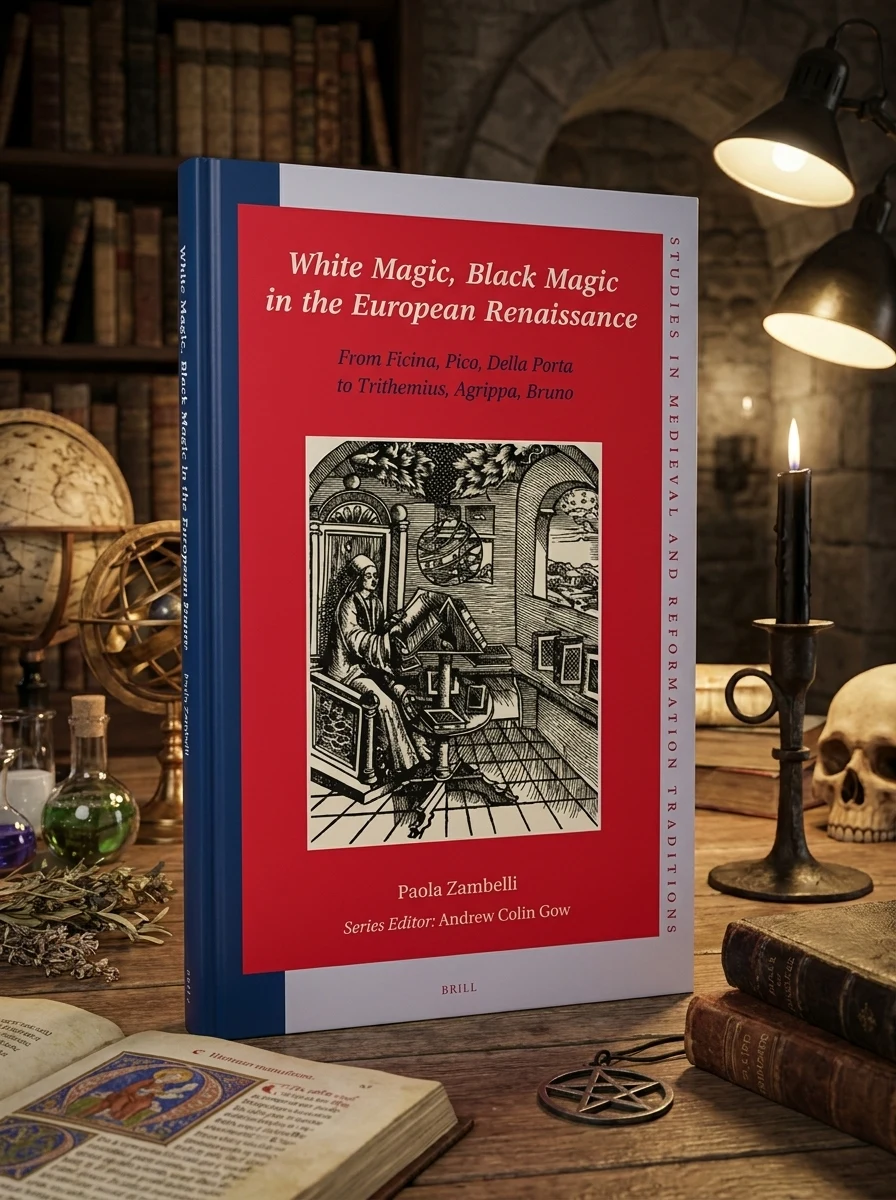
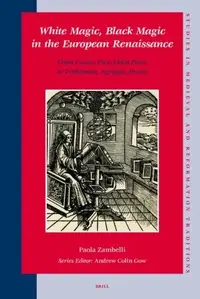
White Magic, Black Magic in the European Renaissance: From Ficino, Pico, Della Porta to Trithemius, Agrippa, Bruno - Ingram Academic Zambelli, Paola
Zambelli, Paola 90
90
 Editorial score
How we rate
Editorial score
How we rate
Stock reported in the catalog; fulfillment is confirmed with your request.
Uncover the hidden currents of Renaissance magic, where light and shadow intertwined.
Paola Zambelli's rigorous scholarship delves into the complex world of magic during the European Renaissance. This essential work meticulously traces how intellectuals like Ficino, Pico, Della Porta, Trithemius, Agrippa, and Bruno grappled with the nuanced distinctions between 'white' and 'black' magic. Moving beyond simplistic classifications, Zambelli illuminates the philosophical, theological, and social implications of these practices, revealing magic not as mere superstition but as a profound intellectual pursuit deeply embedded within the era's cultural fabric. It's a vital exploration for understanding the era's occult landscape.
This volume situates itself within the rigorous academic study of European Renaissance intellectual history, specifically focusing on the intersection of philosophy, theology, and esoteric practice. It serves as a critical scholarly resource for understanding how early modern thinkers navigated the complex boundaries between accepted science and forbidden magic.


📝 Description: White Magic, Black Magic in the European Renaissance: From Ficino, Pico, Della Porta to Trithemius, Agrippa, Bruno - Ingram Academic Zambelli, Paola
💎 Expert review
📖 Why choose it
Why this book is worth reading
Scholars and serious enthusiasts of Renaissance history will find immense value in this text, as it dismantles the simplistic binary of white versus black magic that often obscures historical reality. Zambelli’s work is essential for anyone seeking to understand how prominent intellectuals like Ficino, Bruno, and Agrippa viewed their magical pursuits not as superstition, but as profound philosophical inquiries. By tracing these nuanced distinctions, the book reveals the deep cultural and theological stakes involved in Renaissance occultism. Readers who appreciate dense, well-researched analysis will gain a richer appreciation for the era's intellectual landscape, seeing magic as a legitimate, albeit controversial, pillar of early modern thought rather than mere fringe activity.
⭐ Reader reviews
Reader rating
Paola Zambelli delivers a meticulous and indispensable scholarly account of Renaissance magic, offering deep insights into the philosophical frameworks of figures like Trithemius and Della Porta. The work is rigorous, well-argued, and vital for specialists in esoteric history. However, it is decidedly not suited for casual readers seeking accessible introductions or practical magical instruction. Those looking for entertainment or simplified narratives will likely find the academic density and specific focus on intellectual distinctions tedious. It is a serious historical study that demands patience and prior interest in Renaissance philosophy.
❓ Frequently asked questions
📖 Who should read this
If you're fascinated by the intellectual history of the Renaissance, the intricate interplay between philosophy, religion, and nascent science, or the historical evolution of occult traditions, this book offers unparalleled insight. Scholars and dedicated enthusiasts alike will find its depth rewarding.
🎯 Key themes and symbolism
Renaissance Esoteric Thought
The book meticulously explores how magic was integrated into the broader intellectual currents of the Renaissance. It demonstrates that figures often considered 'magicians' were also philosophers, physicians, and theologians, whose work profoundly influenced fields like astrology, alchemy, and kabbalah, challenging modern perceptions of science and spirituality as distinct.
Delineating Magical Morality
Central to Zambelli's study is the historical attempt to categorize magical practices as either benevolent ('white') or malevolent ('black'). The text unpacks the criteria used by Renaissance thinkers to differentiate between divine-inspired ritual, natural magic, and demonic pacts, highlighting the profound moral and theological stakes involved in these distinctions.
Pioneers of Occult Philosophy
Through detailed analysis, the book introduces readers to the foundational contributions of key Renaissance figures. From Marsilio Ficino's Neoplatonic 'natural magic' to Giordano Bruno's audacious cosmological visions, Zambelli showcases how these intellectuals shaped the theoretical frameworks and practical applications of magic, pushing the boundaries of knowledge.
💬 Quotes from the book
“The Renaissance mind grappled not with the *existence* of magic, but with its moral compass, seeking to discern divine intervention from infernal pact.”
“From Ficino's astral talismans to Agrippa's formidable synthesis, each master navigated a perilous intellectual landscape, risking heresy for enlightenment.”
📜 Historical context
📚 Glossary
- Hermeticism
- Neoplatonism
- Theurgy
📔 Questions to reflect on
- How did the societal and religious context of the Renaissance shape the classification of magical practices as 'white' or 'black'?
- Reflect on how the figures discussed in the book attempted to reconcile magical philosophy with their contemporary scientific and theological understanding.
- Consider the lingering influence of Renaissance magical thought on modern occultism or even contemporary spiritual practices. What connections can you draw?
✍️ More books by this author Zambelli, Paola
All books by this author →
🏛 Books from this publisher Brill
All books from this publisher →
You might also like
See more →