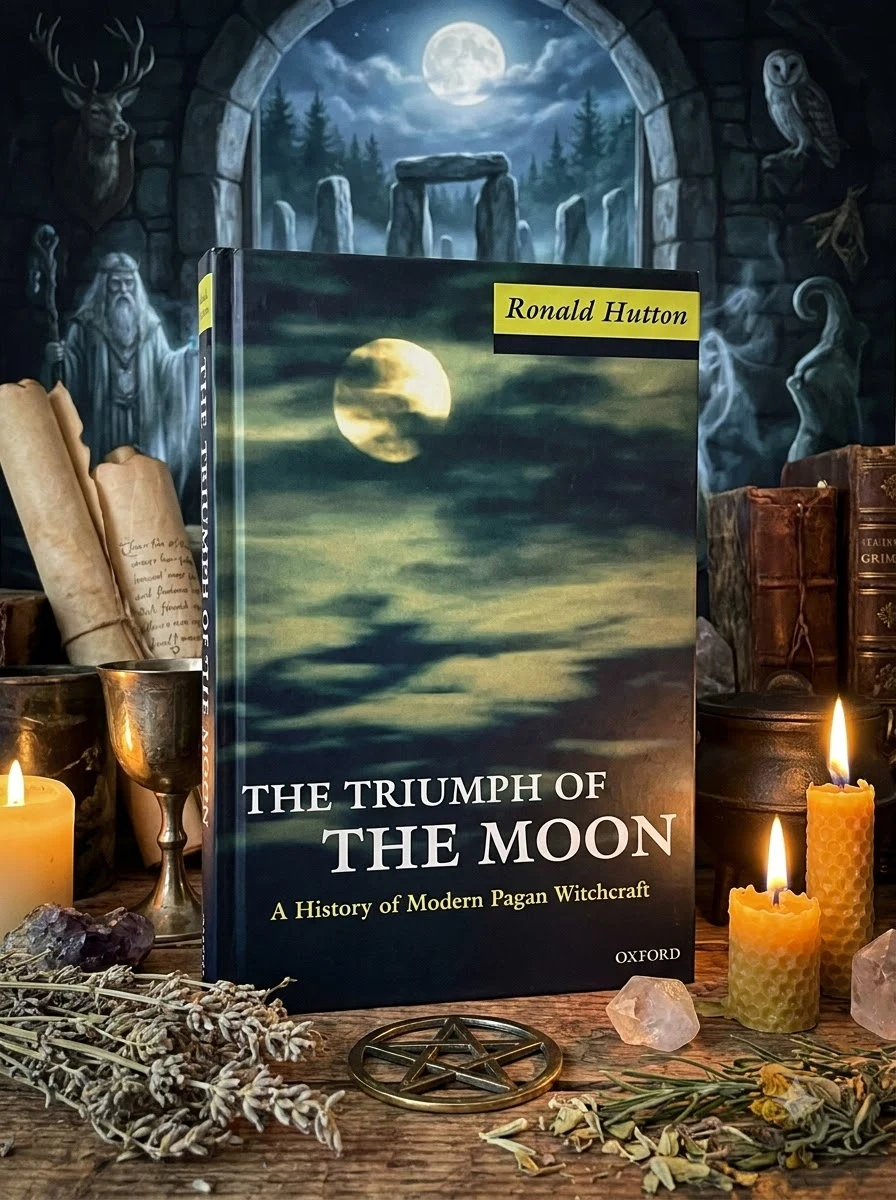
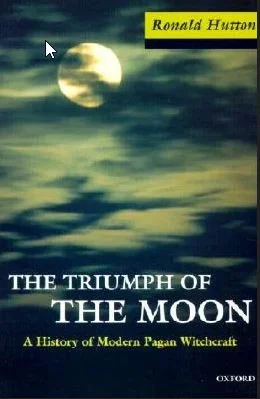
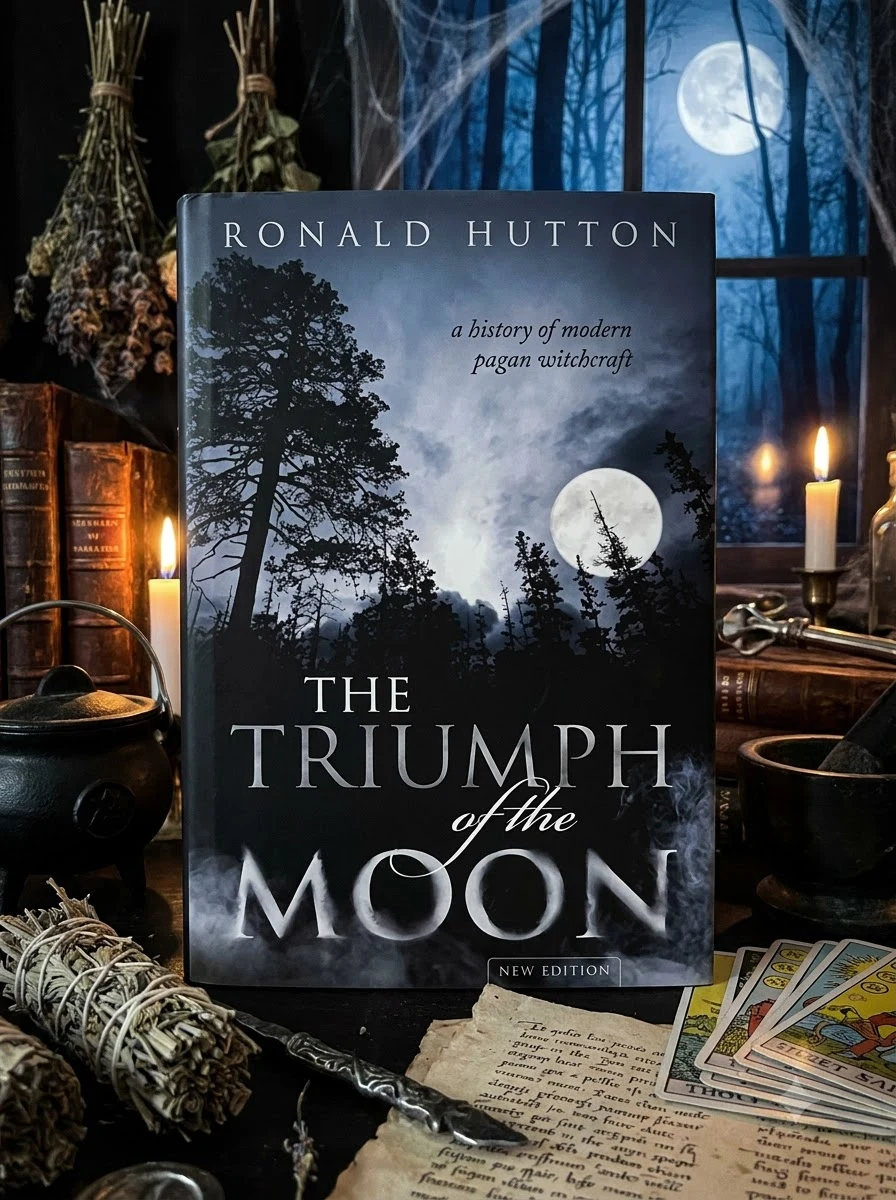
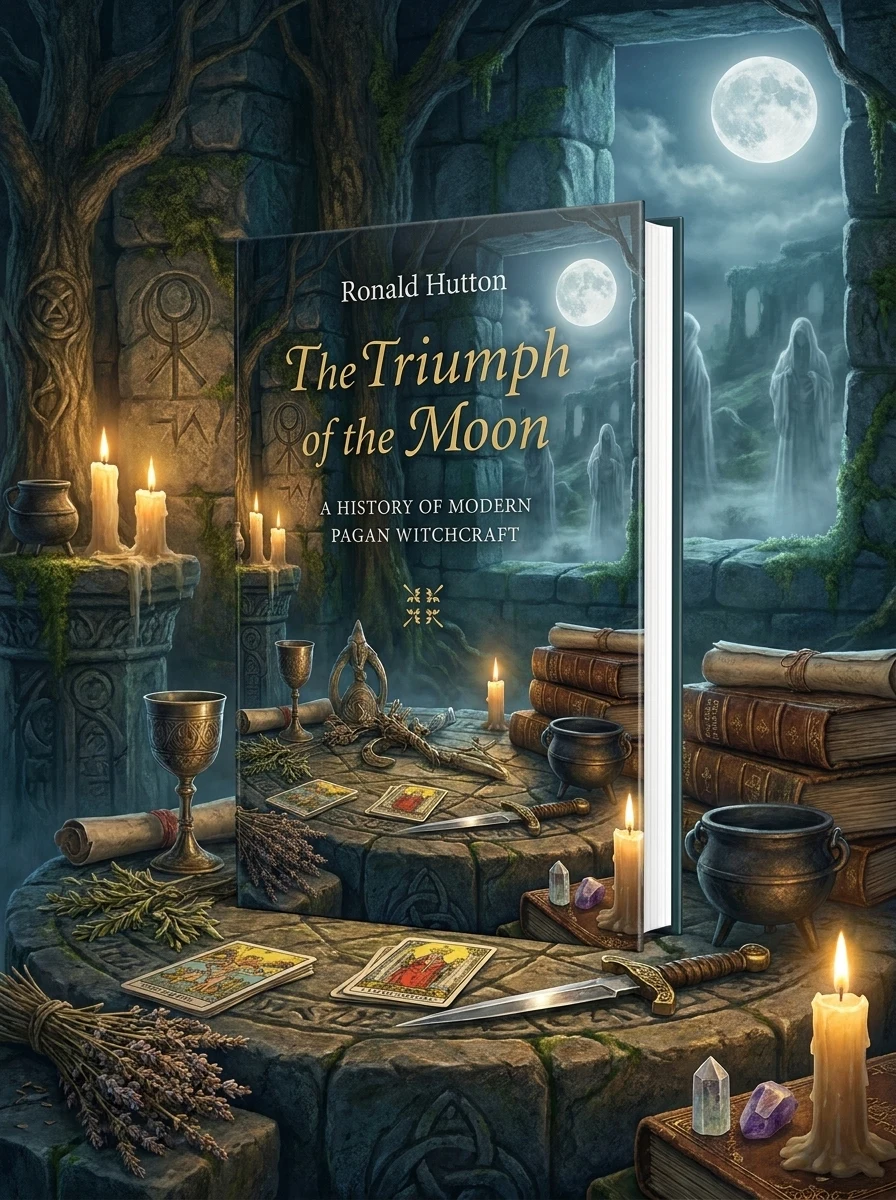
The Triumph of the Moon: A History of Modern Pagan Witchcraft (Revised)
✍️ Hutton, RonaldAn academic cultural history tracing the English roots and development of modern pagan witchcraft.
This Oxford University Press volume examines modern pagan witchcraft from its British origins to its spread across four continents. Professor Ronald Hutton examines how village traditions, high magic, freemasonry, and literature converged into a structured religion. By analyzing historical figures like Gerald Gardner alongside broader cultural shifts, the book places occult practices directly within the study of modern British history.
Originating in Victorian England, modern pagan witchcraft grew from British cultural traditions, high magic, and folklore. It eventually expanded from English shores across four continents into a recognized modern religion.


Praise for this book
“Hutton has synthesized a huge body of sources, and woven together a fascinating narrative with supreme skill. The reader is sure to be gripped by the wonderful cast of characters that he assembles...Hutton shows us that paganism is a matter of interest not only for the classicist and archeologist, but for the modern historian as well. In doing so his Triumph of the Moon proves to be a triumph of cultural history.”
“Hutton's book is a must-read not only for anyone interested in modern Paganism, or the occult, but it also embodies a deep insight into the development of British society and culture.”
“Hutton uses his historical skills to tease apart some of the themes in this popular rural romanticism, and to locate their purely modern origin.”
📝 Description: The Triumph of the Moon: A History of Modern Pagan Witchcraft (Revised)
💎 Expert review
📖 Why choose it
Why this book is worth reading
This book is essential for anyone seeking to understand the authentic roots and vibrant evolution of modern pagan witchcraft beyond popular myths. It benefits readers who wish to replace sensationalized perceptions with a grounded understanding of how England’s spiritual contribution blossomed into a global religion. By tracing the lineage from ancient folk practices through ceremonial magic to its contemporary form, it offers profound insights into connections with art, nature, and the divine feminine. Those interested in how literary figures softened public opinion will find this meticulously charted journey both educational and inspiring, revealing witchcraft as a thriving, recognized faith rather than just a shadowy mystery.
⭐ Reader reviews
Reader rating
Hutton’s revised edition is a meticulous charting of Wicca’s complete journey, offering a groundbreaking study of its English origins and continental spread. While it brilliantly illustrates the religion's profound connections to classical pantheons and the divine feminine, it may not suit readers seeking practical ritual instructions or purely mythological narratives. This text is best for those willing to engage with scholarly analysis of how influential literary figures softened public opinion and how ancient practices evolved. It candidly addresses darker historical associations while emphasizing contemporary recognition, making it ideal for students of religious history rather than casual practitioners looking for immediate spellwork or dogmatic guidance.
❓ Frequently asked questions
📖 Who should read this
If you seek a definitive, scholarly yet engaging account of modern witchcraft's history, evolution, and cultural impact, this book is essential. Ideal for students of religion, pagan practitioners, or anyone curious about how a once-maligned practice transformed into a respected spiritual path.
🎯 Key themes and symbolism
Historical Genesis of Wicca
This work meticulously traces Wicca's complex origins, moving beyond popular myths to reveal its true lineage. It explores the fascinating blend of ancient folk traditions, esoteric currents like Freemasonry and high magic, and intellectual contributions that collectively forged modern pagan witchcraft into a coherent, widespread spiritual path.
Challenging Witchcraft Perceptions
Hutton confronts the pervasive, often chilling historical stereotypes of witchcraft head-on. While acknowledging the darker facets sometimes associated with the craft, he powerfully foregrounds its positive core: a deep reverence for the natural world, an appreciation for artistic expression, and a profound connection to the divine feminine and classical deities.
Cultural & Literary Impact
The book highlights how prominent literary figures, such as Yeats, Lawrence, and Graves, played a pivotal role in reshaping public perception of witchcraft. Their works celebrated its positive, life-affirming aspects, effectively paving the way for greater acceptance and understanding of nascent pagan traditions in the Victorian era and beyond.
📜 Historical context
📚 Glossary
- Wicca
- Paganism
- High Magic
📔 Questions to reflect on
- How has your understanding of "witchcraft" been shaped by popular culture, and how might historical accuracy challenge or affirm those views?
- Consider the interplay between individual spiritual practice and its broader cultural acceptance. How do movements like Wicca gain legitimacy over time?
- Reflect on the book's discussion of positive aspects of witchcraft (nature, art, femininity). Which of these resonate most with your own spiritual or philosophical outlook?
📖 Read on the blog
✍️ More books by this author Hutton, Ronald
All books by this author →


🏛 Books from this publisher Oxford University Press
All books from this publisher →


You might also like
See more →
Have a question about this item?
Ask about the edition, condition, delivery or anything else — we reply by email or phone, usually within a day.
