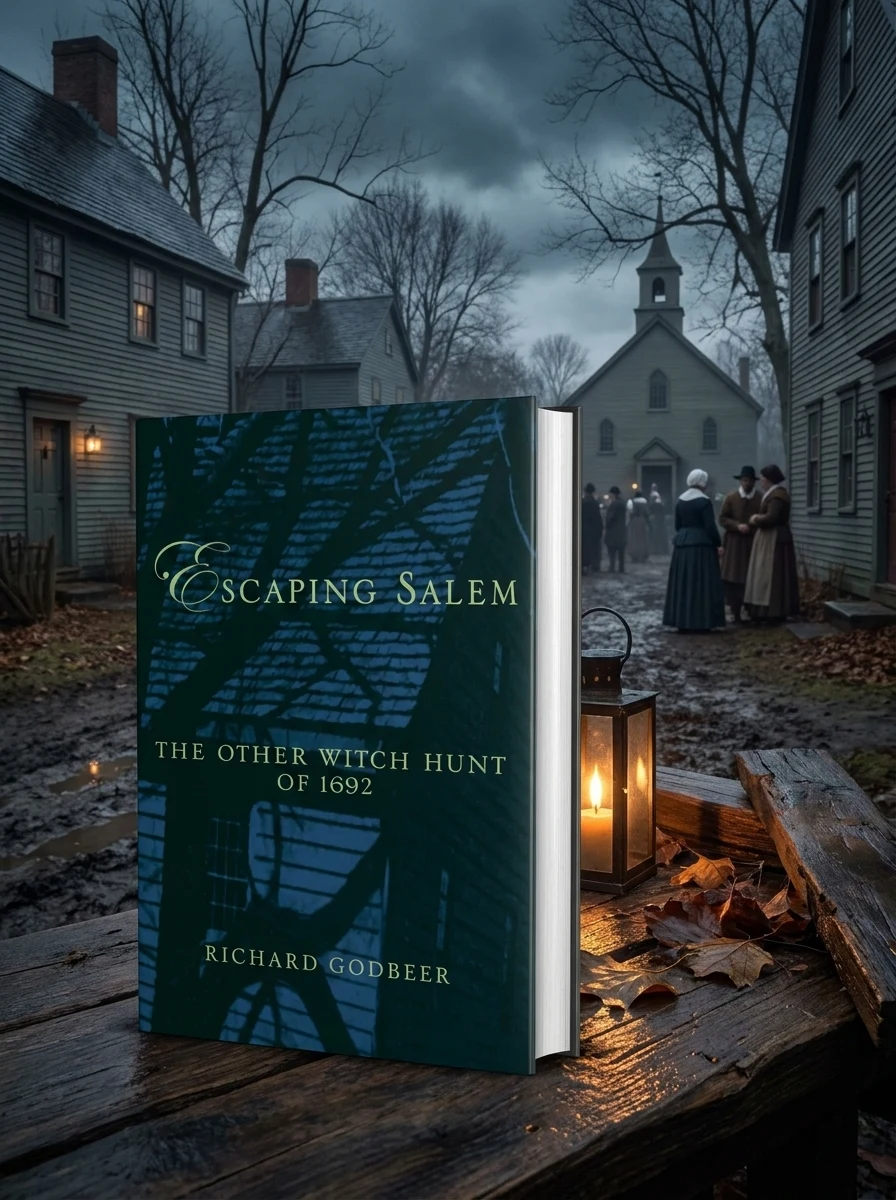
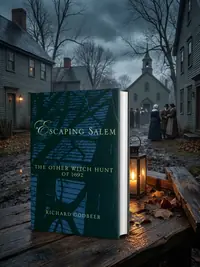

Escaping Salem: The Other Witch Hunt of 1692 Godbeer, Richard
Godbeer, RichardStock reported in the catalog; fulfillment is confirmed with your request.
Beyond Salem's shadows, discover Connecticut's forgotten witch trial, a testament to unexpected doubt.
Delve into the lesser-known 1692 witch trial in Stamford, Connecticut, a stark contrast to the infamous Salem tragedy. Richard Godbeer meticulously reconstructs the case of Kate Branch, a young woman whose unsettling visions and torments led to accusations against local women. Through vivid eyewitness accounts, the book explores the surprising skepticism of the Stamford community and legal authorities. It challenges conventional notions of early New Englanders, revealing a nuanced society grappling with the complexities of supernatural claims, legal evidence, and the potential for human deception, even amidst widespread belief in witchcraft.
This work anchors itself within the historiography of early American colonial society and the broader phenomenon of New England witch trials, offering a critical counter-narrative to the dominant Salem hysteria. It contributes to the scholarly understanding of how legal systems and community beliefs intersected during the late seventeenth century.


📝 Description: Escaping Salem: The Other Witch Hunt of 1692 Godbeer, Richard
💎 Expert review
📖 Why choose it
Why this book is worth reading
Readers fascinated by the nuances of colonial history and the psychology of mass hysteria will find immense value in this meticulous reconstruction. It is particularly rewarding for those tired of the monolithic Salem narrative, offering a refreshing perspective on how skepticism and doubt functioned within a deeply religious community. By focusing on the Stamford case and Kate Branch’s unsettling visions, Godbeer illuminates the complex interplay between supernatural belief, legal evidence, and human deception. This book appeals to anyone seeking to understand that early New Englanders were not merely irrational zealots but individuals grappling with profound uncertainty, making it essential for a balanced view of this turbulent period.
⭐ Reader reviews
Reader rating
Godbeer delivers a compelling, well-researched account that successfully challenges conventional wisdom about the uniformity of witch-hunt fervor. The vivid use of eyewitness accounts brings the Stamford tragedy to life, highlighting the surprising legal skepticism present in the community. However, readers expecting a fast-paced, dramatic thriller akin to popular Salem narratives may find the academic tone and focus on legal intricacies somewhat dry. It is not suited for those seeking simple moral binaries or sensationalist ghost stories; this is a serious historical study requiring patience for its detailed exploration of evidence and societal complexity.
❓ Frequently asked questions
📖 Who should read this
If you're fascinated by colonial American history or the intricate dynamics of belief and justice, this book offers a fresh, nuanced perspective. It's for those who seek to understand the complexities of the past beyond popular narratives and appreciate meticulous historical detective work.
🎯 Key themes and symbolism
Connecticut's Unique Trial
This work highlights the 1692 Stamford witch accusations, an event overshadowed by Salem. It meticulously details the local proceedings, providing a crucial comparative perspective that illustrates how other New England communities approached similar incidents, diverging significantly from the more sensationalized events to the north.
Skepticism in Early America
Godbeer reveals an unexpected degree of doubt among Stamford's residents and legal figures regarding Kate Branch's claims. Far from quick condemnation, the community questioned the nature of her affliction and the reliability of demonic testimony, challenging the popular stereotype of uniformly credulous colonial society.
Legal Labyrinths of Witchcraft
The book intricately details the legal challenges faced by judges trying accused witches. It shows how authorities grappled with the absence of tangible evidence, the dubious nature of spectral evidence, and the ethical dilemmas of relying on information potentially manipulated by malevolent forces, transforming the trials into a complex judicial puzzle.
💬 Quotes from the book
“The perplexing challenge for Stamford's magistrates lay not in denying witchcraft's existence, but in discerning truth amidst demonic whispers and human frailty.”
“Unlike Salem's fervent accusations, the Connecticut court revealed a community grappling with nuanced doubt, demanding tangible proof beyond spectral torment.”
📜 Historical context
📚 Glossary
- Afflicted
- Bewitching
- Spectral Evidence
📔 Questions to reflect on
- How might a modern legal system approach accusations of supernatural harm, balancing individual belief with evidentiary standards?
- Reflect on how collective societal fear, as seen in the broader context of witch hunts, can influence judicial processes and public opinion.
- Consider the role of skepticism in uncovering historical truths, particularly when dealing with events rooted in deeply held but unprovable beliefs.
✍️ More books by this author Godbeer, Richard
All books by this author →
🏛 Books from this publisher Oxford University Press
All books from this publisher →

 81
81

You might also like
See more →