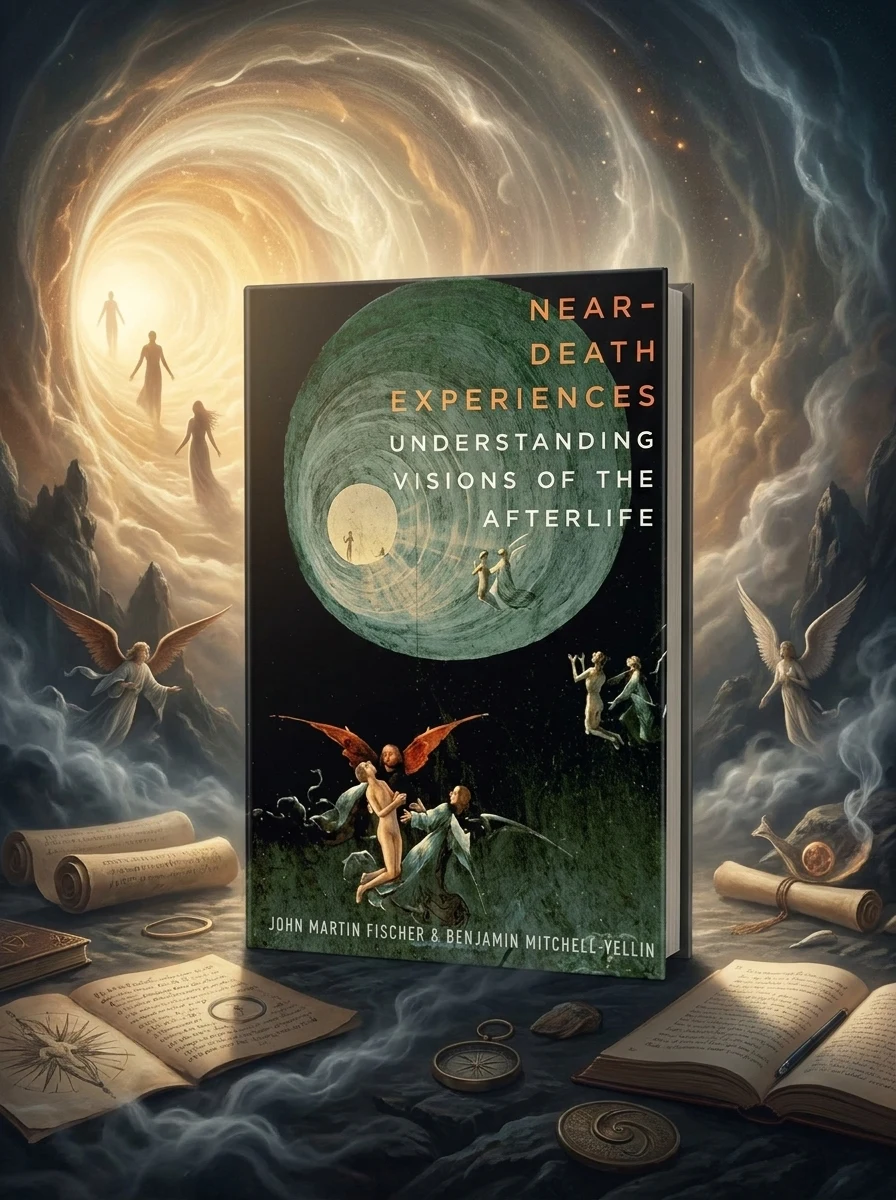
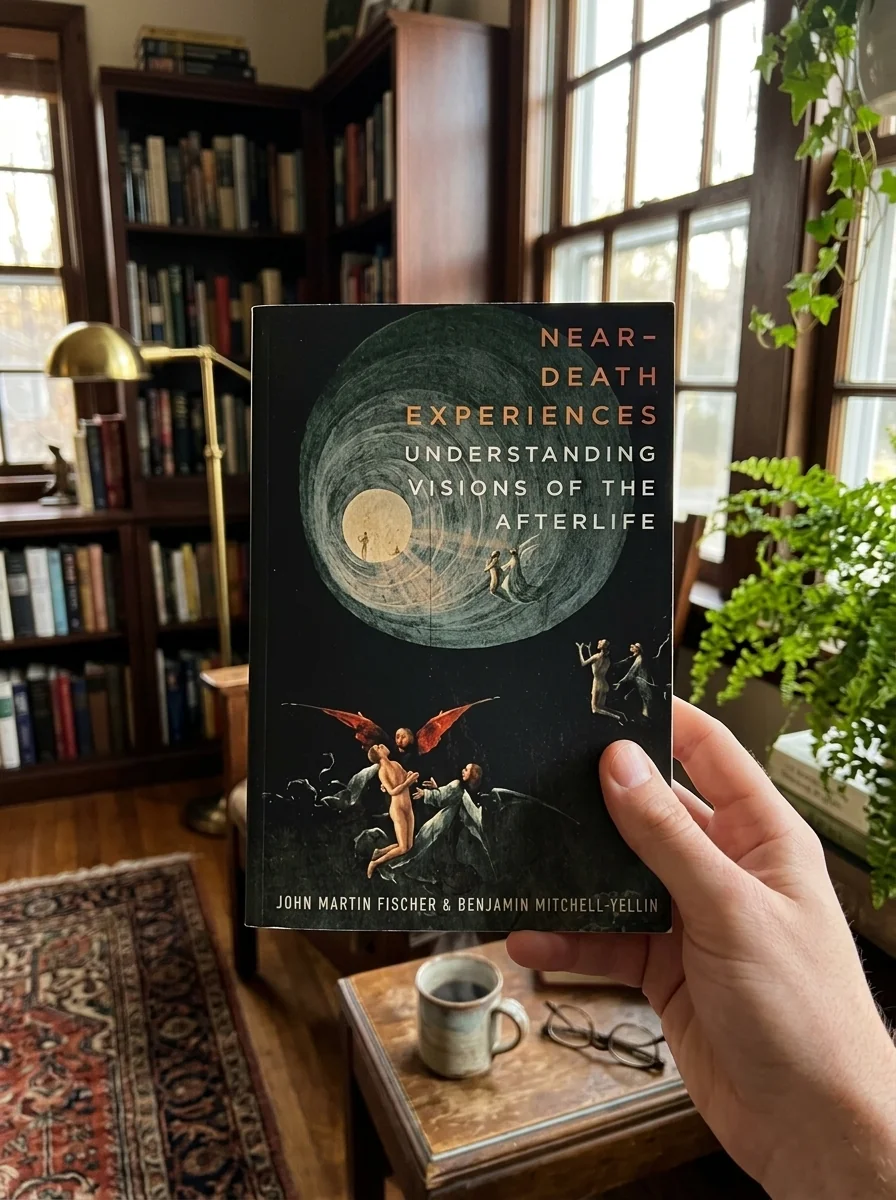
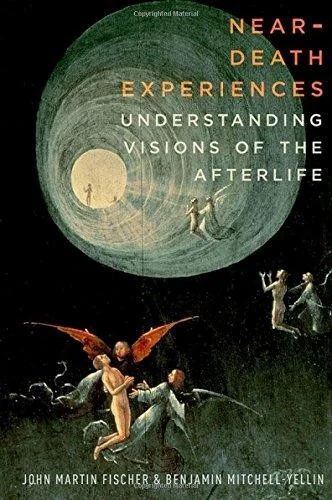
Near-Death Experiences: Understanding Visions of the Afterlife
A naturalistic philosophical analysis of near-death experiences and afterlife accounts.
Academic philosophers Fischer and Mitchell-Yellin critique supernatural claims surrounding famous afterlife accounts. Drawing from their work on the Immortality Project, the authors analyze visions reported by children, blind individuals, and cross-cultural subjects. The authors evaluate whether nonphysical explanations are necessary, examine lucid visions, and apply logical principles to test whether simple physical accounts explain these phenomena. They challenge the idea that minds are immaterial, offering a blueprint for scientific understanding while addressing how confirmation bias leads people to believe in heaven.
Published by Oxford University Press in June 2016, this academic work emerges from the 2012 to 2015 Templeton Foundation Immortality Project. It addresses popular contemporary American near-death accounts within the broader framework of modern mind-body philosophy.


Praise for this book
“John Martin Fischer and Benjamin Mitchell-Yellin's book is the gold standard for philosophical work aimed at a popular audience. Fischer and Mitchell-Yellin make nuanced, philosophically interesting arguments about a topic largely unexplored by academic philosophers and manage to do so in a way that is accessible to any intellectually curious reader.”
📝 Description: Near-Death Experiences: Understanding Visions of the Afterlife
📑 What's inside
- Preface
- Chapter One: Introduction
- Chapter Two: Two Famous Near-Death Experiences
- Chapter Three: When Exactly Do the Near-Death Experiences Take Place?
- Chapter Four: Must an Explanation of Near-Death Experiences Appeal to the Nonphysical?
- Chapter Five: Are Lucid Experiences Necessarily Accurate?
- Chapter Six: Near-Death Experiences in the Blind
- Chapter Seven: Near-Death Experiences in Children and throughout the World
- Chapter Eight: Why Expect Near-Death Experiences to be Explained by a Single Factor?
- Chapter Nine: Are Simpler Explanations More Likely to be True?
- Chapter Ten: Near-Death Experiences, Transformation, and the Afterlife
- Chapter Eleven: A Strategy for Explaining Near-Death Experiences
- Chapter Twelve: Confirmation Bias: We Believe What We Want to Believe
- Chapter Thirteen: Awe, Wonder, and Hope
- References
💎 Expert review
📖 Why choose it
Why this book is worth reading
Readers who stand at the crossroads of spiritual curiosity and scientific skepticism will find this book to be a vital guide. It is designed for those weary of dogmatic explanations who crave a nuanced, evidence-based perspective on near-death visions. By examining cases like those of Pam Reynolds and Eben Alexander, the authors provide a framework that honors the profound transformative power of these experiences without abandoning rational inquiry. If you seek to understand the 'veil' through a lens of rigorous human event analysis rather than mystical assumption, this text offers the clarity and depth needed to navigate the enigmatic realm of post-mortem consciousness with both heart and mind.
⭐ Reader reviews
Reader rating
Fischer and Mitchell-Yellin present a compelling, naturalistic framework for understanding near-death experiences, moving beyond spiritual dismissal to rigorous inquiry. While it serves as an essential resource for those seeking deeper understanding beyond dogma, it may disappoint readers expecting purely mystical validation or supernatural proof of the afterlife. The book’s strength lies in its science-based approach, which scrutinizes claims of immaterial consciousness with academic precision. Consequently, individuals seeking emotional comfort through unverified spiritual assertions might find the tone too analytical. However, for those willing to engage with a thought-provoking examination of human events and extraordinary visions, it delivers a sophisticated, intellectually satisfying exploration of the boundary between life and death.
❓ Frequently asked questions
📖 Who should read this
If you're captivated by the mysteries of consciousness, curious about the afterlife, or seek to bridge spiritual inquiry with scientific understanding, this book offers a balanced, thought-provoking exploration of humanity's most profound threshold.
🎯 Key themes and symbolism
Consciousness Beyond Body
Explores philosophical debates on whether NDEs prove the mind's independence from the physical brain, analyzing common arguments for an immaterial self and offering counter-perspectives rooted in scientific materialism. It challenges conventional spiritual interpretations with critical philosophical insight.
The Scientific Lens
Applies a rigorous, evidence-based approach to explain NDE phenomena, proposing naturalistic mechanisms for the vivid perceptions and profound insights reported, without diminishing their personal significance. The authors seek to demystify without discrediting.
Transformative Impact
Investigates how NDEs profoundly alter individuals' worldviews, values, and life paths, acknowledging their deep personal meaning even when interpreted through a scientific framework. It respects the individual's experience while seeking broader understanding.
📜 Historical context
📚 Glossary
- Naturalistic Explanation
- Dualism
- Veridical Perception
📔 Questions to reflect on
- How might a purely scientific explanation of an NDE still offer profound spiritual or personal meaning to an individual, even if it doesn't confirm an afterlife?
- Reflect on a personal experience of profound transformation. How does it compare to the reported effects of NDEs, and what does this suggest about human resilience and perception?
- If consciousness is indeed inseparable from the brain, as suggested by some naturalistic views, what implications does this hold for our understanding of mortality and the concept of a 'soul'?
📖 Read on the blog
🏛 Books from this publisher Oxford University Press
All books from this publisher →



You might also like
See more →




Have a question about this item?
Ask about the edition, condition, delivery or anything else — we reply by email or phone, usually within a day.
