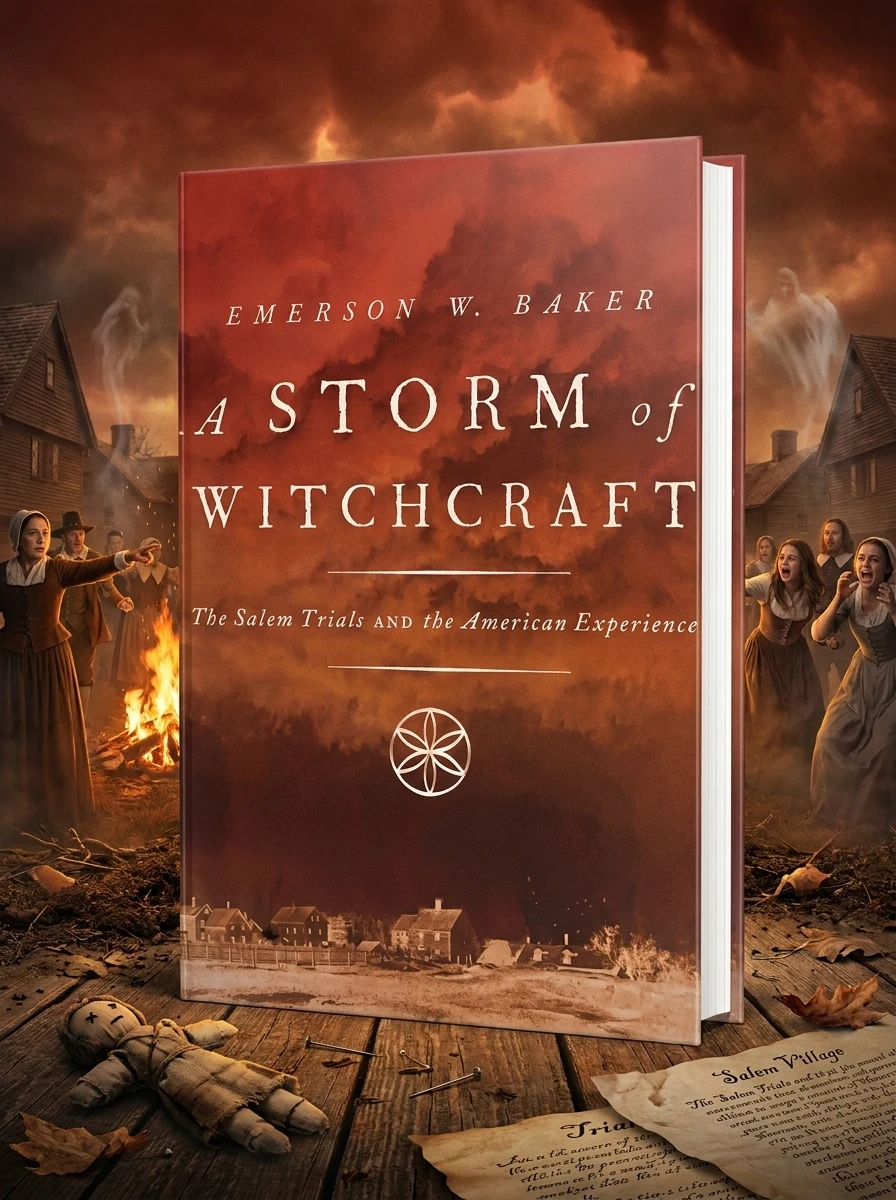
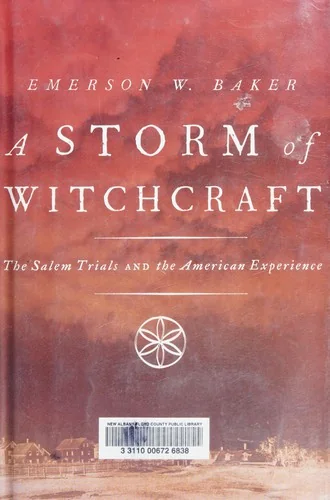
A Storm of Witchcraft: The Salem Trials and the American Experience
✍️ Baker, Emerson WThis paperback volume investigates how colonial New England experienced the largest lethal witchcraft crisis in early American history. Baker analyzes the societal pressures of the 1690s, including religious instability, frontier conflict, and government transitions, that fueled the hunt for invisible spirits. The narrative examines the perspectives of accusers, the accused, and magistrate prosecutions, while explaining why the fading Puritan government attempted to erase the tragedy from public memory.


Praise for this book
“Of many books about the Salem witch-trials, only a few really matter. This is one of them. Combining deep learning and clear-sighted good sense, A Storm of Witchcraft retells a story that has long managed to be familiar yet puzzling and misunderstood. Emerson Baker's masterly dissection of events is both genuinely original and utterly persuasive, not least because the importance of political circumstance, legal…”
“...[A] cogent, readable, and comprehensive analysis of the literature on the Salem witch trials.... His emphasis on the choices made by individuals - to take action or remain passive - makes this work a welcome addition to our attempts to understand the significance of the Salem events of 1692.”
“This is a necessary book for all of those who seek to find a balanced way to approach the time period, as the scale on which it is written provides an insight not only into the trials themselves, but into the lives of the turbulent and diverse populations that inhabited the American colonies.”
📝 Description: A Storm of Witchcraft: The Salem Trials and the American Experience
💎 Expert review
📖 Why choose it
Why this book is worth reading
Readers fascinated by the complex roots of American identity and the psychological mechanics of mass panic will find this book indispensable. Emerson Baker offers a nuanced perspective that moves beyond simple folklore to examine the tangible social, religious, and environmental forces at play. It is ideal for those who seek to understand how historical trauma shapes collective memory and contemporary cultural narratives. By dissecting the 'perfect storm' of 1692, the book provides clarity on how fear can dismantle community bonds. It appeals to historians, sociologists, and anyone interested in the dark undercurrents of colonial life, offering a respectful yet analytical look at a tragedy that remains deeply embedded in the American psyche.
⭐ Reader reviews
Reader rating
This is a meticulously researched historical analysis that effectively dismantles monolithic explanations for the Salem events. Baker’s argument regarding converging pressures is compelling and well-supported by archival evidence. However, readers seeking sensationalist ghost stories or supernatural validation will be disappointed, as this is a rigorous academic study grounded in secular history. It may also feel dry to those preferring narrative-driven fiction over analytical prose. The book does not cater to those looking for easy moral binaries; instead, it presents a complex tapestry of causality. While essential for serious students of history, casual readers might find the dense focus on social dynamics less engaging than character-driven accounts.
❓ Frequently asked questions
📖 Who should read this
If you're captivated by pivotal moments in American history, curious about the psychological and social dynamics of mass hysteria, or seeking a comprehensive, nuanced understanding of the Salem Witch Trials beyond popular myths, this authoritative volume is essential for your collection.
🎯 Key themes and symbolism
The "Perfect Storm" Concept
Baker meticulously presents the notion that the Salem outbreak was not a result of any single factor, but rather a catastrophic intersection of various societal, environmental, and spiritual pressures. He explores how this unique alignment of conditions created an extraordinary and tragic event that transcended simple explanations.
Colonial Life's Undercurrents
This book richly details the complex social fabric of 17th-century New England, examining the tensions, fears, and daily realities that shaped the Puritan communities. It reveals how frontier conflicts, religious anxieties, and local disputes provided fertile ground for the escalating paranoia and accusations that defined the trials.
Enduring American Legacy
Beyond recounting the historical events, the work explores how the Salem Witch Trials have profoundly influenced the American psyche and narrative. It delves into the lingering questions and interpretations, demonstrating how this dark episode continues to serve as a potent symbol and cautionary tale in discussions of justice, hysteria, and mass delusion.
📜 Historical context
📚 Glossary
- Spectral Evidence
- Puritanism
- Ergotism
📔 Questions to reflect on
- How might the specific geographic and social isolation of Salem Village have contributed to the rapid escalation of accusations and fear?
- In what ways do modern anxieties or societal divisions mirror the underlying tensions Baker identifies in 17th-century New England?
- Considering the "perfect storm" theory, what lessons can be drawn about the dangers of seeking singular explanations for complex historical or social phenomena?