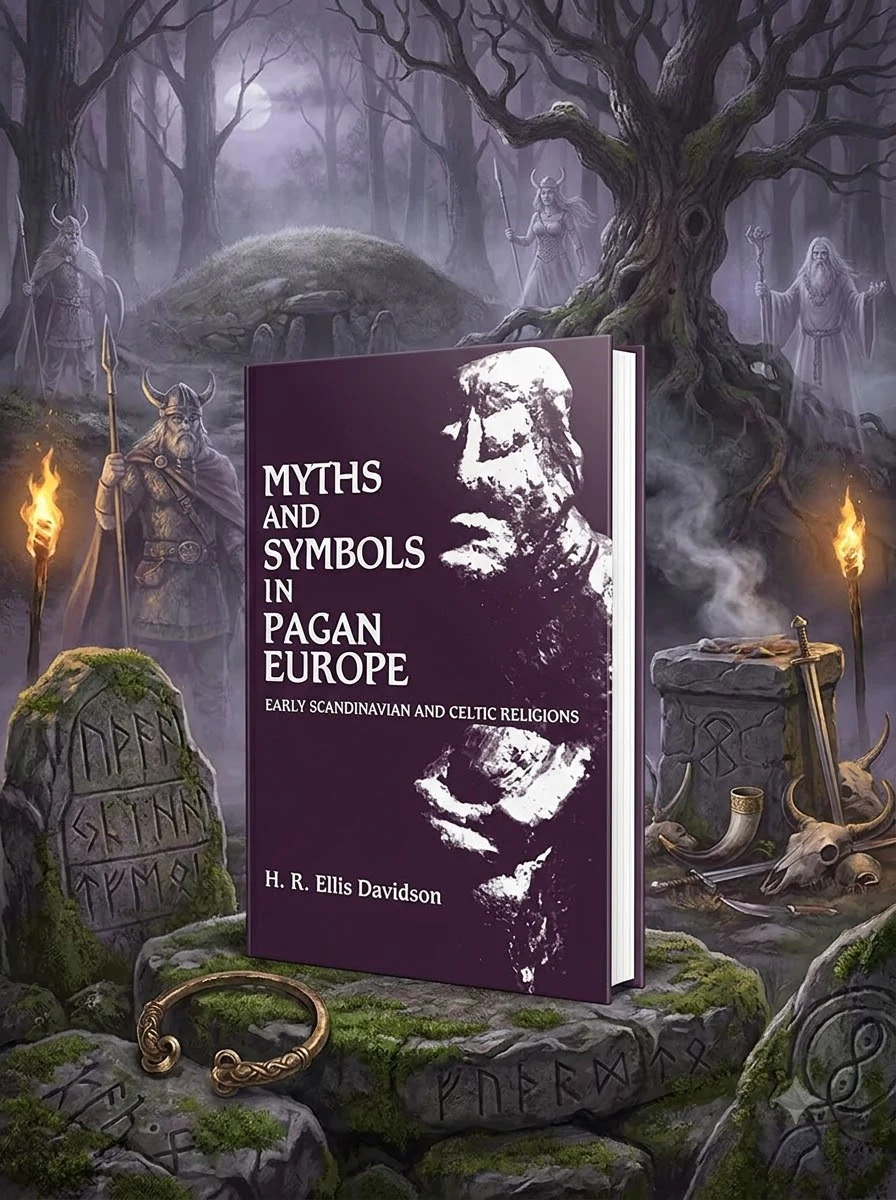
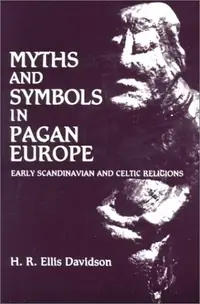
Myths and Symbols in Pagan Europe
Stock reported in the catalog; fulfillment is confirmed with your request.
Unearth the forgotten spiritual connections binding pre-Christian Europe's diverse pagan traditions.
Delve into Hilda Ellis Davidson’s groundbreaking exploration of pre-Christian spiritualities across northwestern Europe. This insightful volume moves beyond familiar myths like Valhalla to reveal profound commonalities and intriguing distinctions between Celtic, Germanic, and Scandinavian belief systems. Davidson meticulously analyzes shared concepts such as sacred sites, ritual sacrifice, divine warfare, guardian spirits, and the nature of the Otherworld. Drawing upon archaeological finds, ancient imagery, literary accounts, and oral traditions, she investigates whether these parallels stem from ancient origins or later cultural exchange, offering a vital framework for comprehending the spiritual landscape of early European societies.
This volume serves as a scholarly bridge between archaeology and comparative mythology within the study of pre-Christian European pagan traditions. It anchors itself in the academic exploration of spiritual landscapes across Celtic, Germanic, and Scandinavian cultures.


📝 Description: Myths and Symbols in Pagan Europe
💎 Expert review
📖 Why choose it
Why this book is worth reading
Readers deeply interested in the roots of European spirituality will find this book an indispensable resource for understanding the complex tapestry of pre-Christian beliefs. It is particularly valuable for those seeking to move beyond superficial mythological tropes like Valhalla to grasp the nuanced connections between diverse pagan traditions. Scholars, esoteric practitioners, and history enthusiasts who appreciate rigorous analysis of sacred sites, ritual sacrifice, and the concept of the Otherworld will gain a vital framework for comprehending the spiritual landscape of early European societies through Davidson’s meticulous synthesis of archaeological and literary evidence.
⭐ Reader reviews
Reader rating
Davidson offers a rigorous, academic dissection of pre-Christian spirituality, making this an essential text for serious students of comparative religion and archaeology. However, it is not suited for casual readers seeking accessible fantasy lore or simple mythological summaries. The dense analysis of divine warfare, guardian spirits, and cultural exchange requires patience and a willingness to engage with scholarly discourse rather than narrative storytelling. Those expecting popularized pagan guides or immediate practical ritual advice will likely find the tone too dry and the scope too broad. It is a foundational reference work for understanding historical spiritual contexts, not a light read.
❓ Frequently asked questions
📖 Who should read this
If you're drawn to the ancient spiritual currents of Northern Europe, eager to understand the deeper connections between Celtic, Germanic, and Norse mythologies, and appreciate rigorous scholarship grounded in diverse evidence, this book is an essential addition to your collection.
🎯 Key themes and symbolism
Interconnected Pagan Traditions
This work meticulously juxtaposes the spiritual practices and mythologies of Celtic, Germanic, and Scandinavian peoples. Davidson highlights striking resemblances in their cosmologies, ritual behaviors, and deities, while also noting crucial divergences, offering a nuanced perspective on the shared cultural substrata of pre-Christian Europe.
Sacred Sites and Rituals
Explore the profound significance of holy places and sacrificial rites across these diverse cultures. Davidson examines how concepts of sacred space and ritualistic offerings, including those to battle-goddesses and protective spirits, informed the religious lives and worldviews of ancient Europeans, revealing underlying patterns.
Otherworldly Journeys and Portents
Davidson delves into the fascinating beliefs surrounding the afterlife and methods of foretelling the future. She uncovers shared understandings of the Otherworld, its inhabitants, and the various techniques of divination practiced by Celts, Germans, and Scandinavians, questioning the origins of these profound spiritual parallels.
💬 Quotes from the book
“The persistent echoes of shared belief, from the sanctity of specific groves to the veneration of divine female warriors, compel us to ask if these were independent developments or remnants of a deeper, common spiritual ancestry.”
“By weaving together archaeological insights, the subtle language of ancient carvings, and the surviving fragments of epic verse and oral tradition, a more complete tapestry of pre-Christian belief begins to emerge.”
📜 Historical context
📚 Glossary
- Valhalla
- World-Tree
- Otherworld
📔 Questions to reflect on
- How might understanding the shared spiritual patterns of pre-Christian Europe alter our perception of modern European cultural identities?
- Consider a specific mythical figure or ritual practice. How do Davidson's comparative insights deepen your understanding of its potential origins or broader significance?
- In what ways do ancient beliefs about the Otherworld or divination resonate with, or diverge from, contemporary spiritual or philosophical thought?
🏛 Books from this publisher Syracuse University Press
All books from this publisher →
You might also like
See more →

 91
91